Utilizing a tailored machine learning model requires several weeks from a tech team. However, making the whole enterprise realize the importance of such a model takes a longer period, sometimes months. Many executive teams tend to think that hiring an AI vendor is an engineering task. However, in most cases, the failure in adopting the new approach does not happen due to weak algorithms but rather because the internal operations, practices, and pipelines are not adjusted to work with the new technology.
While traditional software integration only converts old processes into digital format, ai transformation consulting applies a more serious approach it changes organizational culture, processes, and data systems so that the automation process leads to an increase in total revenue.
This truth is supported by statistical data according to the research performed by Gartner – as much as 85% of the projects related to automation and artificial intelligence do not bring anticipated profit owing to poor data integration and internal barriers.
While developing the digital strategy, executive management needs to focus on those changes that should be introduced to make the transition to the usage of cutting-edge software successful.
Technical Upgrades vs. AI Transformation: What Is the Difference?
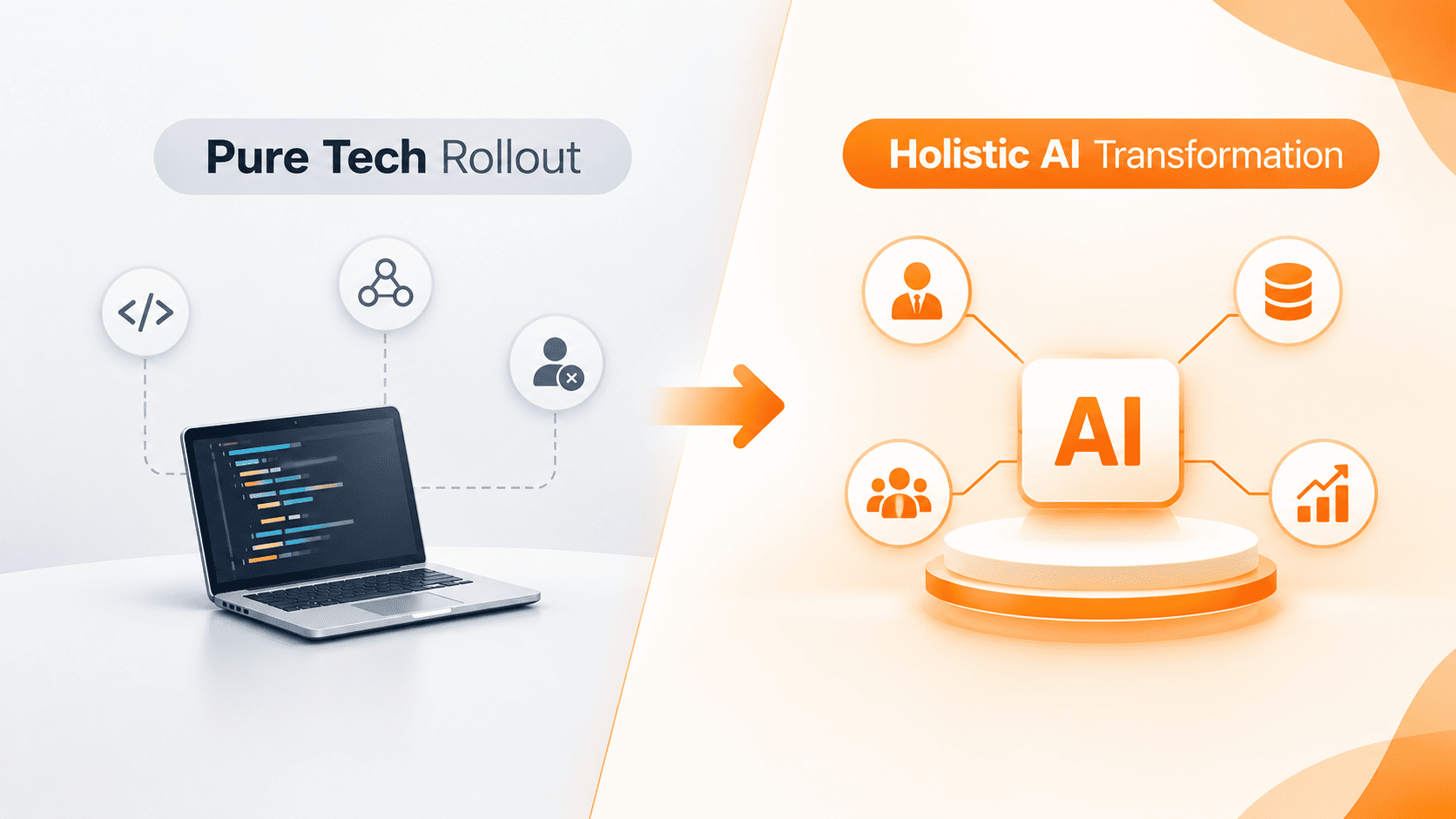
To understand how AI transformation consulting restructures day-to-day operations, business leaders must first distinguish pure technical software delivery from broad organizational transformation.
| Transformation Layer | Pure Technology Rollouts | Holistic AI Transformation |
| Primary Scope | Building models, writing code, and deploying APIs | Re-engineering workflows, culture, data, and business models |
| Logic Basis | Isolated task automation | End-to-end operational enablement |
| Organizational Impact | IT-centric deployment | Cross-departmental operating model evolution |
| Primary Metric | Model speed and output accuracy | Net cost reduction, margin growth, and team adoption |
| Risk Management | Basic software bug testing | Enterprise governance, security, |
Comprehensive AI management consulting services have an enterprise-wide approach as opposed to traditional IT upgrades that usually operate in silos. The layers of this approach are
- Strategic Intent
Instead of experimenting with tech pilots, executive leadership identifies bottlenecks in the business processes. - Operational Alignment
Decision points and daily operational processes are revamped to accommodate automation results. - Data Readiness
Old data is processed and put in a single storage area to be actively deployed. - Cultural Enablement
Workers are trained and encouraged to depend on predictive insights to perform their day-to-day operations.
4 Core Pillars Changed Beyond the Code
For a successful enterprise transformation, business executives must focus on the four non-technical pillars determining long-term ROI, namely
- Re-engineering of the Operating Model
Processes are moving from being reactive and human-driven to proactive and process-driven automation in all main business departments. - Cultural Acceptance and Trust
Change management methodologies tackle the employees’ reluctance to accept the change along with providing transparency and education of people involved in the process. - Data Governance Framework
Different sources of data are joined into one secure central data lake along with being monitored for automatic compliance. - Value-Driven KPIs
The effectiveness of business operations is calculated in financial indicators and not in merely some technical specifications.
💡 Is your organization ready for holistic digital evolution?
Don’t waste capital on technology rollouts that fail to scale. Book a Free 15-Minute AI Audit with our strategy team to identify your top 3 high-impact transformation opportunities.
High-Impact Transformation Outcomes Across Departments
Organizations that receive high returns on their investments tend to focus on specific operation areas where the application of some strategic advice can eliminate outdated obstacles:
- Supply Chain and Operations Optimization
Instead of assigning regional managers to analyze data in spreadsheets, companies make use of advance algorithms to trigger actions such as restocking, recalculating logistics routes, etc., based on real-time signals from the markets. - Finance and Working Capital Operations
The operating team now does not reactively reconcile the figures, but rather takes advantage of automatic audits. Intelligent automated systems make it possible for such operators to spot discrepancies, improve pricing strategies, and manage their budgets independently. - Customer Experience Management
The process of personalization is now not an email segmentation process anymore, as it is done automatically based on real-time consumer data. - Risk, Legal and Compliance Monitoring
The effectiveness of business operations is calculated in financial indicators and not in merely some technical specifications.
The Non-Technical Leader’s Guide to AI Strategy Consulting
Executing a successful enterprise initiative around AI strategy consulting does not require writing code; it requires establishing governance, operational boundaries, and business rules.
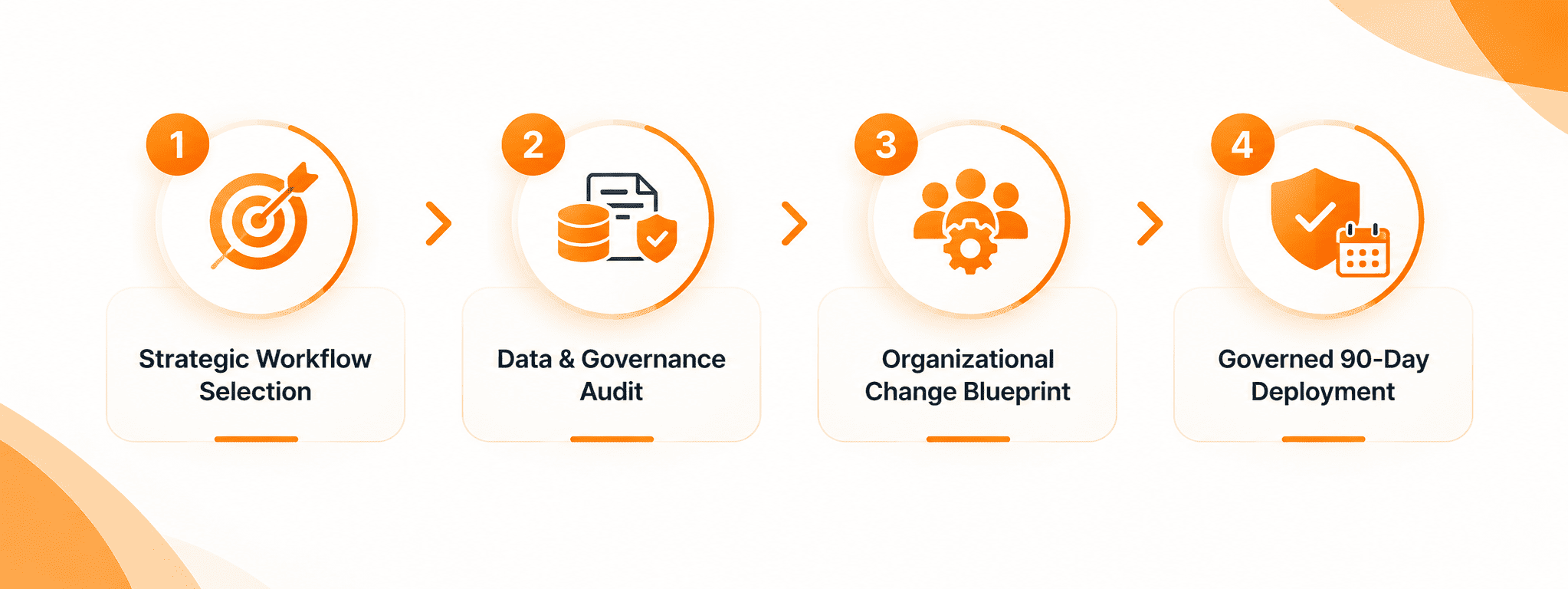
Phase 1: Identify the Right Business Problem
Instead of general statements like “automate customer service,” find specific operational processes with measurable financial results like “minimize standard order reconciliation times.”
Phase 2: Upgrade Data Governance Infrastructure
The predictive model is only as accurate as its data source. Before using sophisticated analytics, create centralized data pipelines, automated cleaning processes and security measures first. The research conducted by McKinsey & Company indicates that data modernization generates approximately 30% of the overall possible value created in corporate transformation.
For more information on how to prepare your IT systems and databases, check our comprehensive guide on how modern data engineering speeds accelerate digital implementation.
Phase 3: Implement Organizational Change Management
Instill employee confidence using a transparent training program. Tackle concerns regarding job loss and train employees how to operate prompts and read dashboards effectively.
Phase 4: Conduct a 90-Day Governed Rollout
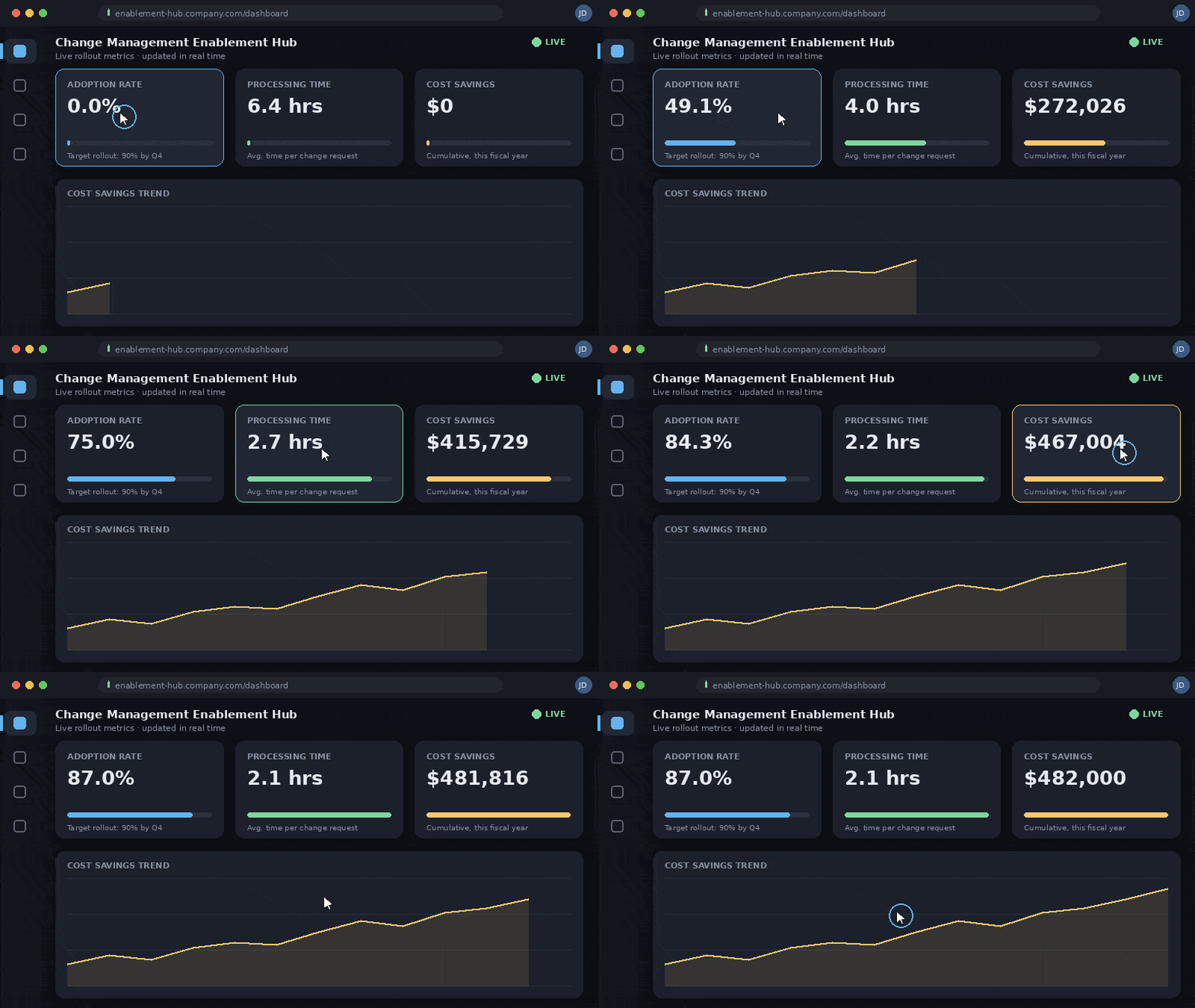
Test your new operations with pilot programs. Monitor adoption, errors, speed, and ROI before increasing the scale of the project.
Mitigating Risk: Security, Governance, and ROI
The use of intelligent systems and technology creates business implications that leadership can no longer ignore.
- Model Drift and Maintenance – The prediction capacities deteriorate over time due to changes in market conditions. Using continuous telemetry and frequent adjustments in models is necessary to maintain the needed level of accuracy.
- Role-Based Access Control – Automated systems need to have limited access to data based on their roles and functions in the corporation.
- Financial Accountability – Every transformation effort should be connected with financial calculations in the company.
Frequently Asked Questions (FAQs)
Custom software development is limited to the coding process used in the creation of tailored software projects. In contrast, transformation consulting seeks to analyze the various elements of your business hence applying the necessary technical elements for continuous returns on investments.
The assessment of strategy, processes and data preparedness takes approximately 4-8 weeks. Implementation phases, management of change and optimization of processes may take anywhere from 3 to 6 months depending on the level of complexity of the organization.
Most corporations think of automation as an IT upgrade just like other IT-related upgrades. However, without new business processes and data flow and management of change, automation tools will not deliver the desired results.
It is not necessary. Solution managers can focus on developing necessary frameworks for realization of your objectives while keeping in touch with specialists responsible for implementation of AI technology.
Transform Your Business Operations
Stop running isolated software experiments. Start building scalable, enterprise-wide value.
Schedule a tailored walkthrough with our strategy team to evaluate your data readiness, audit your workflows, and build a custom transformation roadmap.