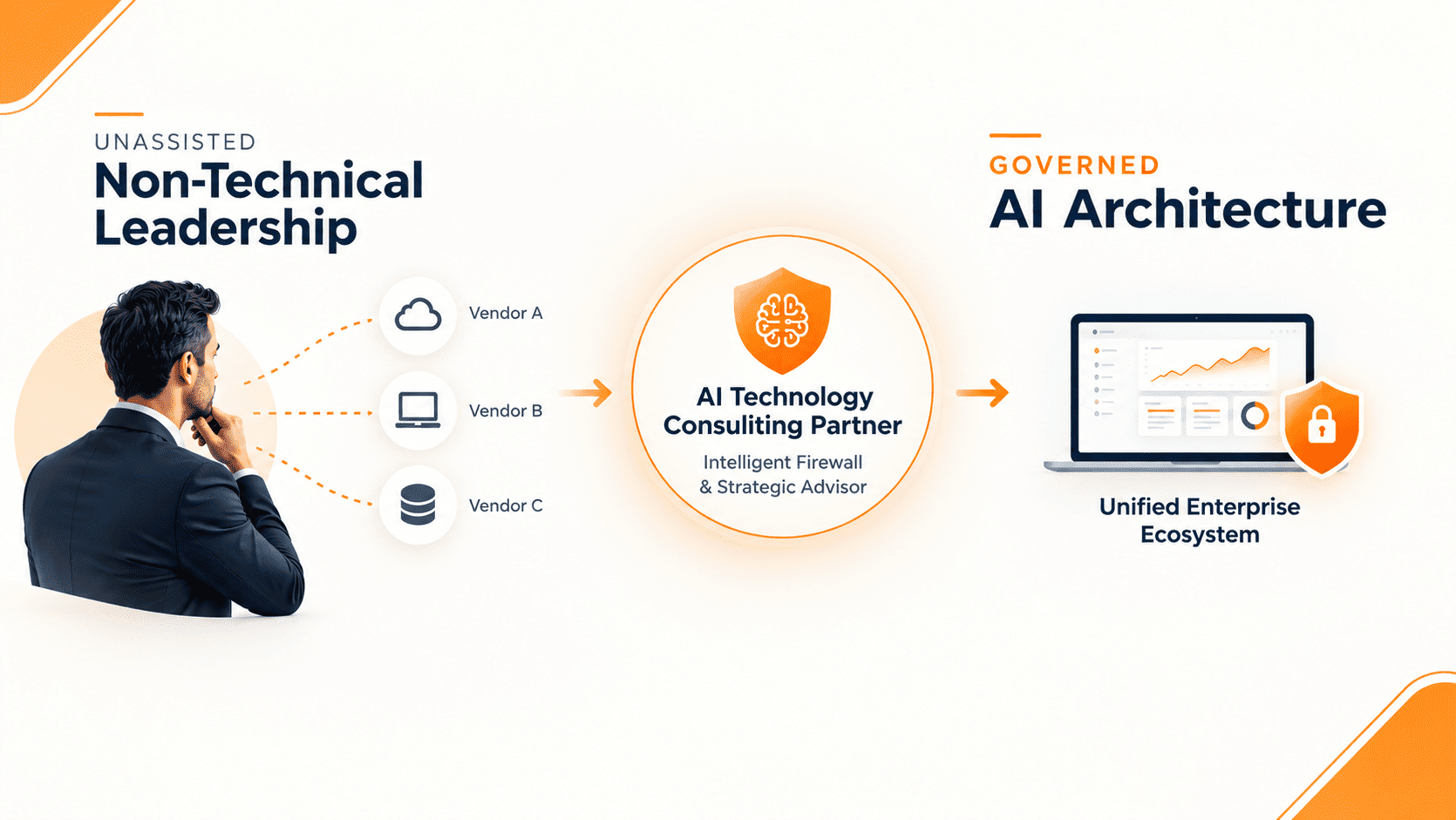
Every business leader knows that AI makes it easier to conduct operations, saves money for staffing, and opens new sources of income. But, unfortunately, in order to build a successful enterprise solution, the person in charge may need to have a solid background in technology that the majority of CEOs and operations managers lack.
Without the involvement of a CTO, it can be very difficult to assess the statement of vendors, to know the software architecture, and to evaluate risks concerning software use. AI technology consulting provides professional leaders with expert-level guidance regarding tech issues, allowing them to take advantage of the latest technologies and ensure their enterprise builds scalable AI solutions.
According to industry studies, more than 70 percent of corporate AI initiatives do not provide measurable returns on investments. This is due to inappropriate technical planning, ineffective data framework, and improper placement of resources, rather than ineffective technology. According to studies by the Harvard Business Review focusing on digital transformations in corporations, failures in digital transformations are caused mostly not because of software defects but because of misalignment in the organizations and problems with the implementation of the right technology.
This guide explains what on-demand AI consulting is, why businesses without a CTO have difficulties in implementing software, how fractional consultants can help businesses create enterprise value in a short period, and how to deal with the process of adopting AI without being overwhelmed by technical terms.
What Is AI Technology Consulting?
Consulting in the field of artificial intelligence is a type of advisory service aimed at business leaders who may not have a strong technical background and need assistance at the level of planning, system building, technology selection, and implementation without hiring a Chief Technical Officer.
As a part-time technology advisor, a consulting partner in AI helps leaders bridge the gap between business-level strategic decisions and technological deliveries. Their work includes analyzing existing technologies, performing due diligence for SaaS purchases, creating safe data pipelines, and managing vendors providing software solutions.
Differences between Traditional IT and Software Agencies and AI technology consulting
To learn how the implementation of artificial intelligence consulting in small businesses can change processes, non-tech business leaders should compare their options based on parameters like cost, time required, and strategic approach
| Capability / Metric | Full-Time Internal CTO | Standard Software Dev Agency | AI Technology Consulting Partner |
| Annual Financial Cost | Full Salary + Benefits + Equity Burden | High (150–250/hr per engineer) | 60% to 70% Less Than Full-Time Executive |
| Core Focus | Long-term executive alignment | Writing custom code quickly | Business ROI, strategy, & architecture |
| Vendor Objectivity | High (Internal interest) | Low (Pushes their specific dev stack) | Total (Tech-stack agnostic) |
| Data Governance | Full oversight | Varies (Often built as an afterthought) | Strict RBAC & compliance guardrails |
| Time-to-Value | 3–6 Months (Hiring + Onboarding) | 2–4 Months (Scoping + Coding) | 2–4 Weeks (Immediate Audit & POC) |
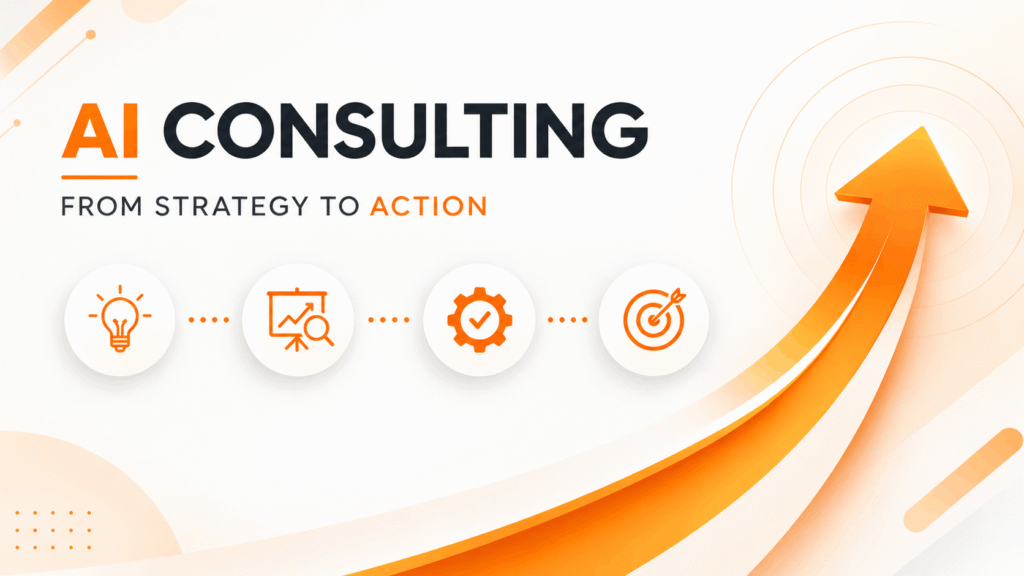
Unlike conventional IT support companies or software vendors organized based on sales, the independent consultants who specialize in AI technology utilize the so-called governed 4-phase cycle
- Audit and Evaluation of Opportunities – AI consultants analyze your business processes so that they can find characteristics that instead of taking a lot of time and money only cause delays and can be automated straight away.
- Architecture and Confidentiality Limits – AI consultants analyze the software you are using at the moment as well as establish data transmission protocols so that clients’ data is kept safe and protected from being disclosed according to international requirements.
- Verification of Vendors – AI consultants check for authenticity of the claims made by vendors, analyze the existing code and establish milestones for the development process making sure that the budget will not be exceeded.
- Implementation and ROI Monitoring – AI consultants calculate the key indicators for business operations and implement inexpensive prototypes to check how well the system works and proves its worth before launching it on a larger scale.
4 Core Capabilities Brought by On-Demand AI Advisors
When you need specialized ai consulting for your small business team or a mid-market enterprise, you will benefit from four key organizational capabilities
- Objective Tool & Vendor Procurement – Agnostic advisors are not selling their own software and will check the market for tools before making a recommendation on the right solution for your needs.
- Data Infrastructure Readiness – Consultants will convert dispersed spreadsheets and old databases as well as disjointed CRMs into organized and structured, API-in-hand accessible data pipelines for use in machine learning applications.
- Risk Management & Security Protocols – Advisors implement standards of Role-Based Access Control (RBAC) and Zero Data Retention policies, which ensure that the confidential corporate knowledge remains safe from getting into the public training sets.
- Fractional Engineering Management – The consultants will write the technical specifications, interview various software development vendors, audit the code quality as well as manage the timings for you.
💡 Is your technology stack ready for practical AI automation?
Don’t spend months experimenting without clear ROI. Book a Free 15-Minute AI Audit with our strategy team to identify your top 3 high-impact workflows for immediate deployment.
How Do Small Businesses and Mid-Market Firms Deploy AI Technology Consulting?
Companies that operate without an in-house CTO have a fast ROI because of the use of targeted measurable process automation that uses AI in solving critical process bottlenecks
1. Automated reconciliation of finance & operations
Bespoke machine-learning workflows correlate purchase orders, non-structured vendor PDF invoices, and bank records. The moment a mismatch is detected, the system raises alerts on specific discrepancies, prepares messages for further clarifications, and handles payment approvals for a human to approve the payment.
2. Predictive demand forecasting and inventory management
Predictive analytics models use historical transaction data, market insights, and supply chain timelines to properly adjust purchase of inventory therefore avoiding costly overstocks or stock-outs.
3. Automation in customer service and sales operations
AI-linked processes are involved in the identification of customers, checking their order history through suppliers such as SAP, Salesforce, and Shopify, handling returns automatically, and updating records in sales CRMs requiring no agent input.
4. Unstructured document and contract processing
Natural language algorithms work through any legal documents, shipping documents, or medical records, extracting necessary structured metadata that goes into the core enterprise ERP systems directly.
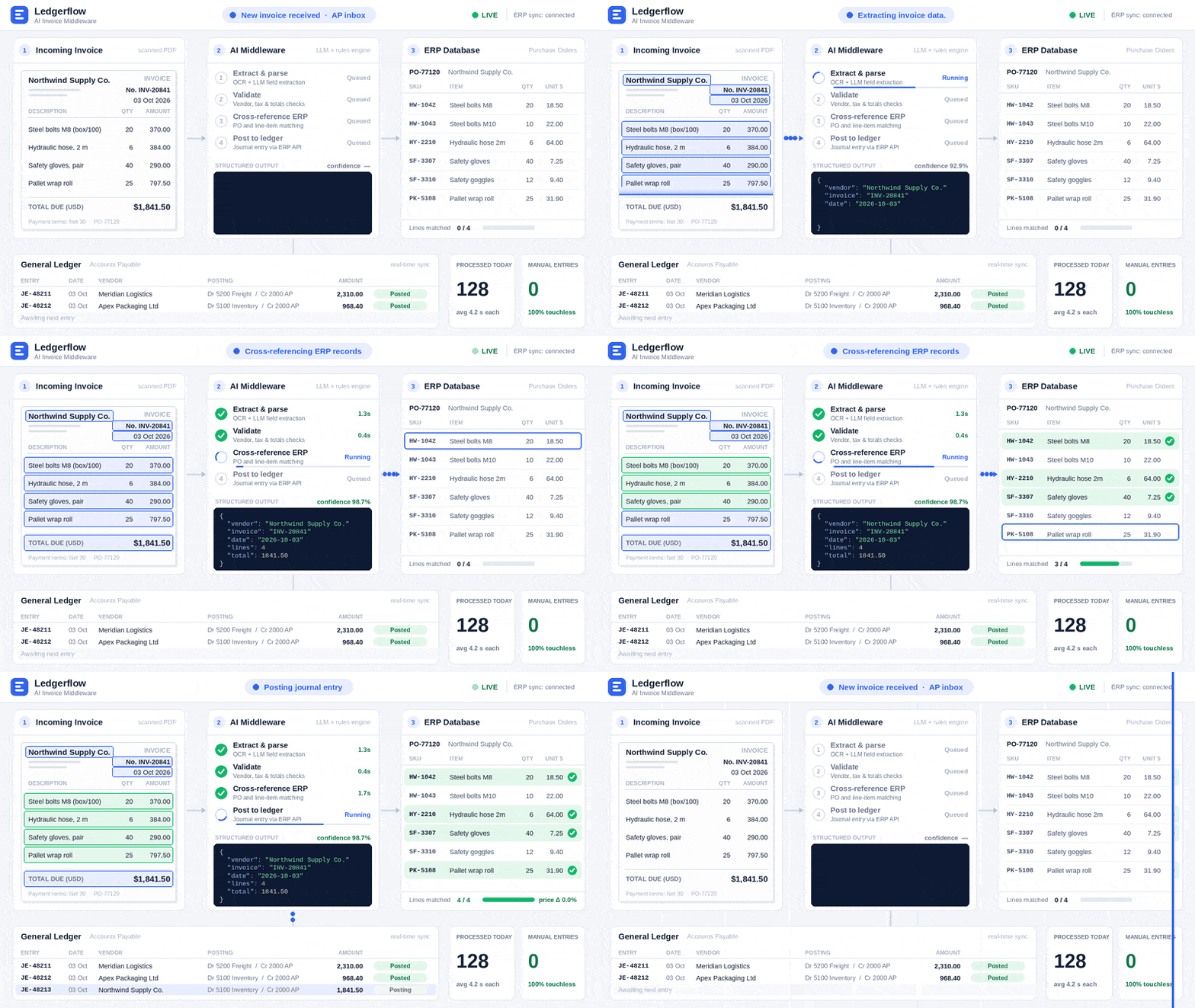
When we implemented these automated workflows for a high-growth distributor without a full-time CTO, read our case study to see how we cut manual invoice processing costs.
What Is the Non-Technical Roadmap for Managing AI Investments?
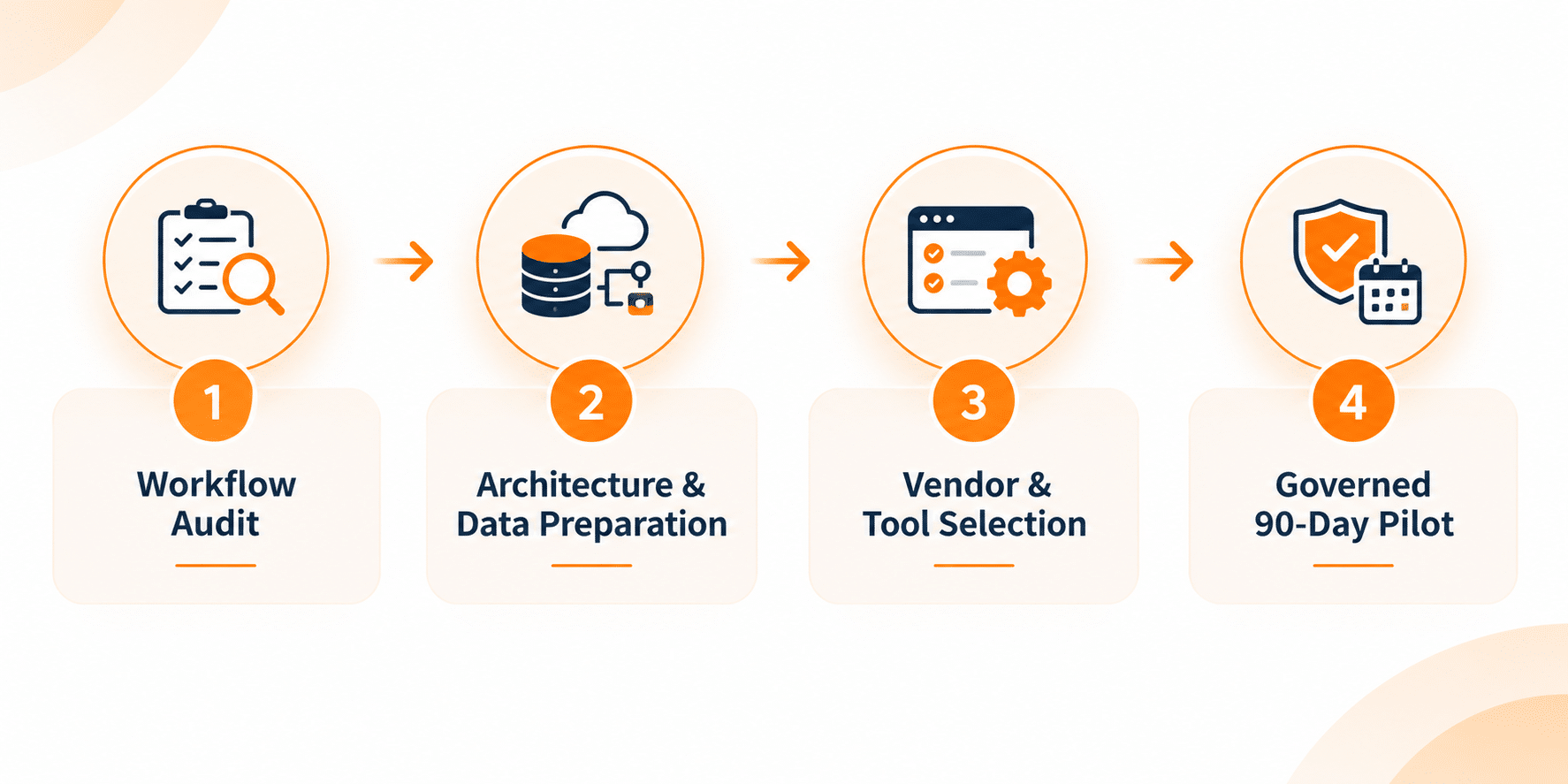
Executing a successful company initiative around AI adoption doesn’t require writing code—it requires defining business rules, establishing governance, and maintaining executive control over technical partners.
Step 1: Select the Appropriate High-Impact Process
Do not issue open-ended directives such as “use AI in customer service.” Rather, focus on one specific process that is simply repeatable with measurable success, such as “automate the process of entry and matching of standard vendor invoice data.”
Step 2: Analyze and Prepare Your Data Pipeline
Validate where your operational data is prior to purchasing software. Eliminate non-connected spreadsheets and establish secure API connections between your primary ERP systems, CRMs, and cloud storage.
Step 3: Consider Buying versus Building
- Pre-Built Applications: Sold software solutions meant to operate in specific platforms like Salesforce and HubSpot. Quick to implement but limited in its functions.
- Custom APIs: Customized solutions that work with your proprietary data and data security. Generally, used for better efficiency.
Step 4: Introduce a Governed Pilot within 90 Days
Start using the system in limited environments where human control will be in place. Monitor cycle times, error rates, and intervention rate before switching to autonomous operations.
Mitigating Risk: Security, Governance, and ROI Metrics
Even though on-demand AI business consulting offers greater adaptability than using an in-house executive, the leadership team must ensure three security and financial guardrails are in place
- The 3-Tier Security Guardrail Model – Enforce all of the deployed AI applications to function within the regulations of the Role-Based Access Control (RBAC) method, implement Zero-Data-Retention (ZDR) enterprise APIs, and implement sandboxed execution environments.
- Preventing Execution Risk – An untested AI system executing software commands can inflict much worse damage than a simple chatbot providing the wrong answer. Rigorous tool vetting and ensuring human approval of spending decisions above a certain threshold are vital.
- Establishing Baseline ROI Metrics – Determine the ROI before extending the project.
Frequently Asked Questions (FAQs)
A general IT consultant works with conventional IT hardware, helps in maintaining workstations, and does basic software installations, while an AI technology consultant specializes in artificial intelligence business solutions involving data pipelines, machine learning model implementation, work automation, SaaS due diligence, and specific compliance rules.
Engagement structure provides flexibility in terms of operations. Audit and technology strategy are priced based on fixed price for the overall project while the ongoing fractional CTO service is billed on the basis of retainer. When compared to total salary and equity responsibility of an overall executive, a fractional service model helps companies to save around 60% to 70% of annual service costs.
In general, technical planning takes two to four weeks and implementation requires anywhere from six to twelve weeks depending on the existing complexity of the data system.
🚀 ACCELERATE YOUR AI STRATEGY
Stop experimenting with unvetted software vendors. Start scaling with clear technical direction.
Schedule a tailored walkthrough with our principal technical architects to evaluate your technology stack and identify high-impact automation opportunities.