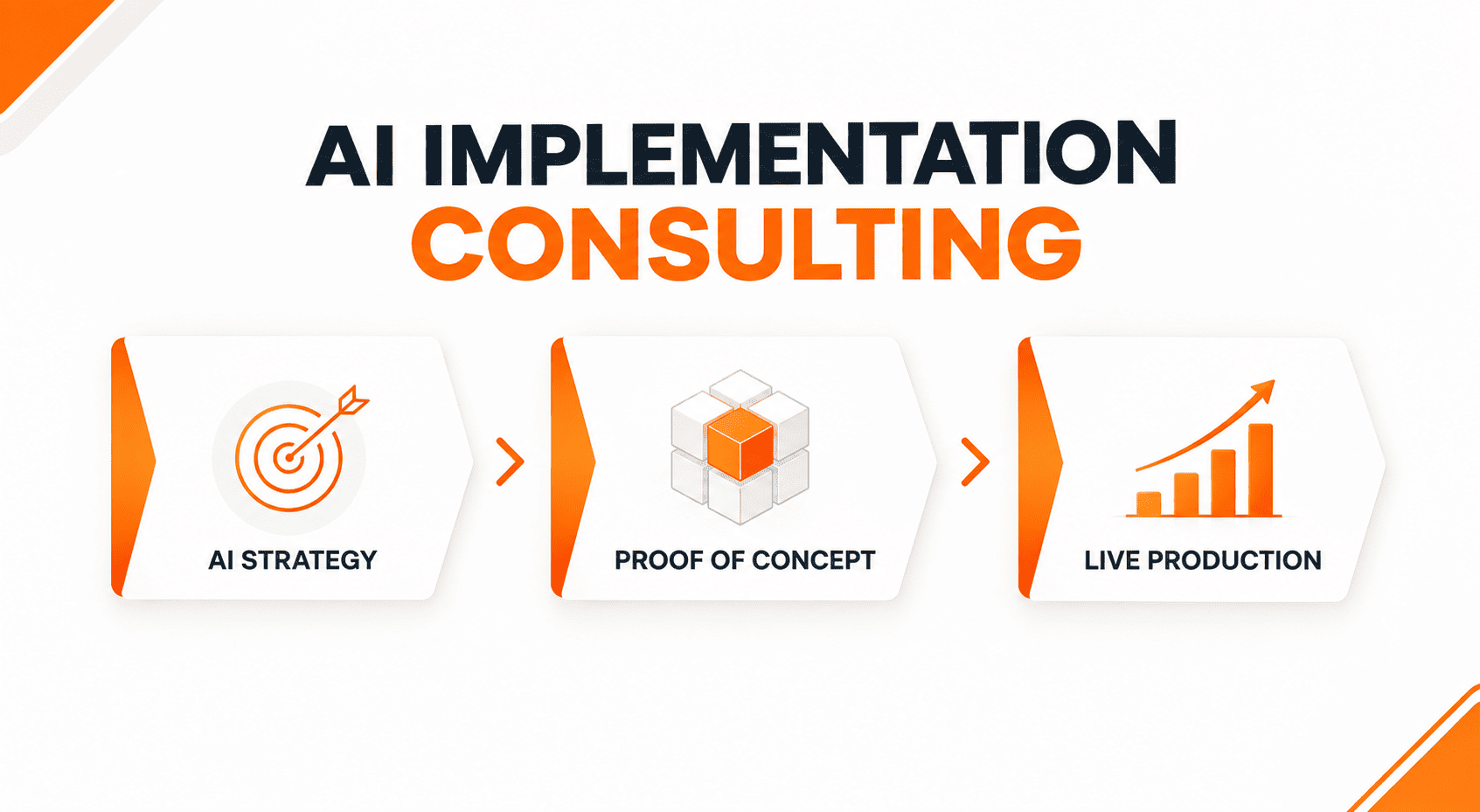
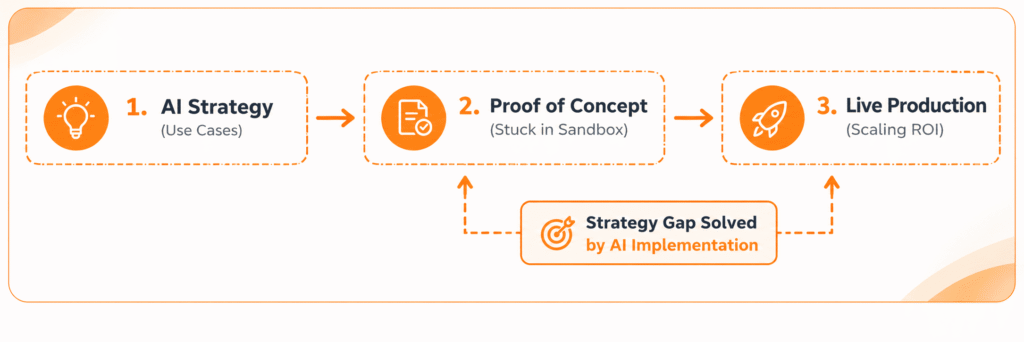
Most artificial intelligence initiatives fail to move beyond the experimental stage. Despite spending significant resources on proof-of-concept, the results remain in a testing phase as they cannot process real-time data, integrate with legacy systems, or gain the trust of the workforce.
AI implementation services help solve this issue by helping companies integrate AI technologies into their operations successfully. While typical consulting agencies focus on identifying possible cases for AI deployment, specialized AI implementation services offer actual AI technologies, enabling firms to build infrastructure, secure data channels, clean data pipelines and integrate custom models into everyday work.
According to market research, enterprises continue to spend money on AI, yet Gartner estimates indicate that up to 80% of AI projects fail to bring the expected return on investment due to the technology’s limitations and compliance issues. Closing the gap enables companies to achieve results instead of sticking to static presentations.
“The world of enterprise software is going to get completely rewired… You can’t simply implement a technology and be done. Success means having hundreds of technology-driven solutions working together across your enterprise to lower unit costs and generate real value.”
— Marc Benioff, Chair & CEO, Salesforce
Why AI Strategy Fails Without Implementation Expertise
Brainstorming automation use cases is straightforward. Deploying a custom model into a live enterprise ecosystem—where it must process thousands of daily requests without crashing or violating privacy protocols—is where organizations encounter massive operational friction.
Traditional advisory firms often leave a critical execution gap between planning and technical execution
| Capability Layer | AI Strategy & Advisory | Standard Off-the-Shelf Tools | Production AI Implementation |
| Primary Focus | Concept mapping & roadmaps | Text generation & quick tasks | System integration & workflow automation |
| Data Interaction | Theoretical use cases | Isolated prompts & upload files | Live enterprise databases & REST APIs |
| System Access | Static slide decks | Single-interface web apps | Connected CRMs, ERPs, & SQL servers |
| Operational Impact | Low (planning phase) | Medium (individual task aid) | High (scalable bottom-line ROI) |
Three points of failure persistently meet corporate executives who do not have engineering experience in the field of implementation and deployment
- Data Infrastructure Disruption
Machine learning models need correct, structured, and regulatory-compliant data points. Messy internal databases can lead to incorrect results and model drifting as well as make the system unsound. - Issues with Legacy Software
A system based on outdated IT architecture may not possess the required API for data streaming and functioning of the model. - Resistance to Change
Employees tend to stick to familiar working modes if software is not user-friendly, causing disruption in operations.
Professional AI consulting services do more than just provide companies with advice; they develop actual data pipelines, implement Role-Based Access Control (RBAC), ensure compliance with SOC2, and train the workforce to familiarize them with the software.
Technical Stack Architecture: The Production Foundation
Transitioning from experimentation to operational implementation needs strong technical architecture. Professional ai implementation teams build advanced structures for consistent operation.
- Data Processing & Assimilation: Processing and obtaining data through tools like Apache Kafka and AWS Glue to ensure data goes through the cleansing process before it reaches the model.
- Vector Databases & Retrieval (RAG): Using vector databases (like Pinecone, Qdrant, or pgvector) to create corporate memories while keeping private information from public models.
- API Gateways & Middleware: Creating dependable REST and GraphQL APIs that manage the interaction between AI models, proprietary apps, and the main platforms of the company (SAP, Salesforce, Shopify).
- Orchestration & Framework: Implementation of public and business orchestration solutions (like LangChain, LlamaIndex, or internal Python microservices) through Kubernetes clusters.
Core Framework: Moving from Concept to Live Production
Achieving a predictable return on investment requires a structured, four-phase execution model designed to mitigate risk and accelerate operational rollout.
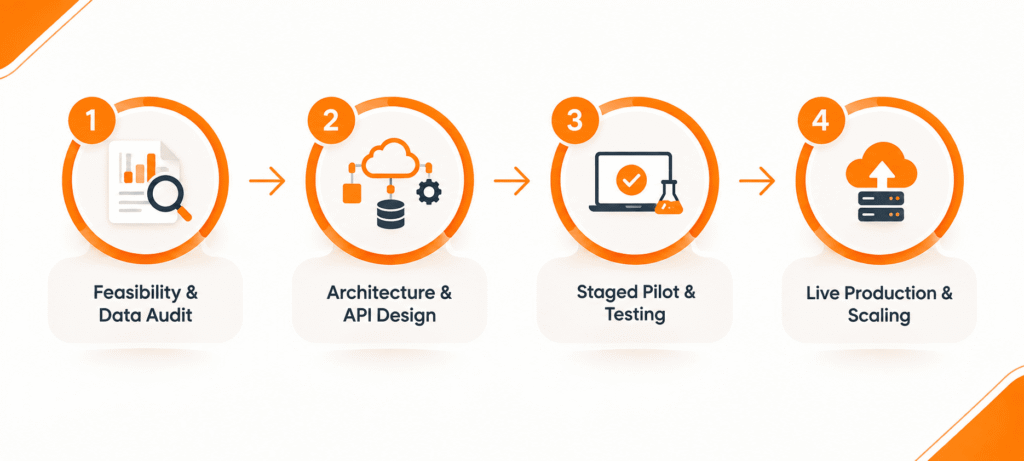
Step 1 – Evaluation of Data and Feasibility
In this initial stage, data quality is examined, current systems are assessed, and operational problems are discovered. The main goal in this step is to make certain that the technical experts are concentrating on only those systems that generate high impact and utilize clean data.
Step 2 – Data Structure and API Development
In this phase of the approach, secure data channels and various middleware applications are designed. Experts develop the required API connections to enable smooth integration of neural network algorithms into the existing system without interruptions during operation of the networks in place.
Step 3 – Trial Implementation and Testing
The team develops a test model that operates in a sandbox environment. Security measures, testing of various extraordinary situations as well as checking latency are employed before the approval for changes to be made to live systems is granted by the relevant authorities.
Step 4 – Implementation and Ongoing Monitoring
The developed solution is put to operation together with automated monitoring tools. Engineers create real-time error recording, performance monitoring, and staff training activities to ensure efficient deployment of the software product.
💡 Is your technology stack ready for live AI production?
Don’t let high-potential projects get stuck in the sandbox. Schedule a complimentary audit with our strategy and engineering team to evaluate your data readiness and isolate your top 3 high-impact deployment opportunities.
Creating Tangible Returns on Investment Across Crucial Sectors
Customized ai implementation consulting optimizes business practices, removes manual processing obstacles, and helps minimize transaction expenses across all essential areas of business.
- Supply Chain and Inventory Planning: Customized solutions analyze previous purchase patterns, seasonal changes, and supplier turnaround to accurately predict inventory requirements, thus significantly reducing holding costs.
- Ultra-Specific Client Services: Integration of smart models directly into your client relationship management system allows for resolving complex client issues autonomously, thus letting your customer support staff focus on dealing with important clients.
- Adaptive E-Commerce Pricing Systems: Use of machine learning systems makes it possible to scrutinize market demand, actions of competitors, as well as target prices in real time, and automatically alter prices of products accordingly.
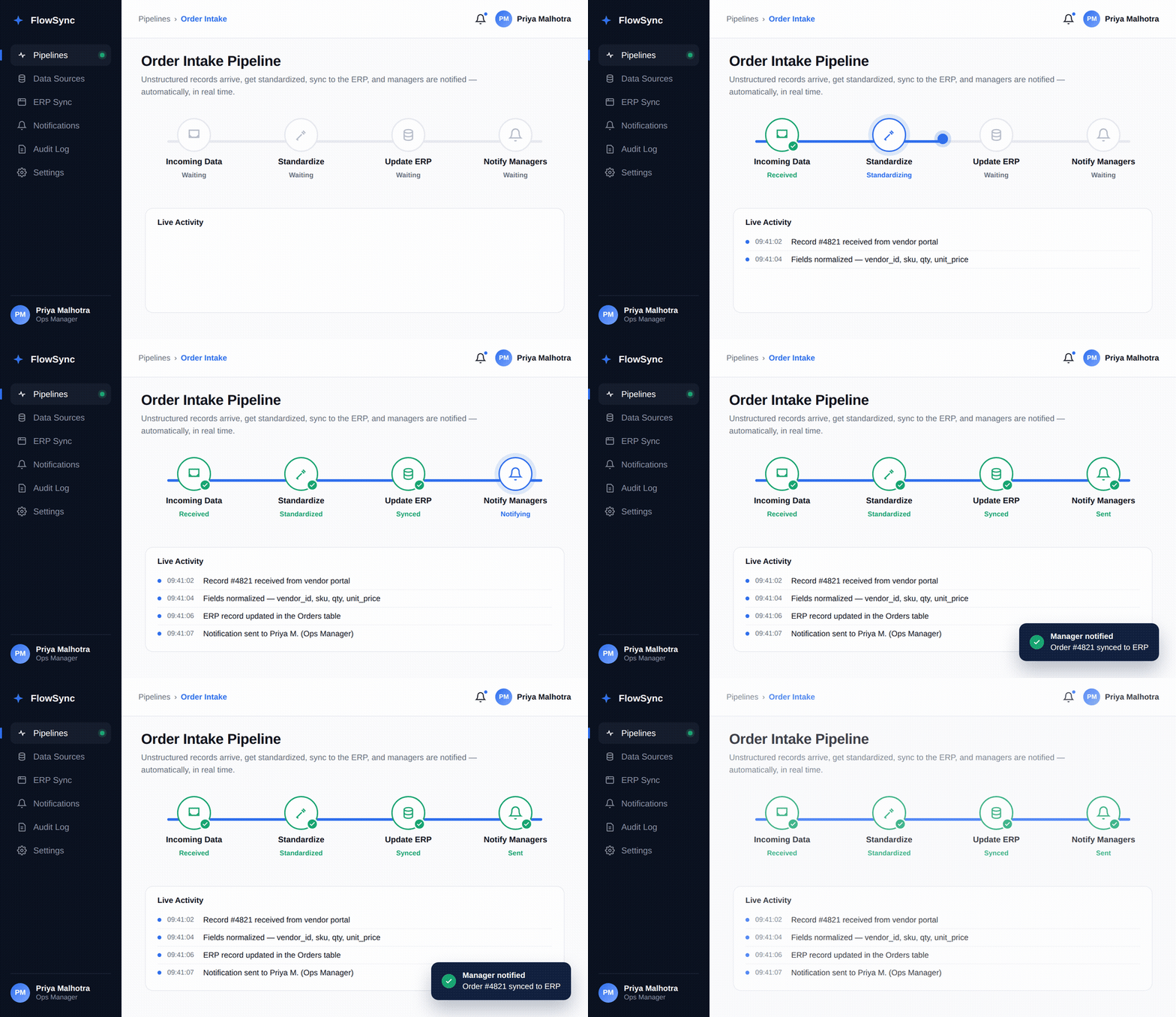
In a recent deployment, we helped a mid-market distributor cut manual invoice processing costs by 64% by building an automated API reconciliation pipeline between their OCR engine and ERP software. [Read our case study →]
Frequently Asked Questions (FAQs)
AI strategy identifies possible areas in which automation or prediction tools can provide value to a business while AI implementation means that a technical infrastructure needs to be set up, data pipeline needs to be cleaned, APIs integrated into the operating system, and operations managed.
About eight to twelve weeks to get pilot solutions ready for production since implementing AI across various business divisions might take 3 to 6 months and depends on the system complexity.
No, since professional AI consulting services create custom APIs and other plug-ins that incorporate AI technology into existing software such as CRM, ERP, or e-commerce platforms.
One should monitor the following KPIs before and after the deployment: cycle time, costs of transaction processing, error percentage, and human intervention rate, as successful implementations make ROI calculable within six to twelve months.
Transform Your Strategic Vision Into Live Infrastructure
Stop letting high-potential automation ideas stall in testing. Partner with our engineering team to build secure, scalable solutions that integrate directly into your daily operations and drive bottom-line growth.
📞 Transform Your Business Operations
Stop experimenting. Start scaling. Schedule a tailored walkthrough with our technical architects to explore live deployment frameworks built for your enterprise.