In the present time’s brisk-paced corporate landscape, being competitive implies producing more with lower inputs. If you intend to understand AI automation services better because you are searching for ways to scale business activities, get rid of manual mistakes, and allow your workforce to take part in high-profile strategic growth exercises, then you should note that currently available research shows that the large majority of corporate structures have turned to
AI for one of their basic operations. But despite the fact that AI technology is well established by now in the corporate world, transitioning the businesses to the next level, which means practicing the advanced profit-and-loss analysis is still the main challenge for many growing businesses.
Efficient scaling of business activities involves not only employing the ready-made software solutions, i.e., the software you can just buy and utilize in your working process but also requires the serious redesigning of the very architecture of the existing system.
What Are AI Automation Services?
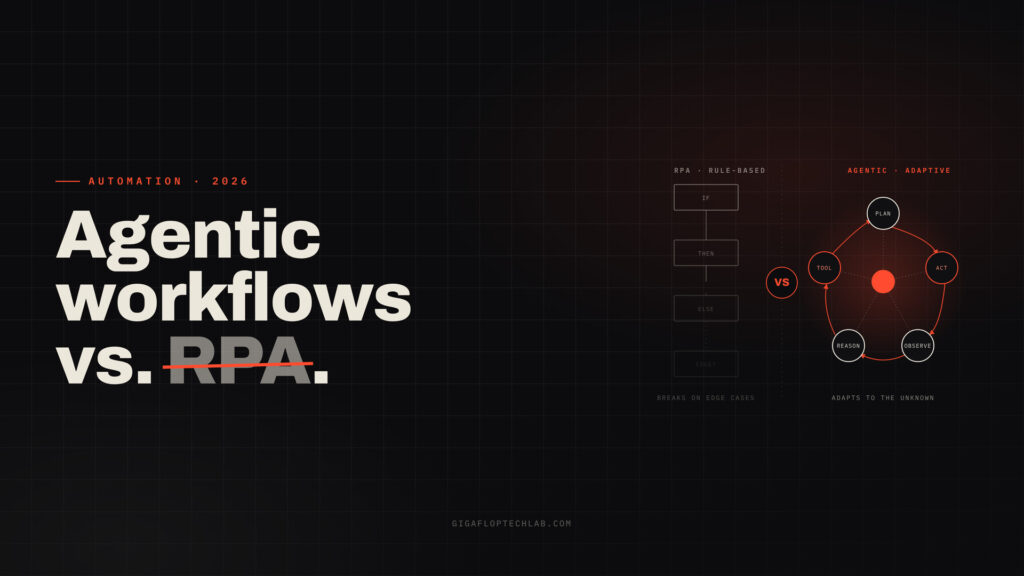
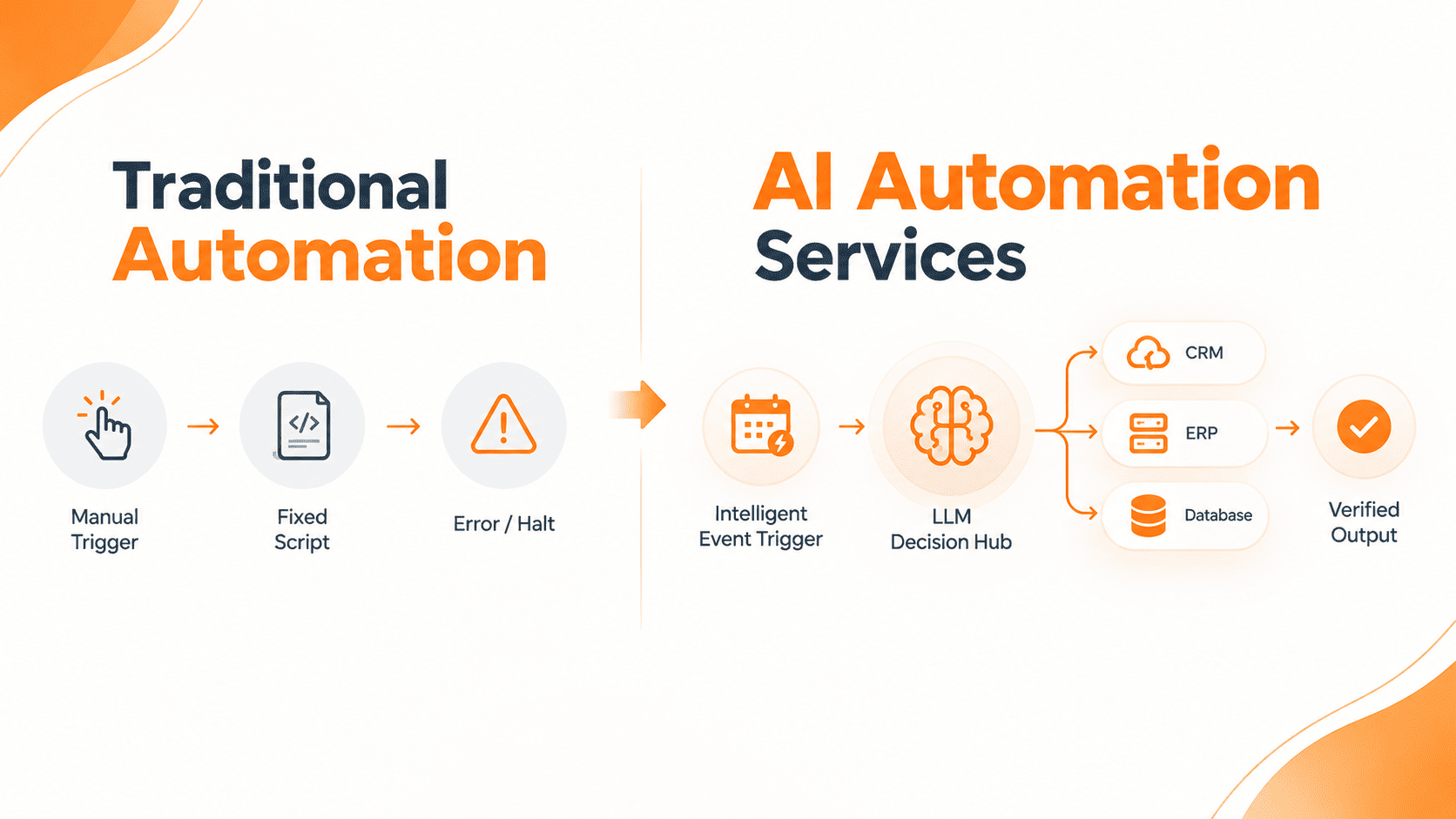
Automation services with AI use machine learning, natural language processing, and advanced robotics process automation technology to solve complex tasks requiring intelligence. Unlike traditional systems, which operate based on a fixed set of pre-defined if-then conditions, modern AI systems can learn from data, adapt to the circumstances, and solve unstructured problems such as non-formatted emails, scanned invoices, and live chats with customers.
Regardless of whether you own a growing company, run logistics, or manage a big e-commerce site, choosing an ideal AI automation service provider can improve your day-to-day operations and boost your revenue.
As NVIDIA CEO Jensen Huang noted when discussing the integration of autonomous enterprise systems and digital labor
“Future workforces in enterprise will be a combination of humans and digital humans… Our company’s IT department is going to be the HR department of digital employees of the future.”
Why Modern Organizations Require an AI Automation Consultant
The process of deploying enterprise-grade AI is typically not one that is merely plug-and-play. Picking the wrong infrastructure or hastily rolling out AI can create wasted costs, as well as internal resistance. This is where an experienced ai automation consultant or specialized ai automation firm becomes beneficial.
An expert partner helps your management team
- Detects major operational bottlenecks in its current processes.
- Identify appropriate AI solutions, database vectors, and software components for its individual requirements.
- Integrate AI systems into its current CRM, ERP, and customer support systems without problems and without compromising security.
- Stay compliant with privacy, security, and governance regulations at all times.
According to insights published in the McKinsey State of AI Report, organizations that successfully scale AI integration are significantly more likely to redesign underlying business workflows and rely on cross-functional partnerships rather than treating AI as a standalone IT experiment.
Core Operational Benefits and ROI
With the implementation of intelligent automation, you can enjoy significant, tangible benefits right across your organization.
- Huge Time Savings – Get rid of the tiresome manual tasks involved in data entry, accounts payable invoice processing, and inventory synchronization so that you can concentrate on customer experience. Research indicates that automation can save from 15 to 25 hours a week on every task.
- Significant Reductions in Errors – Minimize human errors during tedious processes such as data reconciliation or order routing error rates can be reduced by as much as 85%.
- 24/7 Scalability – Increase your capability to deal with any level of requests and orders as you don’t need to increase your workforce.
Ready to see similar efficiency gains in your supply chain or customer service operations? Explore our complete case study library to see how peer organizations scaled with our AI automation agency.
High-Impact Business Use Cases Across Departments
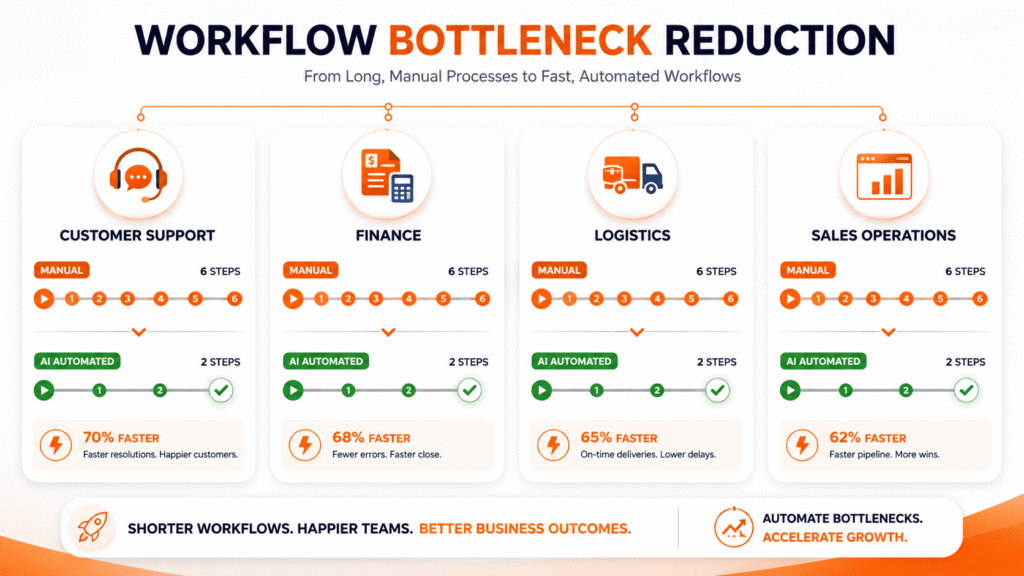
The area of rapid return on investment enterprises is the focused processes that can be measured where friction from manual labor is removed through the automation of the process by using AI tools.
- Customer Support and Service Automation Systems – Artificial intelligence helps to determine customer identity and history in an automatic way and check order delivery status and return of the product as well as credit notes issued using accounting solutions.
- Finance and Operations Limitations – There are pipelines that can analyse different types of documents like invoices and check bank statements and compare them with each other. If there is any discrepancy in the document, the program will reveal where the error occurred and prepare explanation documents.
Logistics and Supply Chain Monitoring – In the case of a carrier’s delay, the agents know what to do in order to inform customers about the situation and make adjustments to the inventory process in a very effective way. your supply chain or customer service operations? Explore our complete case study library to see how peer organizations scaled with our AI automation agency.
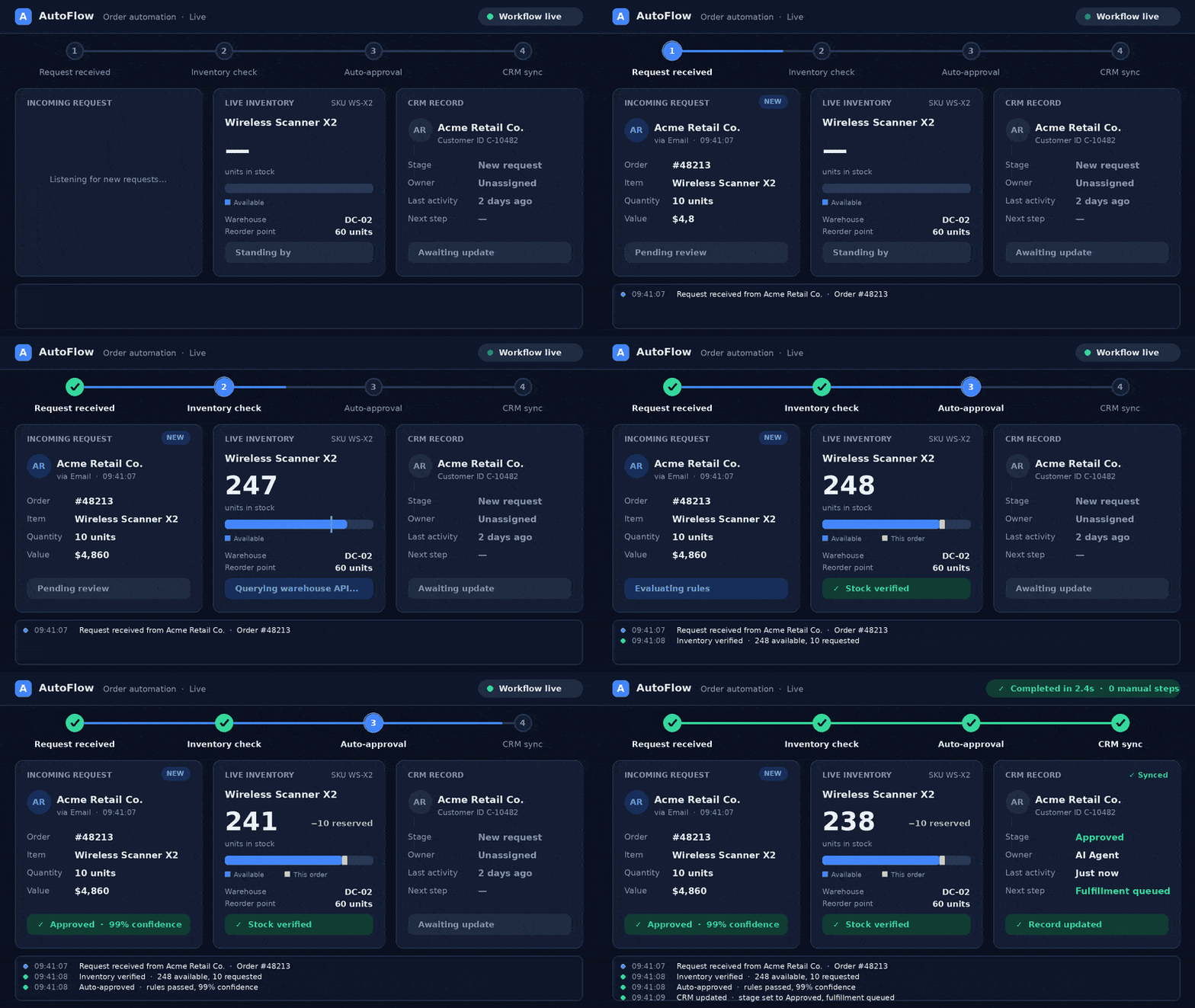
How to Get Started: A 4-Step Executive Roadmap
The integration of artificial intelligence as part of a company’s operating processes can be challenging. What makes this process easier is executing certain steps
1. Perform a Workflow Audit – Analyze the current operational workflow to identify any tasks that take too much time and are too reliant on human operators in the process of moving data from one place to another.
2. Choose One Application – Attempt to apply AI technology in only one area of your operations, such as customer services or invoice processing.
3. Set Real Limits – Ensure that strict controls are implemented that regulate the way the company’s employees make transactions.
4. Evaluate Outcomes – Measure the effectiveness of this application using criteria such as processing speed, error rates, and savings.
Frequently Asked Questions (FAQs)
Standard automation operates with strict and pre-established guidelines. AI automation, on the other hand, utilizes machine learning and natural language processing technology enabling systems to gain awareness of context, work with unstructured data, and make decisions independently.
The time needed for implementation depends on how sophisticated the system is. Easy workflow integrations can take between 2 and 4 weeks to implement, while corporate-level systems will take approximately 3 to 6 months for implementation.
Definitely not. AI was made to fulfill simple and repetitive tasks, ensuring your employees will focus on much more complicated and creative work.
Ready to Transform Your Operations?
Stop letting manual workflows slow down your business growth. Discover how our tailored AI solutions can drive efficiency and lower operational costs.
Book a free 15 min call to see how our AI automation services can work for your business.