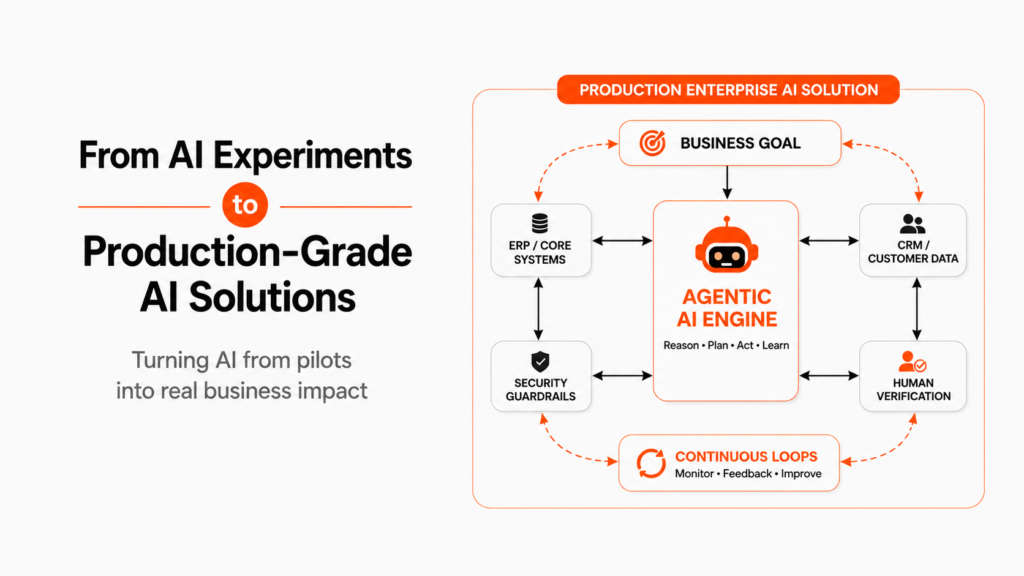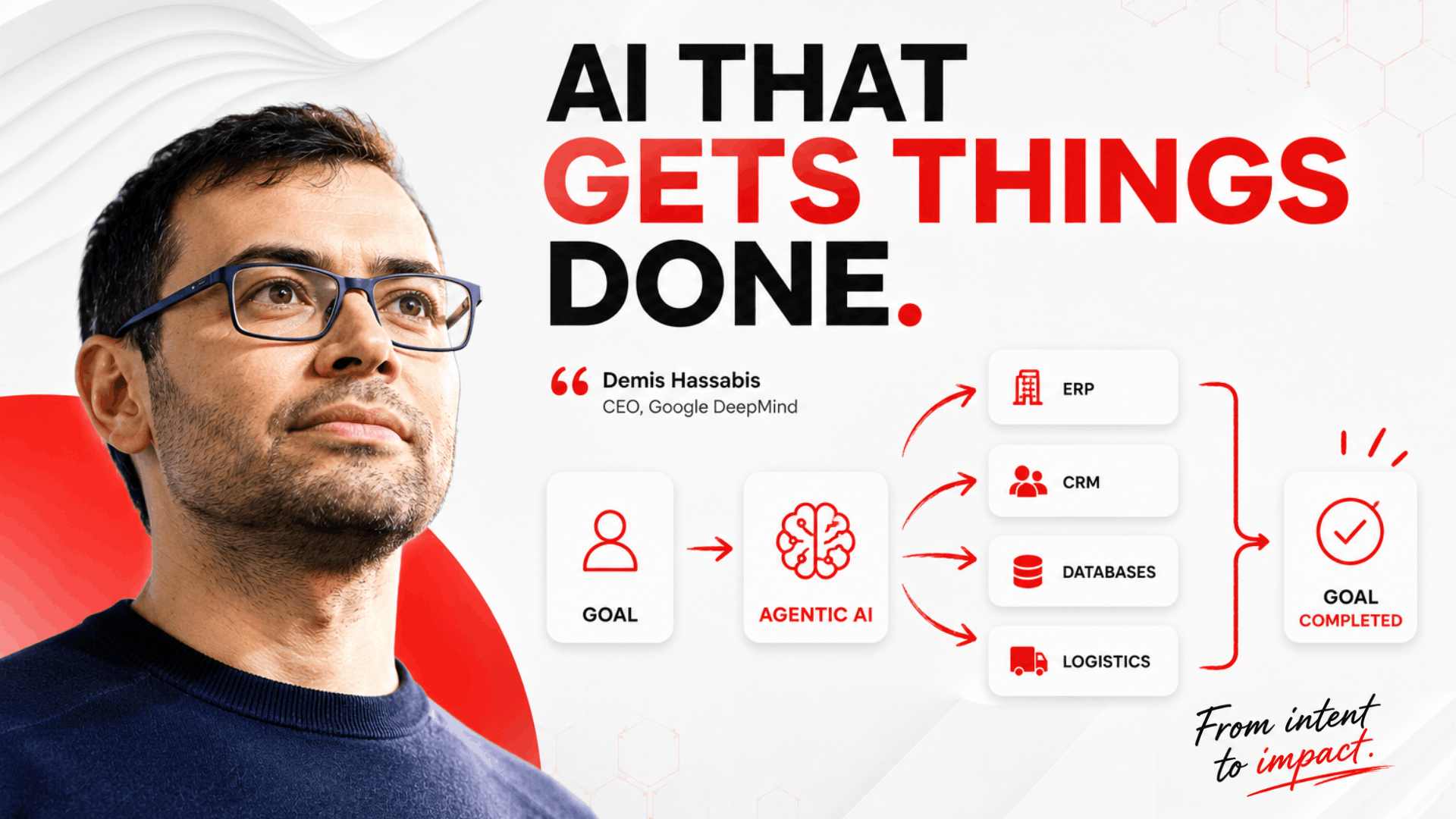
Generative AI changed how professionals write, copy, analyze documents, and generate code. Agentic AI represents the next paradigm shift: moving from passive, prompt-based chat assistants to goal-driven systems that plan, reason, and execute operations across enterprise environments autonomously.
While standard generative AI tools require constant human intervention at every step, autonomous AI agents act on high-level objectives. They break down complex targets into logical sub-tasks, interface directly with company databases and software APIs, correct their own execution errors, and complete end-to-end workflows with minimal supervision. Gartner projections show that by late 2026, 40% of enterprise software applications will feature embedded agentic capabilities.
As industry analysts at McKinsey & Company note regarding the current state of automation:
“The transition from prompt-driven generative tools to agentic systems transforms AI from a personal drafting assistant into an operational workforce multiplier capable of managing enterprise-scale workflows.”
This executive guide breaks down what agentic AI is, how it differs from traditional automation, where top organizations deploy AI agents for business, and how to safely implement autonomous capabilities in 2026.
Generative AI vs. Agentic AI: Key Differences
To understand the practical impact of agentic AI, executives must look beyond conversational interfaces and evaluate system execution layers.
| Capability Layer | Traditional Rule-Based RPA | Generative AI Assistants | Agentic AI Systems |
| Logic Basis | Rigid if/then decision scripts | Large language models (LLMs) | Goal-driven agentic AI loops |
| User Input | Hardcoded system triggers | Conversational prompts & text requests | High-level objective definition |
| System Access | Surface UI recording & screen scraping | Isolated text generation & vector search | Deep read/write API access across software |
| Autonomy Level | Low (breaks on minor UI shifts) | Medium (human must trigger each step) | High (autonomous AI agents with guardrails) |
Unlike legacy script automation that fails when a software interface changes, an agentic AI system operates on an active feedback architecture:
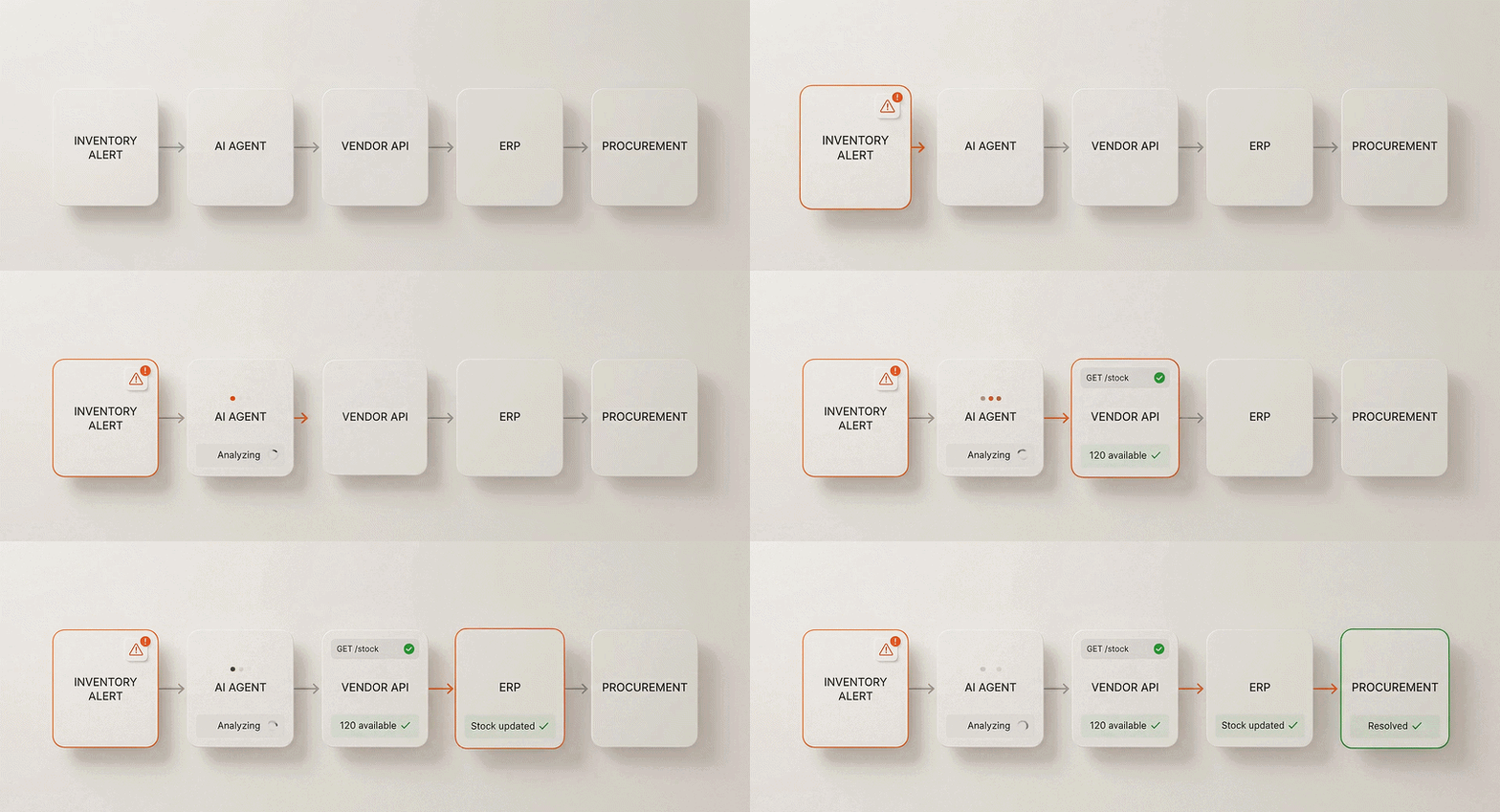
- Perceive: The agent processes an operational goal (e.g., “process an emergency inventory reorder”).
- Reason & Plan: It analyzes available data, breaks the task into sequential steps, and selects the required software APIs.
- Act: It executes real actions—querying warehouse databases, verifying vendor pricing, and generating purchase orders.
- Reflect & Adapt: It evaluates execution success against compliance rules, corrects minor errors, and escalates edge cases to human managers.
4 Foundational Capabilities of Autonomous AI Agents
Deploying AI agents for business successfully requires grounding strategy around four foundational technical pillars:
- Goal-Driven Autonomy: You set the intended outcome (e.g., “reconcile quarterly vendor discrepancies”), and the agent independently builds the execution pathway.
- Multi-Tool Orchestration: Agents connect natively to REST APIs, SQL databases, and internal enterprise tools to execute live read/write transactions.
- Persistent Memory & Context: Systems store short-term operational state while leveraging long-term corporate knowledge repositories to enforce policy rules.
- Human-in-the-Loop Governance: High-consequence decisions such as issuing financial disbursements above designated limits flag automatic approval requests to human personnel.
Is your enterprise tech stack ready for autonomous execution?
Don’t waste budget on unfocused pilots. Book a Free 15-Minute AI Readiness Audit with our technology leaders to pinpoint high-ROI workflows for agentic integration.
High-Impact Deployment Use Cases Across Organizations
Enterprises achieving measurable financial ROI deploy autonomous AI agents to eliminate high-volume operational bottlenecks across key functions:
1. Finance & Accounting Reconciliation
Instead of manually matching data lines, agents extract details from multi-page PDF invoices, cross-reference entries against ERP records, identify exact line-item discrepancies, and stage settlement batches.
2. Supply Chain & Inventory Optimization
When logistics disruptions happen, AI agents for business track carrier status feeds, update delivery forecasts in real time, adjust warehouse reorder thresholds, and notify key accounts proactively.
3. Customer Operations & Service Resolution
Agents verify user identity credentials, analyze purchase history in platforms like SAP or Salesforce, execute eligible return transactions, and update ledger entries without manual routing.
4. IT Service Management & Security Response
Agents monitor system logs, run automated diagnostic commands upon receiving incident tickets, execute routine account provisioning, and isolate security anomalies for analyst review.
[GIF PLACEHOLDER: PRODUCT WALKTHROUGH SCREENCAST]
When our engineering team designed structured agentic workflows for enterprise operations, we helped a mid-market enterprise cut manual invoice processing costs by 62% while maintaining zero compliance defects.
A Non-Technical Roadmap for Enterprise AI Deployment
Implementing agentic AI successfully does not require writing complex neural networks in-house; it requires establishing business parameters, API integrations, and risk boundaries.
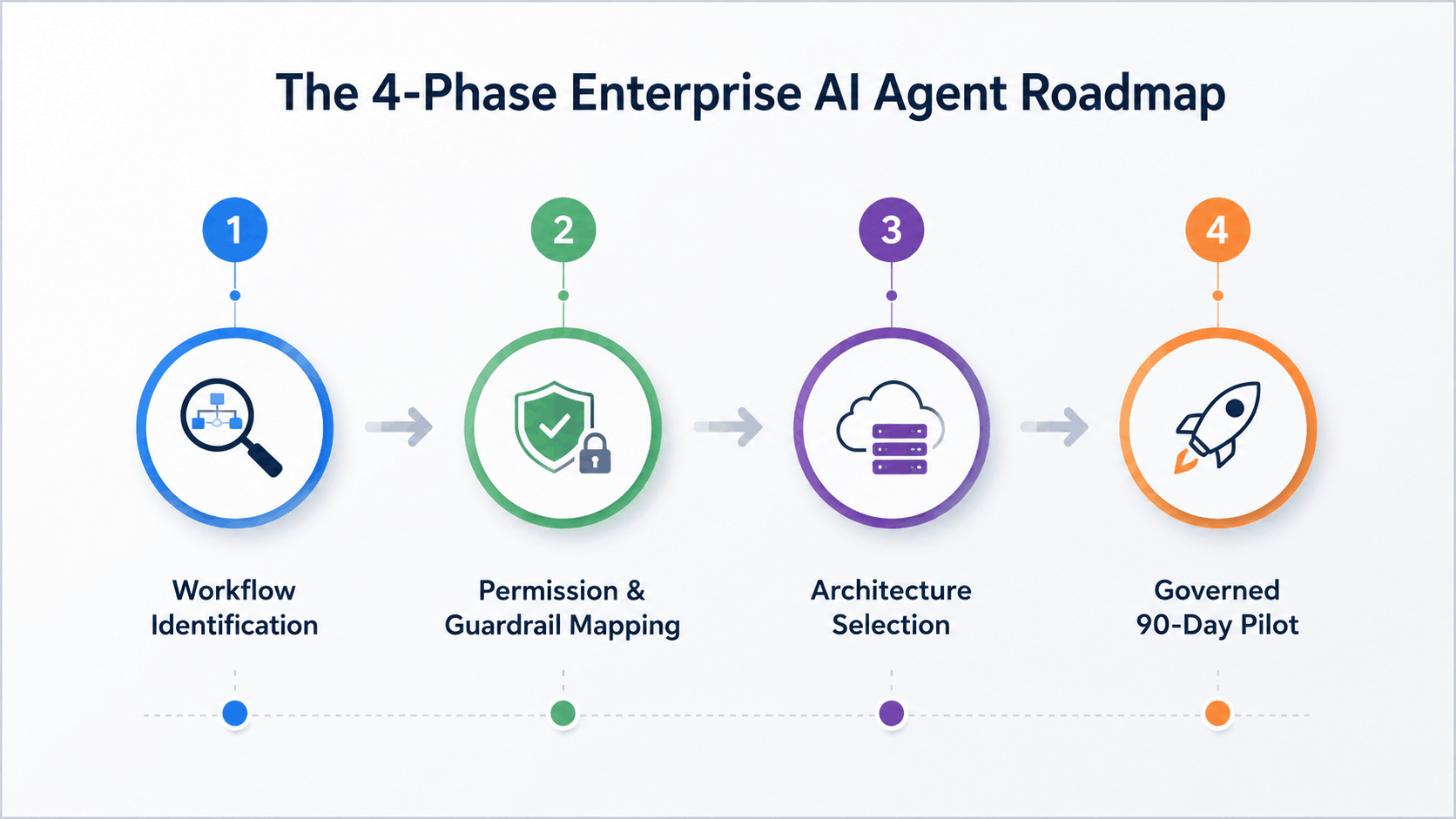
Phase 1: Target High-Frequency, Bounded Tasks
Avoid vague mandates like “automate back-office operations.” Focus on specific, repeatable processes with clear success criteria, such as “verify and route inbound supplier invoices.”
Phase 2: Define Granular Permissions and Boundaries
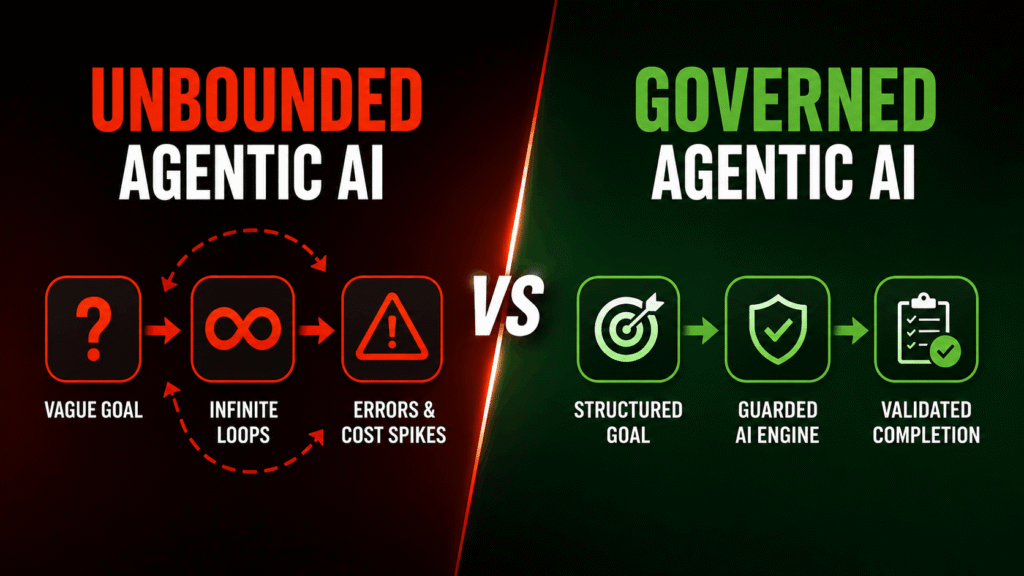
Establish strict Role-Based Access Controls (RBAC). Define precisely which databases autonomous AI agents can query, which fields they can write to, and which financial limits require human sign-off.
Phase 3: Choose Your Architectural Strategy
- Off-the-Shelf SaaS Agents: Pre-built agent modules embedded in platforms like Salesforce or ServiceNow. Fast to launch, but restricted to native platforms.
- Custom Enterprise Frameworks: Tailored AI agents for business integrated across your custom technology stack. Provides a defensible operational advantage and long-term scalability.
Phase 4: Execute a Governed 90-Day Pilot
Deploy AI agents for business alongside human teams. Monitor operational accuracy, processing cycle times, token costs, and human intervention rates before expanding autonomous execution authority. Review our detailed guide on building scalable enterprise integration pipelines to build a reliable architecture for AI agents for business and scale your deployment with confidence.
🚀 Accelerate Your Enterprise Agent Strategy
Ready to transition from passive tools to active operational execution?
Mitigating Risk: Security, Guardrails, and ROI
Deploying agentic ai requires proactive enterprise governance to protect operational integrity:
- Execution Guardrails: An agent performing incorrect software actions creates higher operational friction than a chatbot producing incorrect text. Enforce strict tool validation, sandbox environments, and execution step limits.
- Data Security & Identity Access: Enforce strict identity protocols for digital agents. Ensure every agent acts under isolated credentials with least-privilege permissions.
- Operational KPI Tracking: Monitor key metrics such as transaction resolution times, error rates, token expenses, and cost-per-transaction to prove financial payback.
Frequently Asked Questions (FAQs)
Generative AI produces content (text, images, code) in response to direct user prompts. Agentic AI evaluates goals, creates multi-step execution plans, uses external software APIs, and completes operational tasks autonomously.
Yes, provided they are deployed with strict governance structures, human-in-the-loop checkpoints for sensitive actions, role-based access controls, and comprehensive execution logging.
Initial proof-of-concept projects for single-function ai agents for business typically take 4 to 8 weeks. Comprehensive enterprise deployments involving multi-system integrations generally mature over 3 to 6 months.
No. Leadership can oversee operations using enterprise management platforms or collaborate with specialized development partners to manage integration, security, and infrastructure architecture.
Transform Your Operations with Agentic AI
The transition from passive software tools to agentic ai allows forward-thinking organizations to automate complex, multi-system processes while maintaining full governance.
Ready to move past simple chatbots and deploy high-impact digital workflows?