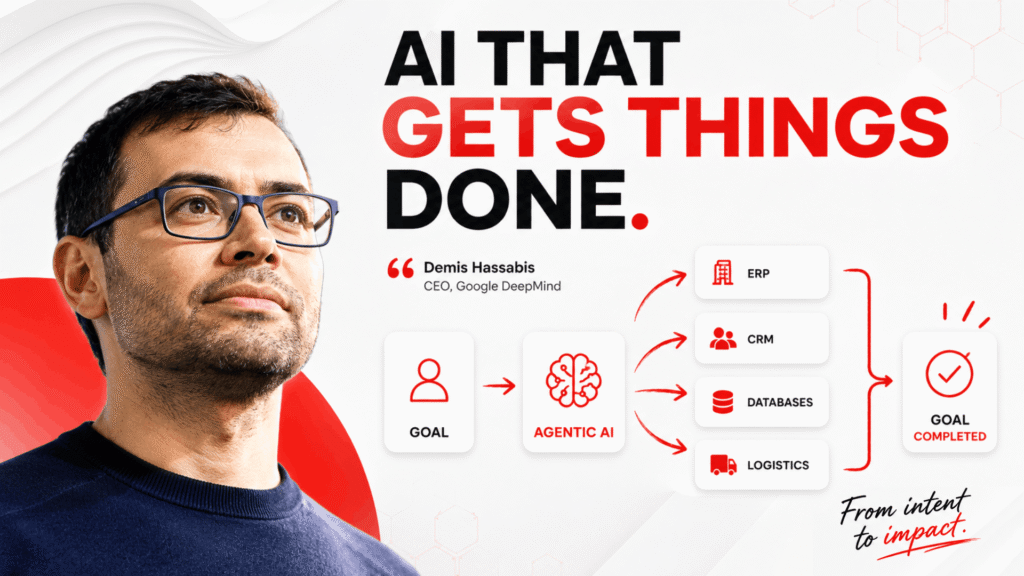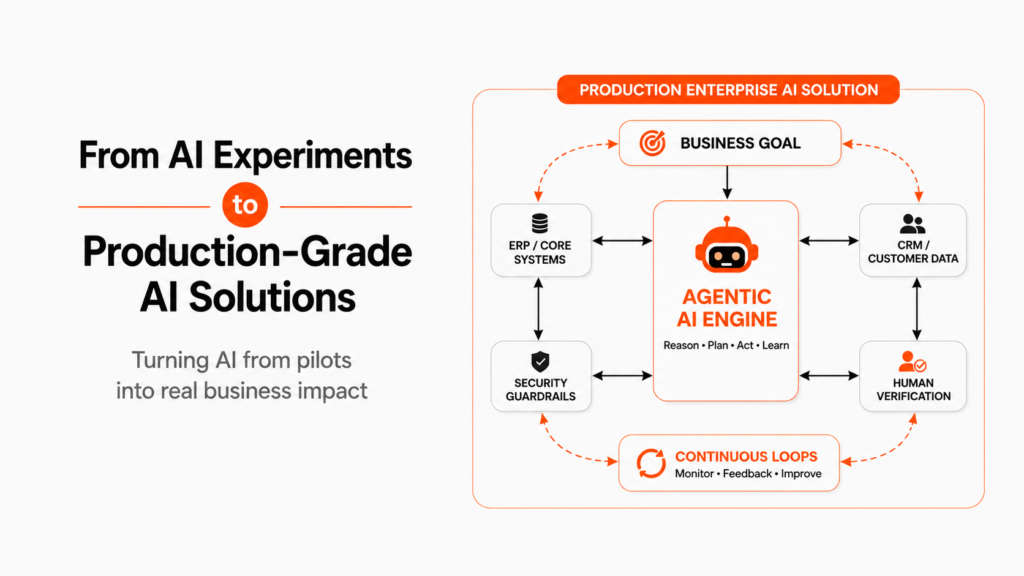
Generative AI proved that large language models can draft convincing copy and write code. However, agentic ai promises a much larger enterprise leap: autonomous systems that reason through multi-step goals, call external software APIs, and execute complex business operations without constant human prompting.
Yet, rapid innovation brings severe operational friction. Market research firm Gartner predicts that over 40% of agentic AI projects will be cancelled by 2027 due to spiraling costs, unclear business value, and inadequate risk controls.
Dario Amodei, CEO of Anthropic
“The biggest challenge with AI isn’t just making the technology more capable it’s figuring out how to deploy it safely and reliably in the real world.”
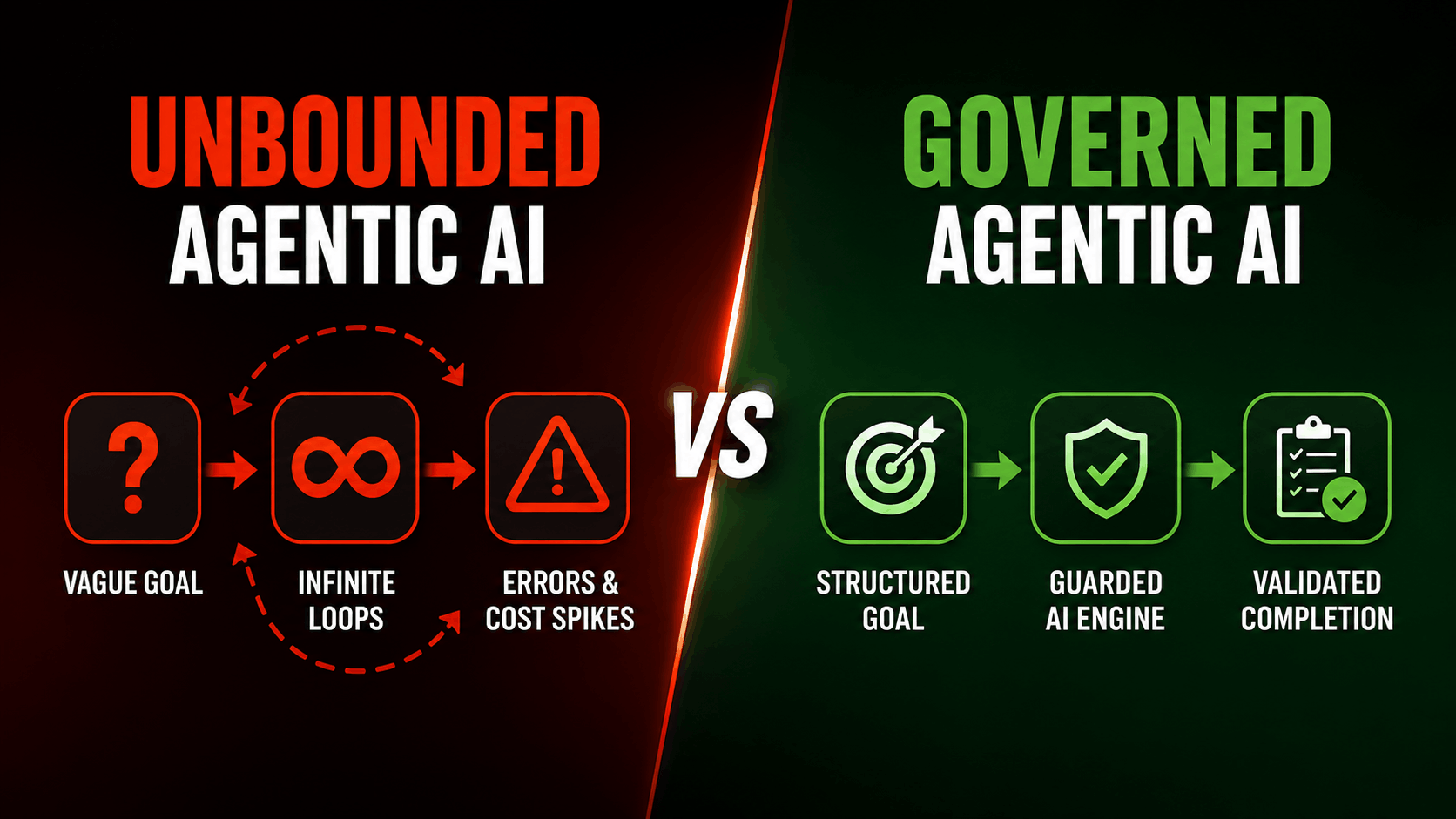
When autonomous agents fail, they don’t just generate incorrect text they execute wrong database updates, trigger unauthorized transactions, or loop infinitely while consuming expensive API tokens. Avoiding these pitfalls requires moving past vendor hype to build production-grade systems with strict governance, clear boundaries, and expert architectural oversight.
The 4 Root Causes Behind Agentic AI Cancellations
Understanding why enterprise pilots stall is the first step toward building an agentic AI system that yields long-term returns.
| Risk Vector | Ungoverned AI Agent Pilots | Production-Grade Enterprise Deployments |
| Execution Control | Open-ended reasoning loops with no step limits | Bounded autonomy with strict recursion guardrails |
| Data Governance | Unrestricted system-wide API credentials | Role-Based Access Control (RBAC) and data sandboxing |
| Cost Management | Unmonitored model calls leading to token bloat | Token budgeting, response caching, and SLA thresholds |
| Human Oversight | Zero validation checks until post-execution | Mandatory Human-in-the-Loop (HITL) triggers for high-risk actions |
1. The “Infinite Loop” and Token Cost Spikes
When an agent encounters an unexpected software error, its default reasoning loop may attempt to retry the task endlessly. Without hard execution limits, a single stuck workflow can consume thousands of dollars in API tokens in minutes.
2. Ambiguous Scopes and Vague Strategic Goals
Projects launched under general mandates like “automate customer support” quickly collapse under the weight of edge cases. Successful deployments narrow their scope to explicit, deterministic tasks before scaling capability.
3. Fragile API Integrations and Data Silos
An agent is only as reliable as the software systems it connects to. Organizations that rely on quick surface-level connectors or legacy screen scraping suffer broken workflows whenever downstream software updates its interface. Partnering with an experienced AI agent development company ensures your architecture is built on robust, authenticated REST APIs and webhooks.
4. Absence of Human-in-the-Loop Guardrails
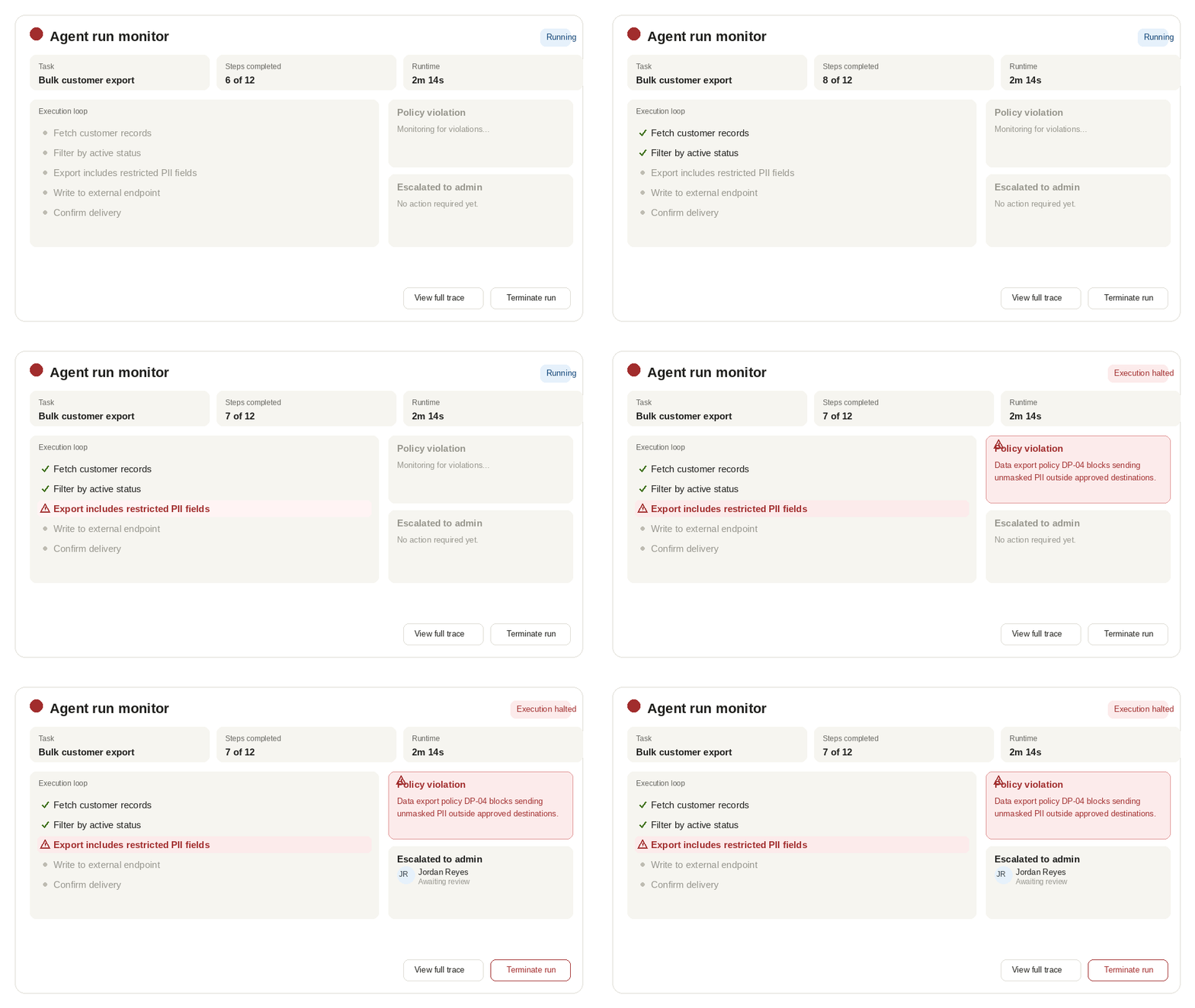
Allowing autonomous agents to modify core ERP records or issue customer refunds without threshold-based verification creates unacceptable financial risk.
💡 Is your organization risking a stalled AI pilot?
Avoid costly architectural re-writes. Book a Free 15-Minute AI Guardrail Audit with our strategy team to evaluate your API architecture and safety controls before full deployment.
4 Essential Pillars of High-ROI Enterprise AI Deployments
To ensure your agentic AI strategy delivers real business impact without exceeding budget constraints, focus on these operational principles:
- Define Bounded Autonomy: Assign clear financial and operational limits. For example, allow an agent to issue customer credits up to $150 automatically, but require manager approval for higher amounts.
- Implement Dual Memory Systems: Combine short-term execution memory (to track current multi-step progress) with long-term vector memory (to enforce corporate policy constraints).
- Establish Token and Latency Budgets: Set strict timeouts and maximum step counts per task run to eliminate runaway processing costs.
- Partner with Specialized Experts: Building custom reasoning architectures internally often strains engineering teams. Working alongside a dedicated AI agent development company accelerates deployment while embedding enterprise-grade security standards from day one.
When we redesigned the autonomous execution pipeline for an enterprise client, we helped a mid-market distributor cut manual invoice processing costs by 64% while maintaining a zero-defect rate in live financial reporting. Explore our AI Automation Case Studies
Strategic Roadmap: From Stalled Experiment to Live Production
Avoid the 40% cancellation statistic by following a structured four-phase implementation framework.
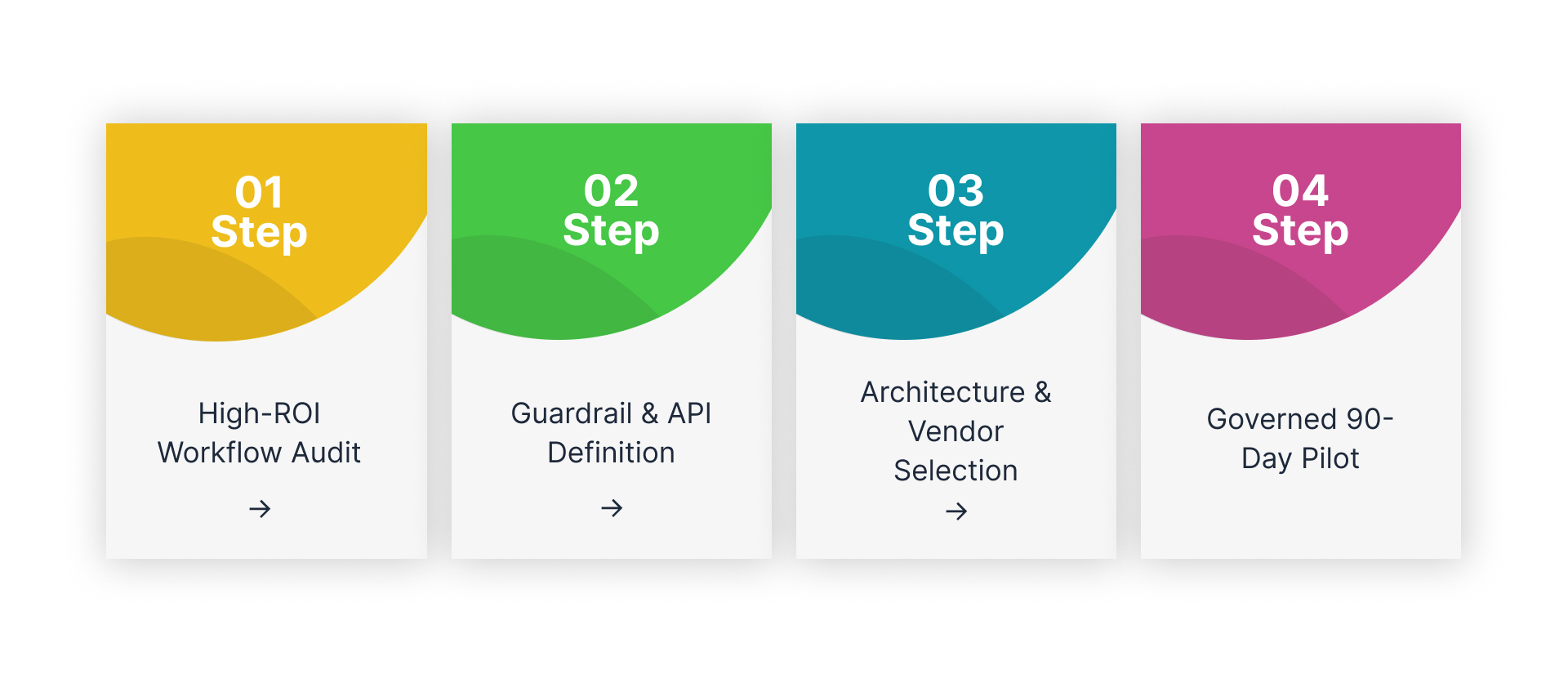
Phase 1: Select High-Volume, Low-Ambiguity Workflows
Focus on processes with structured inputs and clear outcomes, such as invoice reconciliation, IT ticket routing, or inbound lead qualification.
Phase 2: Mandate Role-Based Access Controls (RBAC)
Treat every digital agent like a human employee: assign specific system credentials, restrict database access to a read-only basis where possible, and audit every automated action.
Phase 3: Evaluate Custom vs. Off-the-Shelf Architecture
While pre-built SaaS agents offer rapid setup, complex operations often require custom frameworks tailored to proprietary software stacks. Explore our comprehensive guide to AI automation and learn how to choose between off-the-shelf and custom AI frameworks to determine the right approach for your organization.
Phase 4: Run a Sandbox Pilot with Real-Time Analytics
Run your agent in a staging environment alongside human workers. Monitor key performance metrics such as task accuracy, token consumption, execution latency, and human intervention rates prior to launching into live production.
Ready to Build Production-Grade AI Agents?
Don’t let your AI initiative become another failed pilot. Turn your highest-value workflow into a secure, scalable AI agent built for real business impact.
Frequently Asked Questions (FAQs)
Projects primarily fail due to skyrocketing computational and API token costs, lack of clear business scope, inadequate risk guardrails, and poor integration with enterprise software APIs.
Standard Generative AI responds to user prompts with text, code, or images. Agentic AI goes further by independently planning multi-step actions, using external software tools, calling APIs, and executing operational tasks to achieve broad business objectives.
A specialized AI agent development company brings proven architectural patterns, security guardrails, custom API connectors, and token optimization strategies, reducing deployment risks and accelerating time-to-market.
HITL frameworks require human approval whenever an agent encounters low-confidence scenarios, exceeds financial spending thresholds, or attempts high-risk operational steps (such as deleting data or issuing external payouts).
Build Reliable, High-ROI AI Agents Today
The difference between stalled AI experiments and scalable agentic AI systems comes down to operational governance, smart architectural design, and clear guardrails.
Ready to protect your AI initiatives and build enterprise agents that deliver proven business value?