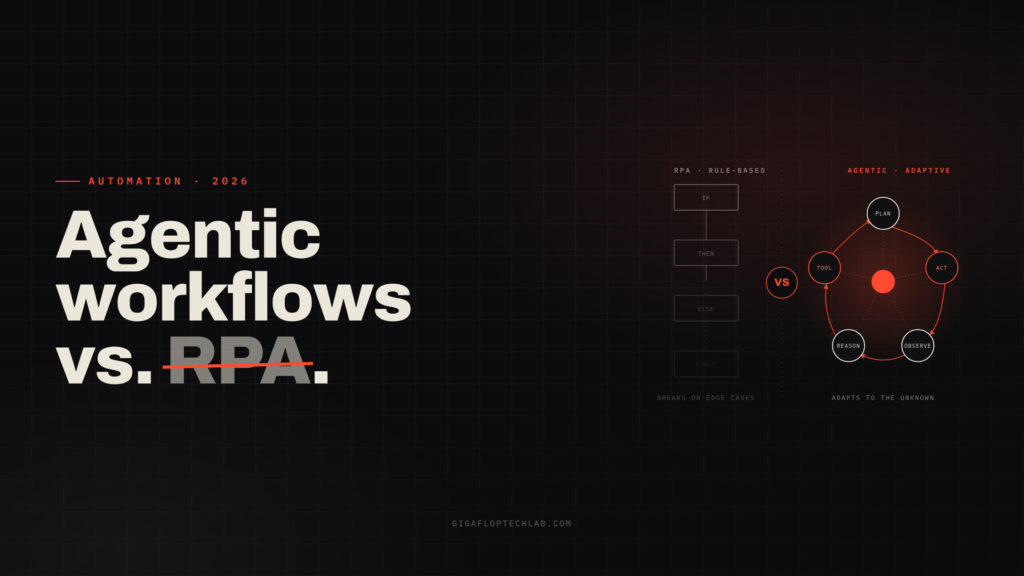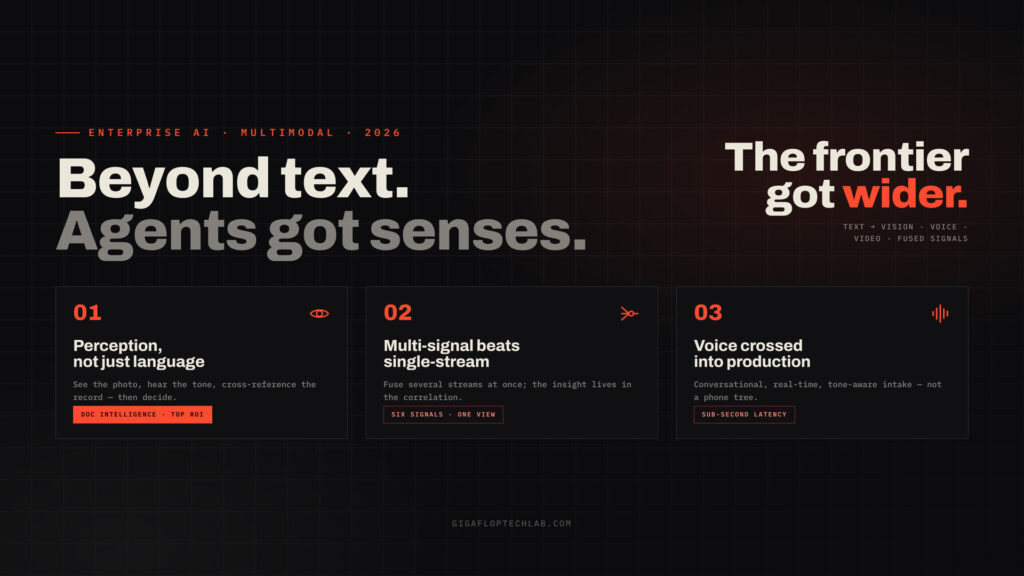
Generative AI brought natural language conversations to the enterprise. AI agents for business take the next leap: moving from simply answering questions to executing complex, multi-step workflows with full operational context.
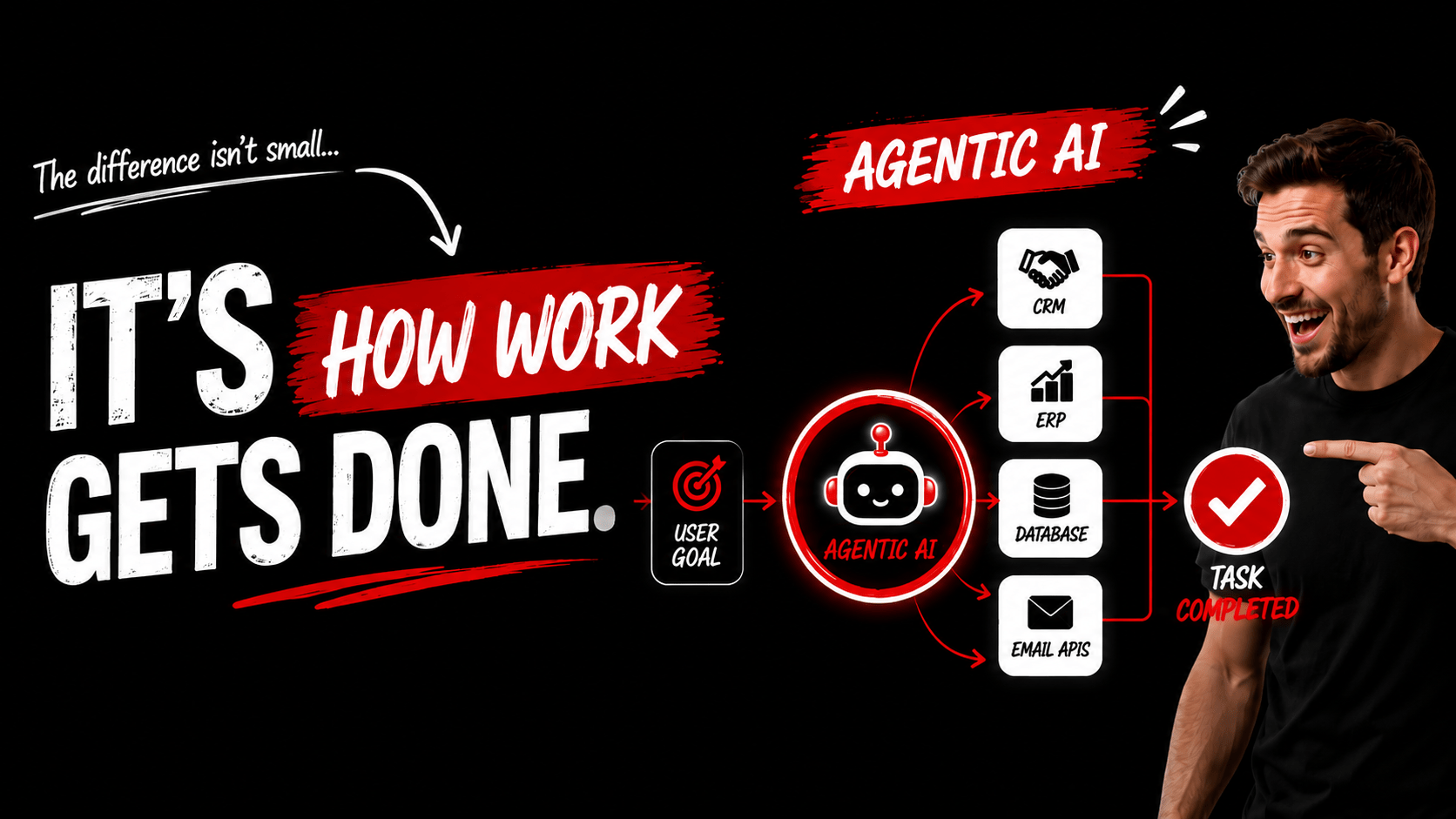
While standard LLM chatbots require constant human prompting at every turn, agentic AI systems evaluate strategic goals, plan multi-stage actions, connect directly with enterprise tools (CRMs, ERPs, databases), and complete tasks with minimal supervision. Market estimates show that by the end of 2026, 40% of enterprise applications will embed task-specific autonomous ai agents.
As Nvidia CEO Jensen Huang noted when describing the future of enterprise software:
“Future workforces in enterprise will be a combination of humans and digital humans… Our company’s IT department is going to be the HR department of digital employees of the future.”
This guide breaks down what autonomous AI agents are, how they create measurable enterprise value, where to deploy them, and how to approach AI agent development without getting bogged down in technical jargon.
Chatbots vs. AI Agents: What Is the Difference?
To understand how AI agents for business transform day-to-day operations, you first need to distinguish them from conventional automation tools.
| Capability Layer | Traditional Chatbots | Generative AI Assistants | Agentic AI Systems |
| Logic Basis | Rule-based (if/then decision trees) | Large language models | Goal-oriented agentic ai loops |
| User Interaction | Rigid option menus | Question and prompt responses | Direct objective inputs |
| System Access | Isolated knowledge bases | Text and code generation | Reads and writes across core software |
| Autonomy Level | Low (scripted branches) | Medium (human must trigger actions) | High (autonomous ai agents with guardrails) |
Unlike legacy chatbots that follow strict static paths, agentic ai architecture operates on a continuous feedback loop:
- Perceive: The agent receives an operational trigger or goal (e.g., “reconcile unpaid invoices past 30 days”).
- Reason & Plan: It evaluates available data, breaks the objective into logical sub-tasks, and selects appropriate software tools.
- Act: It executes operations querying databases, updating CRM records, issuing customer communications, or calling external APIs.
- Reflect & Adapt: It verifies whether the outcome met the initial goal, corrects errors, and escalates edge cases to human managers.
4 Core Capabilities of Autonomous AI Agents
To deploy autonomous ai agents effectively, business leaders should focus on four foundational capabilities:
- Goal Orientation: You define the desired outcome (e.g., “qualify inbound sales leads”), and the agent determines the exact multi-step process to achieve it.
- Tool Usage: Agents interact directly with software APIs, database connectors, and web interfaces to extract data and trigger real-world actions.
- Memory & Context Retention: Systems maintain short-term execution state and pull long-term enterprise memory to maintain corporate compliance.
- Human-in-the-Loop Oversight: High-stakes actions (such as approving supplier refunds over $1,000) are flagged for human review before execution.
Is your technology stack ready for agentic automation?
Don’t spend months experimenting without clear ROI. Book a Free 15-Minute AI Audit with our strategy team to identify your top 3 high-impact workflows for autonomous deployment.
High-Impact Business Use Cases Across Departments
Enterprises seeing rapid return on investment focus on targeted, measurable processes where autonomous AI agents eliminate manual bottlenecks:
1. Customer Support & Service Orchestration
Instead of issuing canned responses, agents verify user identity, query order histories in Shopify or SAP, process returns, and issue credit notes directly within accounting platforms.
2. Finance and Operations Reconciliations
Autonomous ai agents cross-reference invoices, purchase orders, and bank statements. When discrepancies occur, they flag exact mismatches, draft clarification emails to vendors, and queue approvals.
3. Sales Operations and Prospecting
Agents evaluate incoming leads, enrich prospect profiles via corporate databases, draft personalized outreach, and schedule meetings directly on sales reps’ calendars.
4. Supply Chain and Logistics Tracking
When shipping delays occur, agents monitor carrier API feeds, notify affected customers proactively, and adjust inventory replenishment triggers automatically.

When we implemented these automated workflows for a high-growth distributor, we helped a mid-market enterprise cut manual invoice processing costs by 64%.
The Non-Technical Leader’s Guide to AI Agent Development
Executing a successful enterprise initiative around AI agent development doesn’t require writing code it requires defining business rules, governance, and clear boundaries.
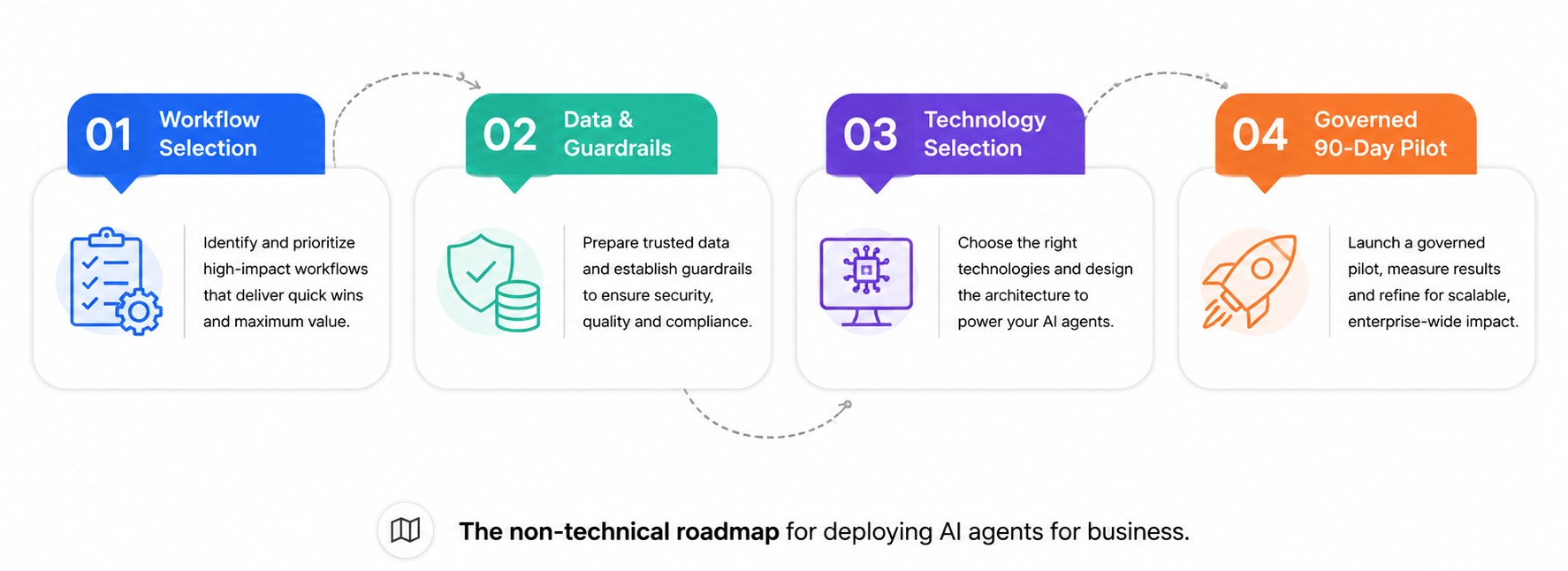
Phase 1: Target the Right Workflow
Avoid broad mandates like “automate customer service.” Instead, select a single, highly repeatable process with clear success metrics for example, “process standard product replacement requests.”
Phase 2: Define Boundaries and Guardrails
Establish clear permissions. Specify what software systems the agent can read, what data it can edit, and what financial or operational thresholds require manager sign-off.
Phase 3: Choose Your Technology Strategy
Off-the-Shelf Agents: Ready-to-deploy modules built into platforms like Salesforce or HubSpot. Fast deployment, but limited to native ecosystems.
Custom Agentic Frameworks: Tailored AI agent development built around your custom software stack and security requirements. Offers higher operational moat and long-term scalability.
Phase 4: Run a 90-Day Governed Pilot
Deploy the agent alongside human operators. Track operational speed, accuracy, error rates, and human intervention frequency before granting full operational autonomy.
Accelerate Your Agent Strategy
Ready to build or deploy autonomous workflows in your enterprise?
Read our in-depth AI Automation Solutions Page
Mitigating Risk: Security, Governance, and ROI
Deploying autonomous AI agents introduces enterprise considerations that leadership must proactively address:
- Execution Risk: An agent taking incorrect software actions causes more disruption than a chatbot generating a wrong answer. Strict tool validation and sandbox testing are mandatory.
- Data Security & Access Control: Agents must operate under strict Role-Based Access Control (RBAC). Ensure agents only access data required for their specific function.
- Clear Metrics: According to recent enterprise AI benchmarks, projects fail to scale when teams neglect to establish baseline operational KPIs before deployment.
Track processing cycle times, error rates, and cost-per-transaction before and after deployment to ensure clear financial payback.
Frequently Asked Questions (FAQs)
Generative AI produces content (text, code, images) based on explicit user prompts. Agentic ai goes further by independently planning actions, interacting with software tools, and completing multi-step business tasks to achieve a defined goal.
Yes, provided they are configured with strict governance frameworks, human-in-the-loop checkpoints for high-risk actions, role-based access controls, and detailed audit logging.
Initial proof-of-concept deployments for single-function ai agents for business typically take 4 to 8 weeks. Enterprise-wide deployments with multi-system integrations generally mature over 3 to 6 months.
No. Business leaders can oversee operations using no-code/low-code agent management platforms or by partnering with specialized ai agent development partners to handle security, architecture, and tool integrations.
Transform Your Business Operations
Stop experimenting. Start scaling.
Schedule a tailored walkthrough with our technical architects to see live agentic workflows in action.