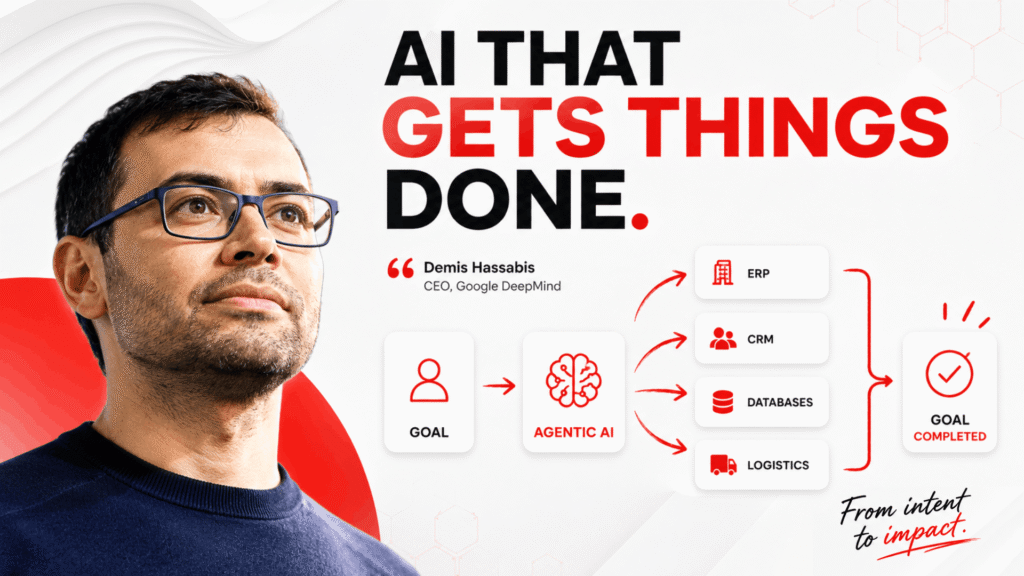
Most automated enterprise systems don’t fall apart because large language models (LLMs) lack raw intelligence. They fail because the surrounding software architecture is paper-thin. When companies move beyond simple customer-facing copilots to full operational autonomy, relying on long system prompts alone inevitably triggers expensive execution loops, unauthorized system calls, and high-profile hallucinations.
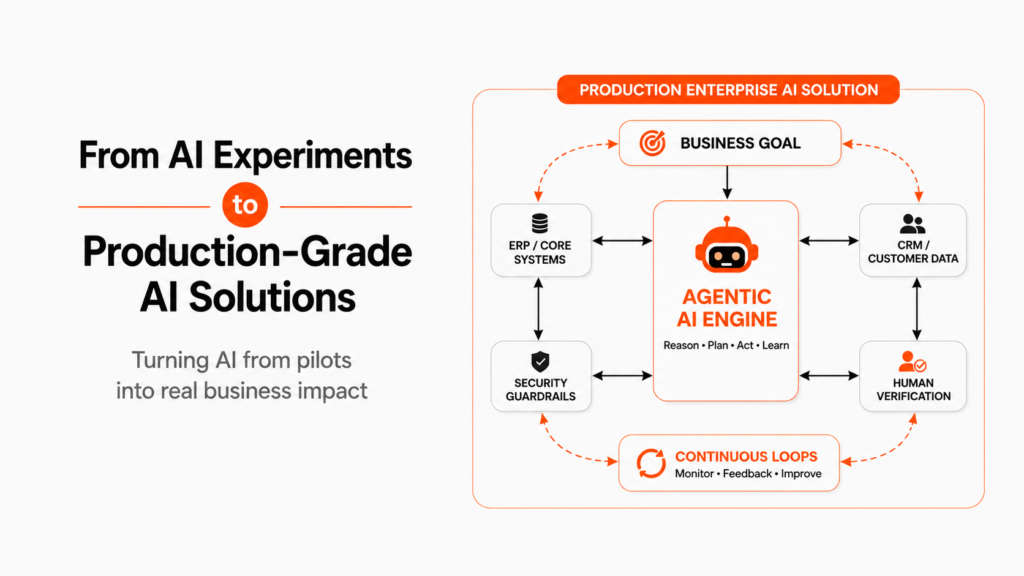
Building high-ROI AI agents for business requires moving well past basic wrapper code. It demands a production-ready engineering foundation the kind an experienced AI agent development company designs. That means separating raw intelligence from execution by building deterministic tool bridges, persistent vector memory, real-time safety guardrails, and seamless human handoff protocols.
“A production-grade AI agent architecture balances dynamic multi-step reasoning with strict security parameters to execute complex business operations reliably.”
Key Architectural Layers for Enterprise AI Agents
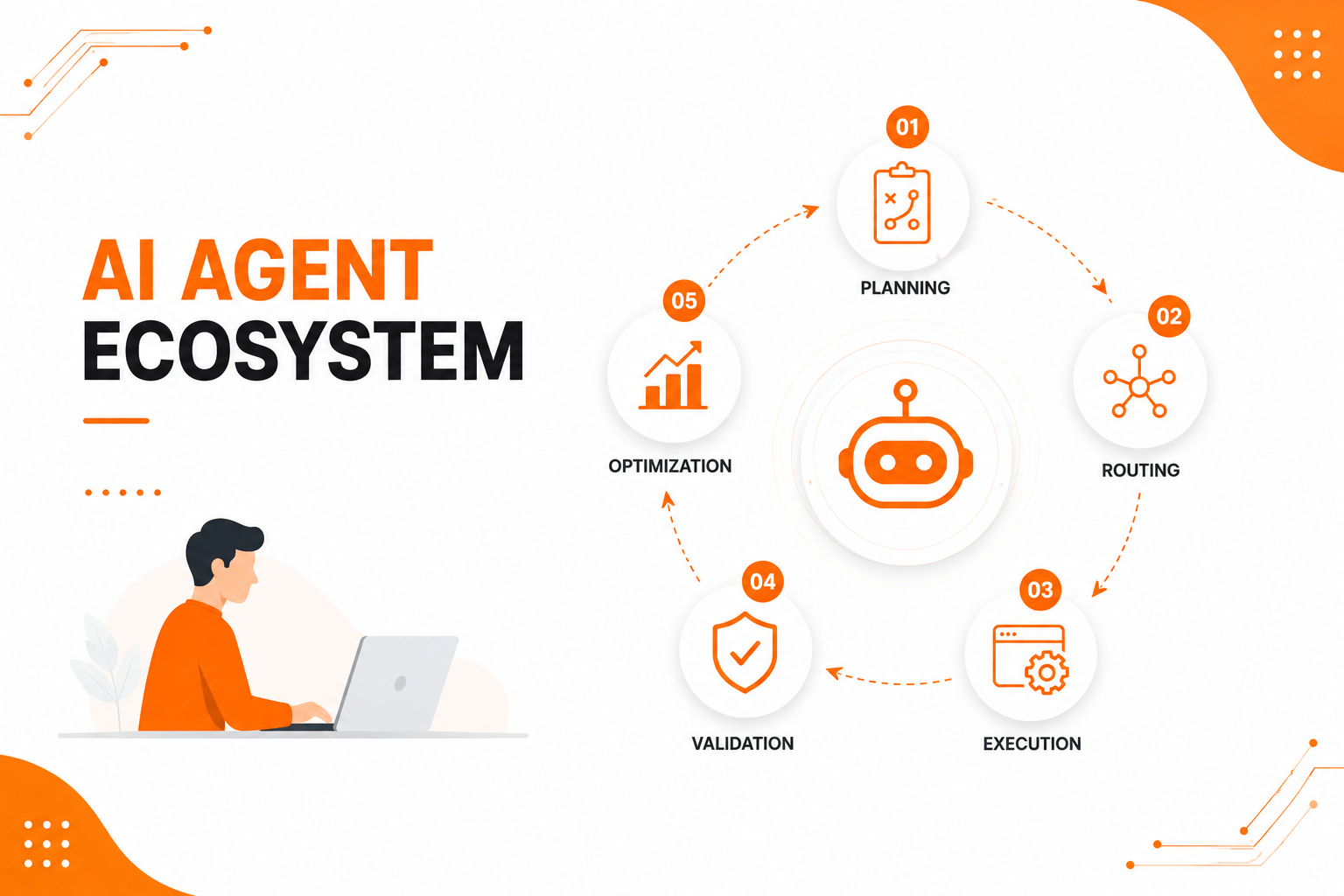
A resilient agentic AI architecture relies on a clear separation of concerns. Instead of asking a single prompt to handle intent recognition, step-by-step logic, external API integrations, and token context management all at once, production-grade platforms split these operational tasks across independent system components.
Decoupling reasoning loops from deterministic API actions consistently reduces operational task failures in multi-step enterprise environments
| Architectural Layer | Core Responsibility | Model Context Protocol (MCP) |
| Reasoning & Planning | Deconstructs complex intent into structured execution graphs (ReAct/Graph topologies). | OpenAI o3, Anthropic Claude 3.5 Sonnet, LangGraph |
| Tool Execution | Executes external read/write operations safely through strict runtime interfaces. | Model Context Protocol (MCP), REST, Pydantic Schemas |
| Context & Memory | Tracks active conversation state while pulling relevant past domain knowledge. | Auto-discovered server capabilities & resources |
| Safety Guardrails | Intercepts malformed inputs, unapproved actions, and invalid outputs outside the model. | Native transport security (stdio / HTTP with SSE) |
| Human Handoff | Routes edge cases, high-risk steps, and execution failures to human reviewers. | Low (decoupled client-server implementation) |
1. Tool Integration- Moving Beyond Text Generation
An agent without integrations is little more than an eloquent chatbot. To drive measurable ROI such as automating cart recovery, updating core ERP inventory, or managing complex procurement cycles agents must safely read operational state and trigger write operations across internal applications.
Connecting tools to an agent engine isn’t about feeding it unstructured natural language instructions. It requires defining clear, typed interface contracts. Every integration exposed to an agent (such as refund order or fetch customer crm) must follow strict system constraints:
- Strict Input Validation: Enforce typed parameters (e.g., verifying an order id string structure and capping maximum refund variables) so the model cannot pass unvalidated payloads.
- Least-Privilege API Scoping: Assign highly restricted service credentials. A customer support agent should call a constrained microservice endpoint, never direct, unmonitored SQL databases.
- Deterministic Fallbacks: When external APIs experience latency timeouts or return 5xx errors, the orchestrator handles the exception programmatically instead of allowing the model to hallucinate a successful response.
To explore how custom tool architectures integrate with legacy software stacks, check out our tailored custom AI development services.
2. Memory Architecture- Dual-Tier Context Management
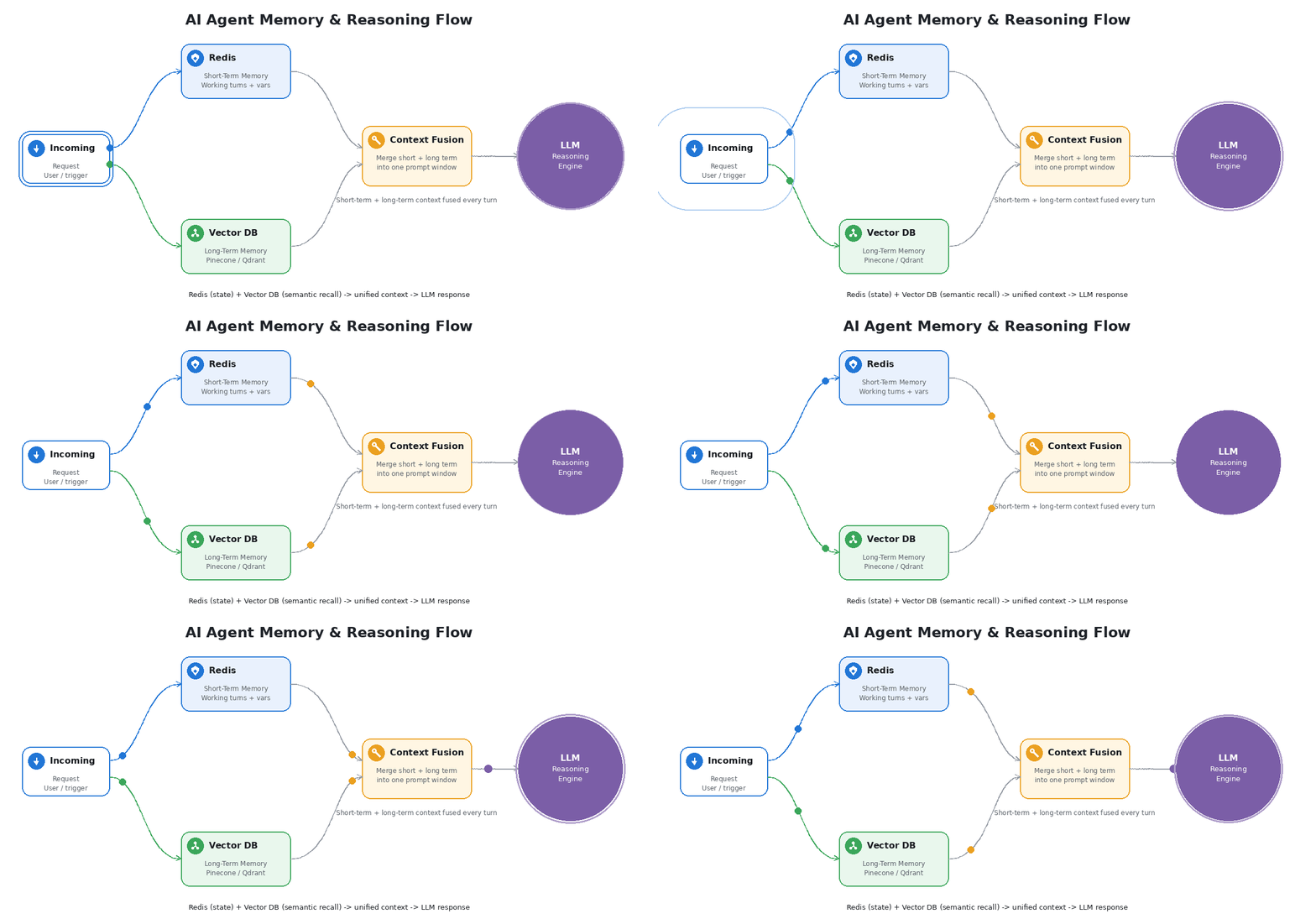
Context management dictates whether an agent feels like a cohesive, enterprise-aware system or a disjointed tool that forgets key customer decisions mid-workflow. Modern platforms handle state by decoupling immediate working context from historical memory search.
Short-Term Working Memory
Working memory maintains running execution steps inside fast key-value platforms like Redis. It records active tool outputs, intermediary sub-goals, and immediate turn histories. As active turns grow, contextual compression algorithms summarize past interactions while retaining structural data parameters keeping model calls fast and token overhead under control.
Long-Term Vector Memory
For cross-session knowledge retention, platforms leverage vector databases coupled with semantic vector embeddings. According to peer-reviewed technical research, implementing isolated vector memory layers drastically cuts context window degradation during multi-turn operational tasks.
- Vector Ingestion Pipeline- Convert unstructured enterprise data (SOPs, ticket history, resolution paths) into numerical vector embeddings.
- Hybrid Search Retrieval- Combine dense vector search with sparse keyword search (BM25) to guarantee precise matching on technical product IDs, exact SKUs, and specific policy names.
- Retrieval-Augmented Generation (RAG)- Inject context snippets into system execution prompts right before decision calls, keeping outputs anchored to verified facts.
See how modern infrastructure scales by reading our latest case study on how we help businesses turn challenges into measurable results
Ready to Build Production-Grade AI Agents?
Let’s design custom tool bridges, persistent memory, and hard guardrails for your enterprise.
3. Enterprise AI Guardrails: Defense-in-Depth Safety
Telling an LLM to “follow safety guidelines” inside a system prompt isn’t enterprise security it’s wishful thinking. Production software requires independent verification layers that validate data outside the model’s reasoning context. Comprehensive research by Gartner Enterprise Architecture Research confirms that autonomous workflows demand real-time verification filters to mitigate security breaches and system runaways.
Implementing robust enterprise ai guardrails guards against prompt injection attacks, privacy leaks, and costly run-away execution loops.
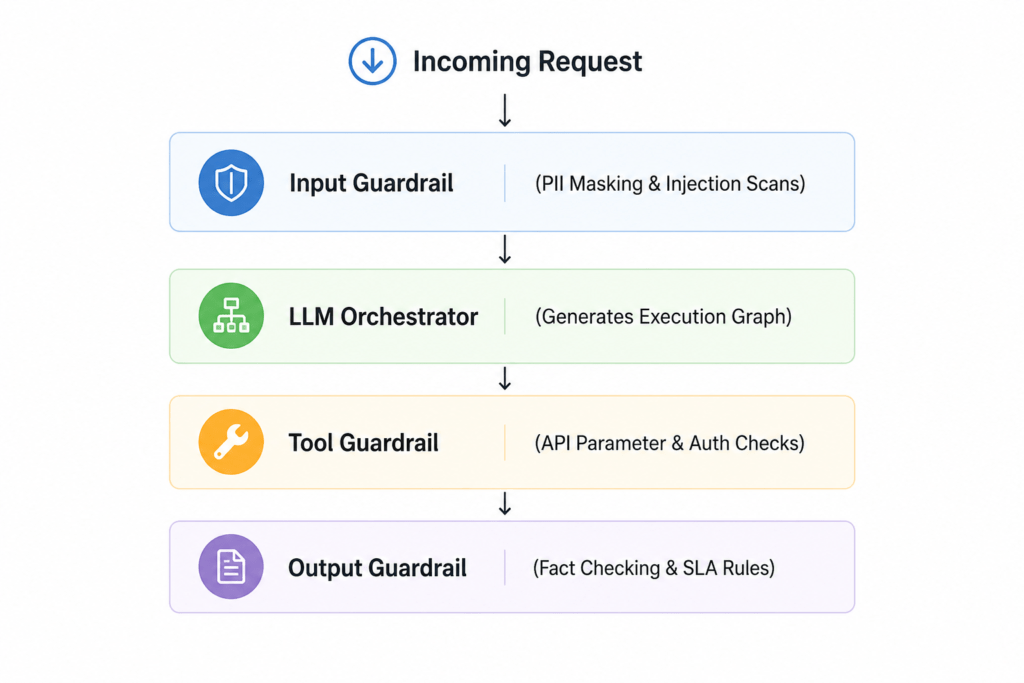
Input Validation & PII Scrubbing
Inspect incoming payload data before passing strings to the primary model. Lightweight classification models strip Personally Identifiable Information (PII) like payment details or access credentials, neutralizing malicious prompt injection attempts before spending compute context budget.
Execution Controls & Rate Limits
Incorporate hard execution rules into your backend runtime engine
- Step-Count Bounds- Cap agent iteration loops at 5–7 steps to prevent open-ended execution loops.
- Financial Thresholds- Trigger strict authorization routines whenever financial or data modifications exceed preset business limits.
- Token Rate Limiting- Enforce dynamic context token budgets per transaction to prevent single bad requests from driving up operational costs.
Output Verification
Cross-reference generated outputs against trusted knowledge repositories. If an agent drafts a policy response not backed by vector context, the output guardrail flags the response and requests a system retry or escalates it to human oversight.
4. Human-in-the-Loop (HITL) Handoff Architecture
Autonomous system operations should never mean taking blind operational risks. High-performing software incorporates explicit Human-in-the-Loop approval workflows to handle exceptions smoothly.
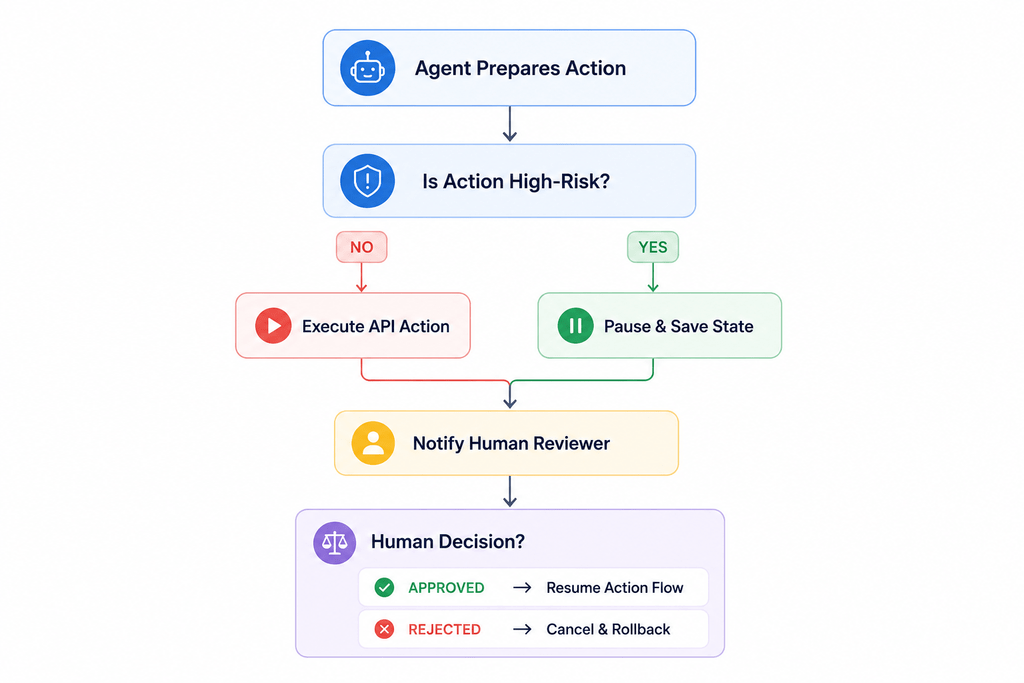
Tiered Authorization Framework
- Autonomous Execution (Low Risk)- Reading tracking info, updating minor user flags, or routing ticket tags run automatically without human pause.
- Human Approval Gates (Medium/High Risk)- Processing refunds above strict limits, overriding account privileges, or modifying backend records updates state to pending approval. The orchestrator formats execution details and sends context payloads to Slack, Teams, or ticketing platforms like Zendesk.
- Timeout & SLA Handling- If human reviewers don’t approve a paused action within a pre-configured SLA window, the workflow safe-aborts the sensitive transaction, logs the state, and routes the ticket to standard user queues.
Eliminate AI Agent Failure Points
Get quick, actionable feedback on your tool integrations and security guardrails.
Final Thoughts
Building production-grade AI agents isn’t about stringing together basic prompts it is about engineering a resilient operational ecosystem. By decoupling multi-step reasoning from deterministic tool execution, implementing dual-tier memory, enforcing strict external guardrails, and embedding clear human approval gates, you transform probabilistic models into reliable business assets. As autonomous workflows continue to drive enterprise efficiency, organizations that invest in robust architecture today will be the ones that safely scale their operations tomorrow.
Frequently Asked Questions (FAQs)
Simple AI workflows run on rigid scripts where step B always follows step A. An enterprise AI agent uses an LLM as a dynamic reasoning engine that analyzes input, selects tools on the fly, adapts to unexpected system errors, and self-corrects execution paths to achieve a business goal.
System prompts are probabilistic recommendations inside model context, making them vulnerable to unexpected user inputs and hallucinations. Enterprise safety requires enterprise ai guardrails deterministic validation layers outside the model context that filter inputs, enforce strict payload schemas, and verify output statements.
Vector memory provides agents with historical context across sessions without inflating token consumption. Storing embeddings in vector databases allows agents to fetch only the records or policies needed for the active turn, lowering API infrastructure costs while boosting resolution accuracy.
Escalation should trigger automatically when actions cross business authorization boundaries, when confidence scores fall below set targets, or when execution runs into repeated tool failure loops. Pausing execution state lets human operators handle edge cases quickly while preserving operational accuracy.