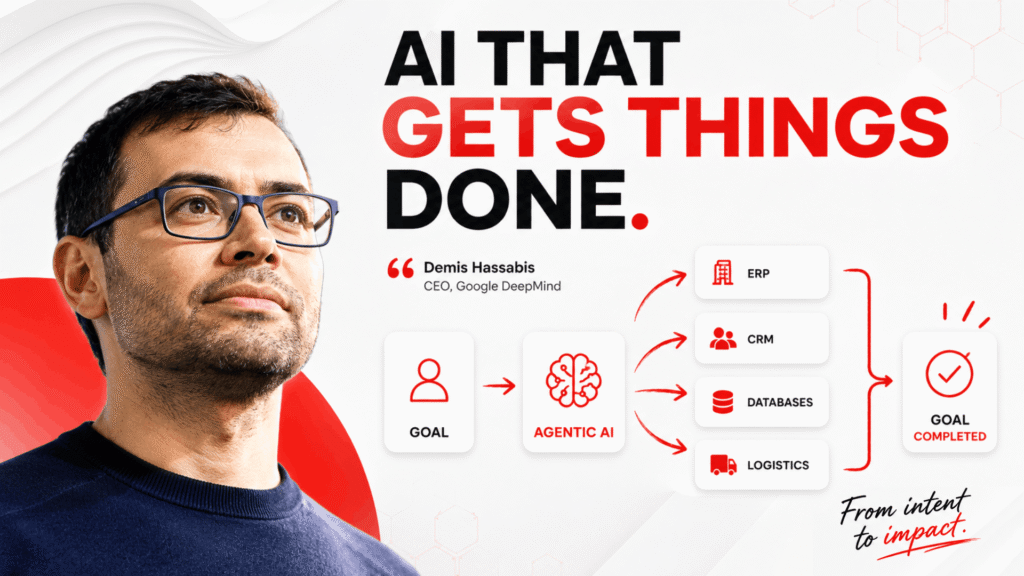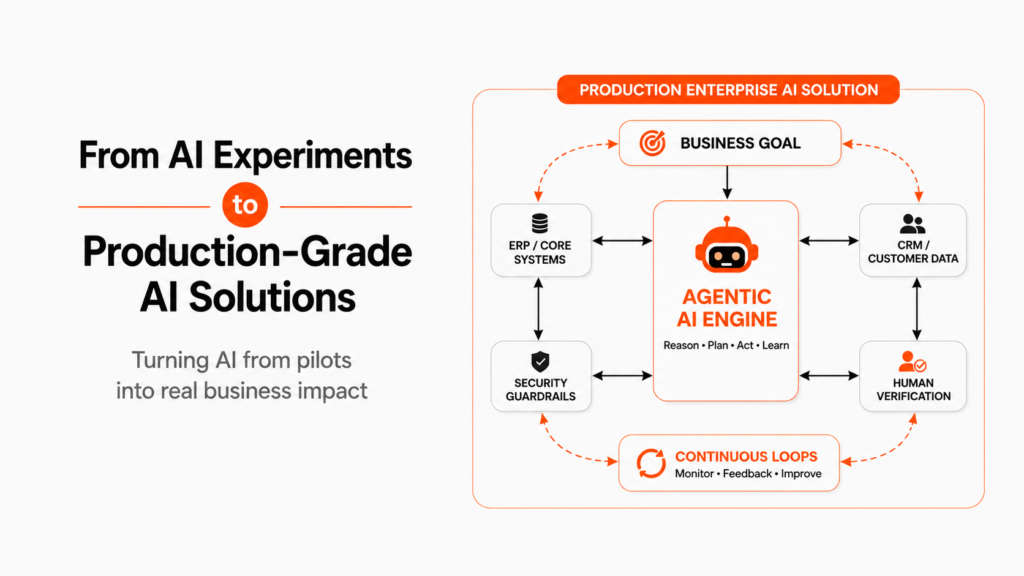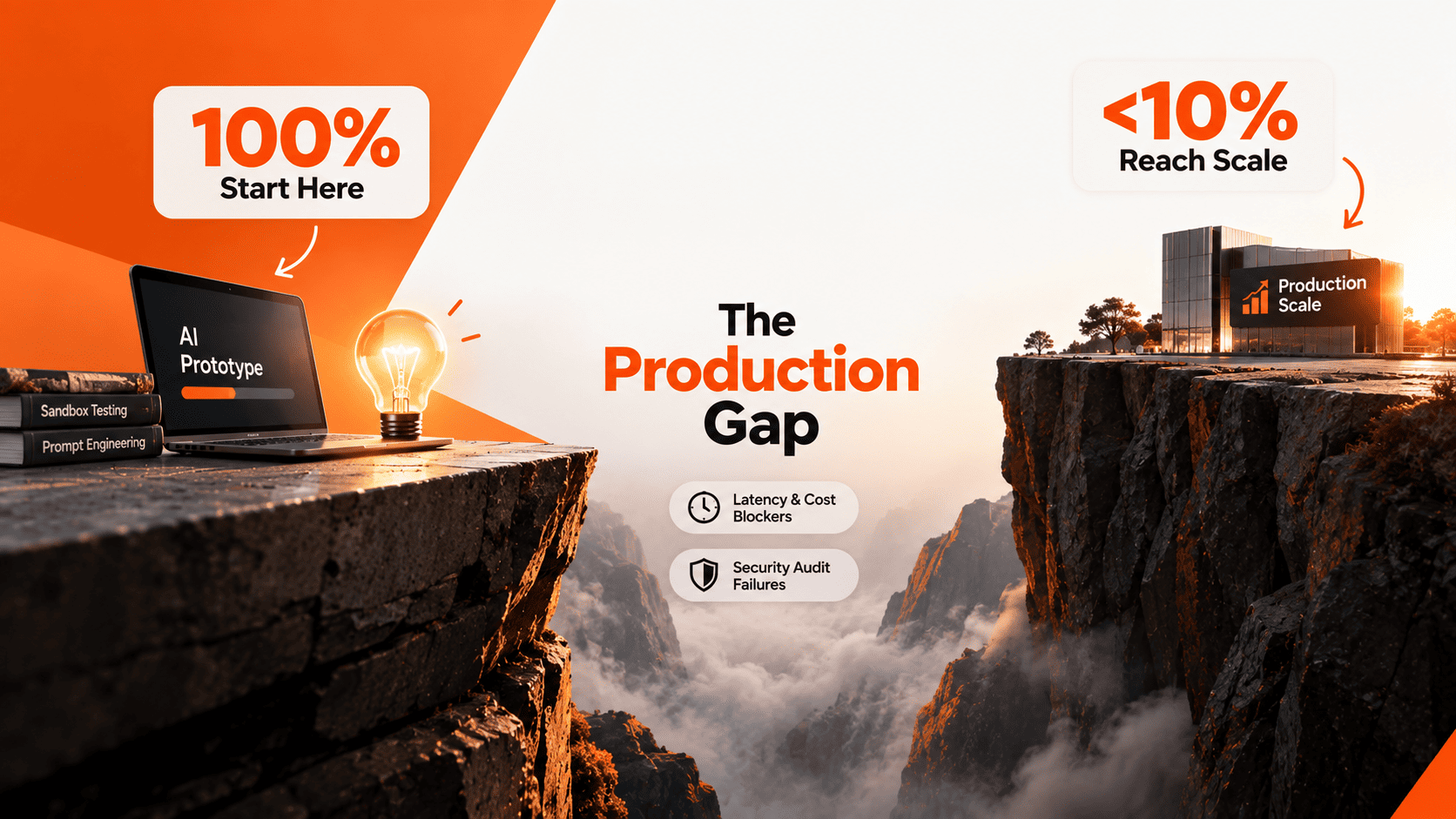
Agentic AI is growing rapidly in businesses, but most projects never move beyond the testing stage. While 88% of Fortune 500 companies launched AI agent pilots last year, fewer than 10% successfully moved them into production.
Modern AI agents can do more than chat, they can call APIs, access ERP data, and update financial records. But moving from a demo to production brings challenges such as data governance, state management, and handling unexpected errors.
According to Gartner, companies without proper evaluation and safety controls may abandon more than 80% of autonomous AI agent projects through 2026 due to execution risks.
As Microsoft CEO Satya Nadella noted when describing the shift toward AI agents:
“It’s not just about having access to Copilot. It’s about unleashing a swarm of intelligent agents to supercharge your productivity and unlock the full return on investment of AI.”
This news report examines the core structural bottlenecks creating the pilot-to-production gap, analyzes where enterprise deployments stall, and provides a strategic roadmap for engineering leaders to achieve reliable production scale.
Sandbox Success vs. Production Reality: Why Pilots Stall
A prototype may work well in testing, but real-world production can be very different. The table below shows what changes when an AI agent moves from a controlled test environment to a real business environment.
| Deployment Layer | Controlled Pilot Sandbox | Enterprise Production Scale |
| Data Environment | Clean, fixed CSVs and sample JSON data | Messy APIs, changing databases, and data conflicts |
| Execution Logic | Fixed prompts and simple tool steps | Dynamic, multi-step decisions and unexpected loops |
| Cost & Speed | Low usage with little monitoring | Strict speed requirements and limits on AI costs |
| Security & Access | Wide API access for testing | Limited access based on user roles and audit logs |
| Failure Response | Developer manually fixes errors | System must recover automatically or hand the issue to a human |
Unlike traditional software upgrades that fail predictably with clear error codes, agentic automation fails non-deterministically. An agent in a pilot sandbox might achieve a 95% task completion rate on sample data, but when deployed across real-world enterprise databases, that remaining 5% error rate creates costly data corruption, broken API calls, and compliance violations.
4 Major Factors for Failure of An Enterprise Agent
According to research, there are four evident causes of AI agent projects failure before they are put into operations.
1. Stiff Legacy System Interconnectivity Issues- An AI agent can face problems while working with older ERP systems or custom developed databases that do not employ standard APIs.
2. Absence of Agent Evaluation Mechanism (Evals)- Instead of doing automated testing of requests, teams frequently test them manually.
3. Uncontrolled Loops & AI Expenditures: Thus, in the absence of proper control mechanisms, agents may continuously execute the same actions when running into incorrect data.
4. Rigorous Security & Governance: Security teams can halt deployment in case agents lack appropriate access rights and complete activity log.
💡 Is your autonomous agent initiative stuck in pilot purgatory?
Don’t let engineering bottlenecks stall your digital transformation. Book a Free 15-Minute Technical AI Audit with our systems architects to identify execution risks and build a production-ready roadmap.
The Effects on Different Departments- Where the Use of the Technology Becomes Difficult
In terms of real experience, it’s easy to see how the use of new technology influences some important business processes
1. Finance & Accounting Reconciliations
The use of automated invoicing in the pilot stage has been successful, however, when it comes to implementing these projects on a commercial basis, the workflow is interrupted because of the existence of multiple vendor invoices with matching purchase order numbers.
2. Supply Chain & Logistics Dispatch
While the logistics team members have no trouble interpreting the information provided by the carriers during the testing phase, they fail to react properly to the problems that appear in processing due to the limitations created by the API and the delays in the provision of the information.
3. Customer Operations & Escalation Routing
It is easy for the front desk support staff to answer static questions from customers, yet difficulties arise when trying to answer in real time in systems like SAP or Shopify when there are cases of order modification.
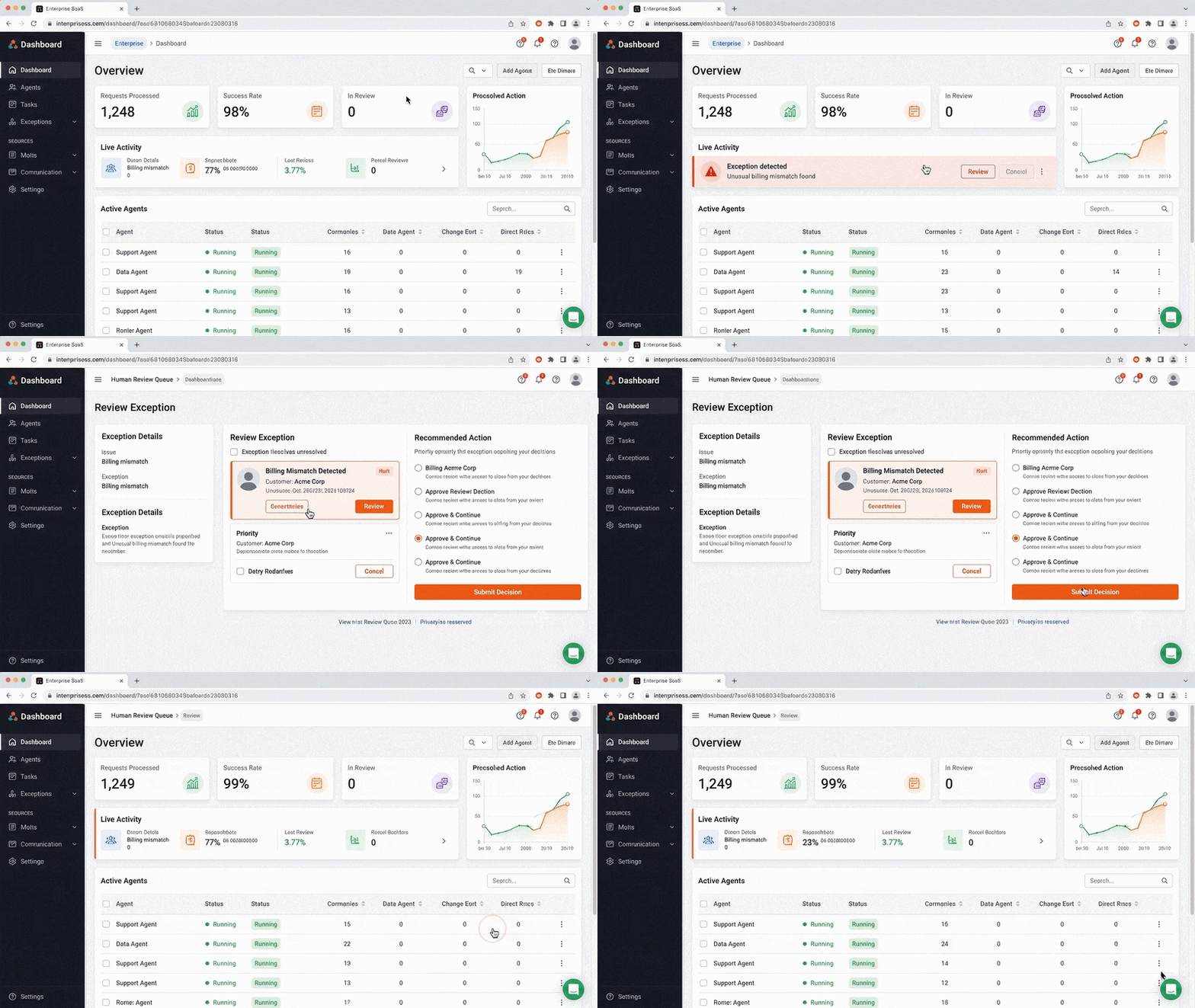
When our team engineered unified operational frameworks for mid-market clients, we helped a mid-market enterprise cut manual invoice processing costs by 67% while maintaining full data control and security guardrails across legacy backend systems.
The Executive Roadmap to Bridge the Pilot-to-Production Gap
Scaling agentic AI from initial proof-of-concept to production requires a structured, security-first framework.
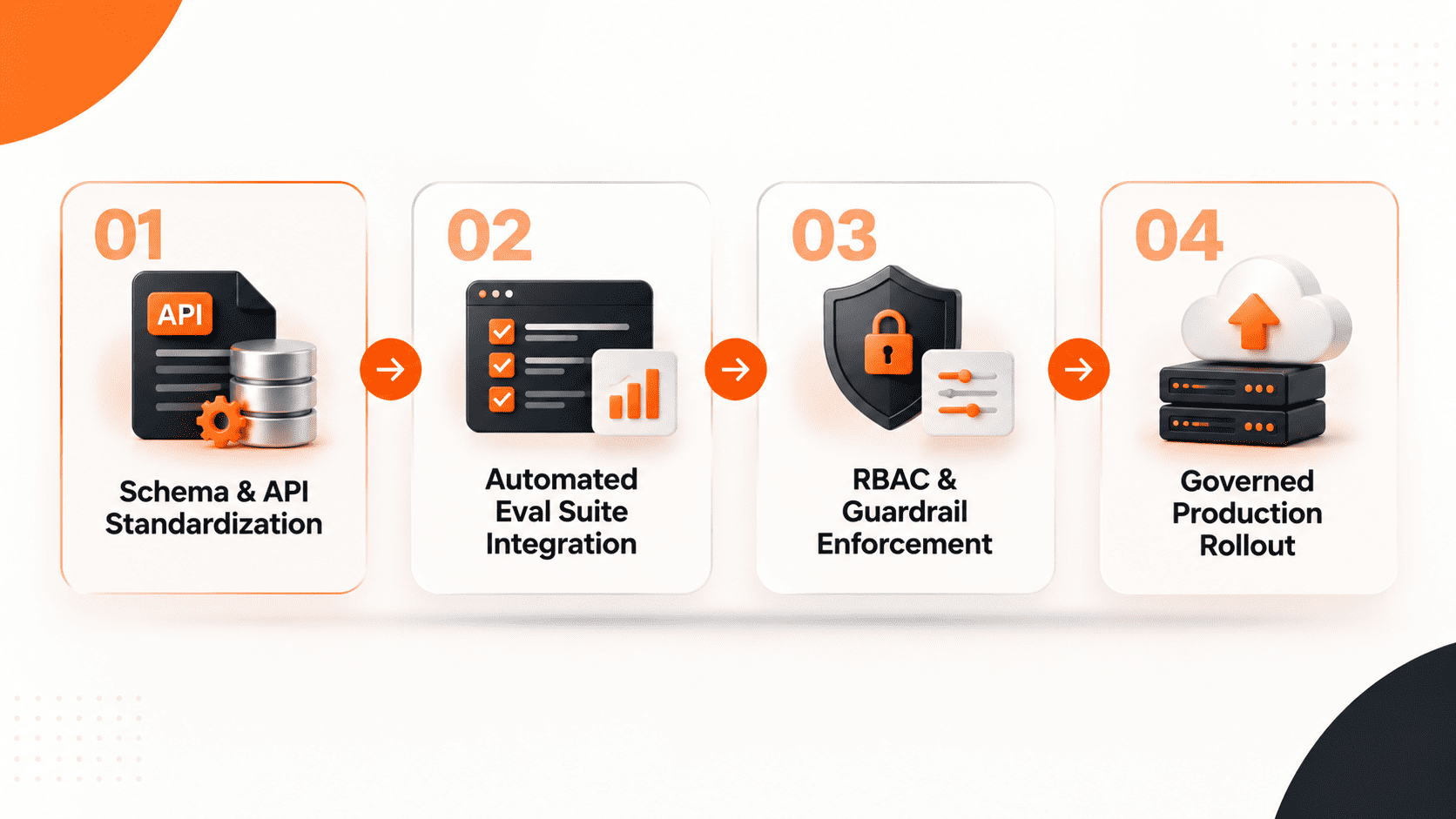
Phase 1: Unify APIs and Tool Inputs
Ensure everyone follows a strict approach when linking old databases and some external tools to AI. In turn, this will guarantee the correct data format of incoming and outgoing messages.
Phase 2: Implement Automated Testing
Design tests based on real production data and historical records made by agents. Check whether the agents are capable of leveraging the tools properly and completing their work before rolling out any alterations to the prompts.
Phase 3: Introduce Access Restrictions
Limit access to information to every AI agent using **Role-Based Access Control (RBAC)**. Grant the agents only the access that they necessarily require—especially with respect to production databases.
Phase 4: Initiate Manual Monitoring
At the initial production stage, make sure that human personnel follow the work of the AI agents. Define limitations to all monetary and crucial operations and let the AI agents get final approval from people before proceeding.
🚀 Bridge the Gap to Production AI
Ready to move past prototypes and deploy secure, high-ROI agentic workflows across your enterprise?
Make Your AI Agent Production-Ready →
Risk Mitigation: Security, Observability, and Cost Control
Moving enterprise ai solutions into live production environments requires proactive risk management:
- Real-time Telemetry & Tracing – According to recent insights from MIT Technology Review, enterprise automation projects fail when organizations lack full visibility into agent execution paths. Integrate end-to-end tracing to log every tool input, reasoning step, and API response.
- Hard Circuit Breakers – Implement system circuit breakers that automatically halt an agent if it exceeds pre-set execution step limits or token spend caps.
- Deterministic Fallbacks – Design clear fallback routines that pass complex tasks back to human teams whenever an agent’s confidence score drops below target levels.
Frequently Asked Questions (FAQs)
The term refers to problems experienced when implementing an AI prototype in a real-life situation, i.e., when using the AI tool in practice instead of in controlled experimental conditions.
The main reason for many failures is that teams either depend on manual tests, do not ensure proper validation of APIs, or lack proper human supervision while automating too complex tasks.
Through the utilization of automated evaluation trials based on real or reliable datasets.
Yes. In addition to utilizing low-code AI agent platforms, they may count on the experience of technical partners.
Scale Your Enterprise AI Workflows with Confidence
Closing the gap requires reliable systems, automated testing, and clear safety controls to turn AI prototypes into production-ready solutions.
Ready to transition your AI initiatives from experimental pilots to scalable enterprise assets?