What Changed in Enterprise Automation?
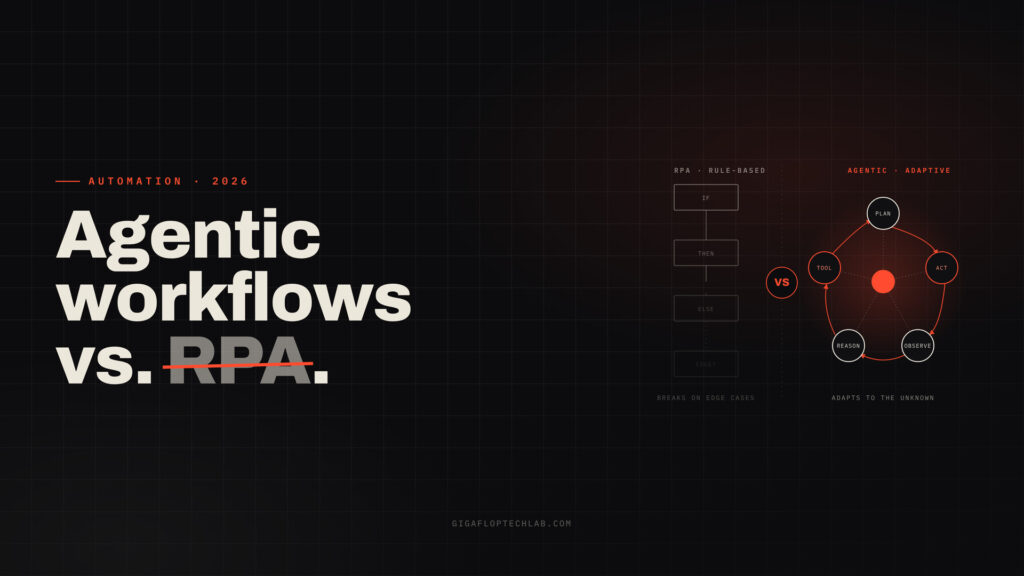
Robotic Process Automation (RPA) has been a game changer in the field of process automation for more than 10 years. Old-fashioned bots successfully performed standard and monotonous tasks. However, when it was time to process non-standardized documents, various user interfaces and communications from clients, enterprises had to stop the process.
Today, AI process automation offers a combination of machine learning, natural language processing and decision-making reasoning directly connected to execution engines. Modern AI process automation does not depend on strict predefined scripts that stop functioning after a slight change in the system, but reacts to situational changes and performs multi-step processes through core business systems.
According to experts’ forecasts, by the end of 2026 more than 50% of old-fashioned RPA implementations will be enriched or replaced by adaptive AI automation platforms. As a result, business leaders rethink the automation mechanism and develop new strategies for its usage.
“AI is going to re-invent every enterprise software category… Enterprise workforces in the future will be a combination of humans and digital humans working together across every business process.”
– Jensen Huang, CEO of NVIDIA
In this article, the fundamental contrasts between conventional RPA and contemporary AI process automation is explained, analyzes operational upkeep (cost of ownership), examines high-impact usage cases, and demonstrates executive guidance on upgrading the old workflows.
Traditional RPA vs. AI Process Automation: What Is the Difference?
To evaluate how modern automation scales operations without adding headcount, you must first understand the fundamental shift from static rule execution to dynamic cognitive reasoning.
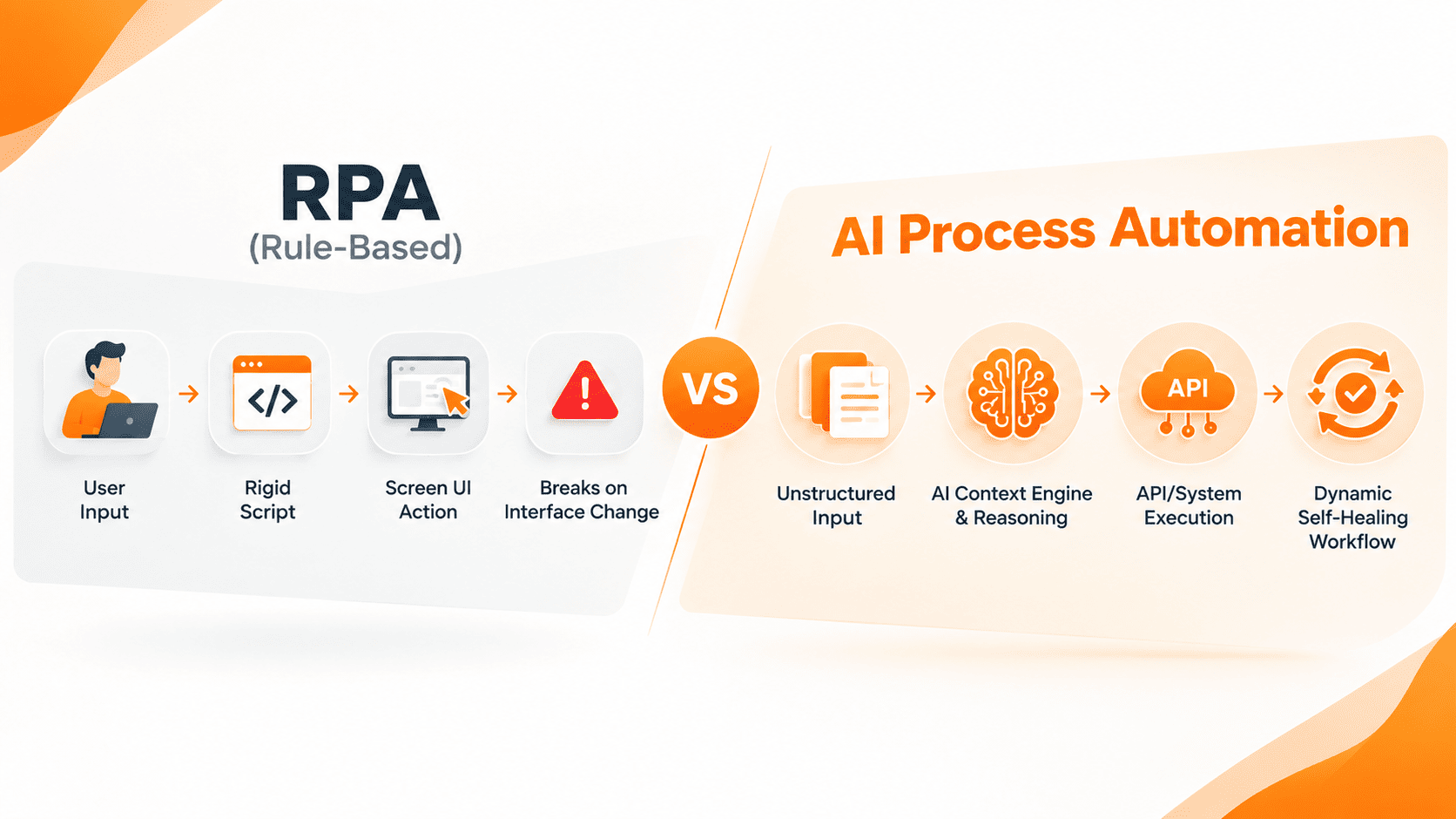
| Capability Layer | Traditional RPA | Modern AI Process Automation |
| Logic Basis | Strict rule-based (If/Then decision trees) | Machine learning models & probabilistic reasoning |
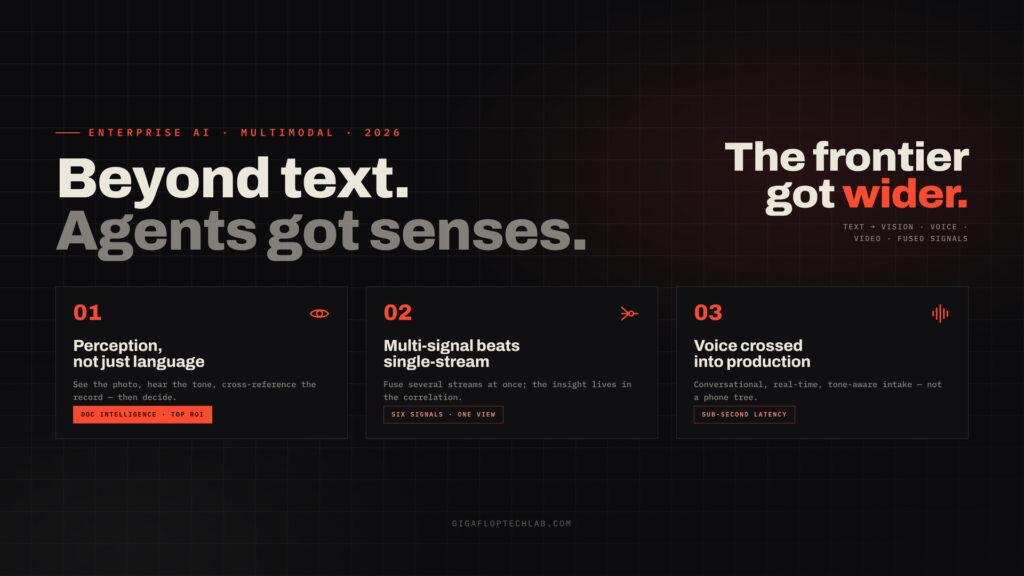
| Data Processing | Structured data only (CSVs, database tables) | Unstructured & structured data (PDFs, emails, images) |
| Interface Adaptation | Fragile (Breaks if UI coordinates change) | Self-healing visual models & direct API connectors |
| Execution Scope | Isolated, single-department task scripts | End-to-end multi-system AI workflow automation |
| Exception Handling | Hard stop; requires developer code fix | Autonomous resolution or guided Human-in-the-Loop |
In contrast to RPA bots which are static and only operate via fixed steps of execution, an enterprise AI automation platform is instead based on a continuous cognitive feedback loop, which contains the following steps
- Perceiving- the system takes in incoming operational triggers, which may include different types of inputs such as unstructured customer emails, multi-page PDF purchase orders, and events from legacy databases
- Reasoning and Classification- with the help of natural language understanding and computer vision technologies, the platform processes and extracts important entities as well as checks the integrity and compliance of the information to the company’s regulations
- Acting – After the data has been processed according to the established rules, the system proceeds to make actions via software APIs such as updating CRM records, sending communications to the vendor, or issuing ERP commands.
- Reflecting – finally, the platform verifies whether the process has been executed as planned. If it fails to meet the operation confidence level, the platform involves human managers in the process and learns from their experiences.
4 Core Capabilities Driving the Automation Shift
Those who are considering an overhaul of their existing systems need to be aware of the unique advantages cognitive automation technology possesses compared to conventional methods of running processes.
- Receiving Data from Unordered Sources – Able to scan, understand, and classify types of unordered data, including prints, contracts, and tickets, without having to rely upon human typing services.
- Using Interfaces and Resilient API Technology – Combines operation through the interface to perform necessary actions on the backend.
- Context and Memory – Keeps consistent work through several-step processes by checking previous actions undertaken by the company in order to meet the requirements of the law and business.
- Use of ITL Technology – Business process-related decisions requiring approval of the manager are automatically put on hold but everything else can be done seamlessly.
Is your technology stack ready for modern AI automation?
Don’t waste months maintaining fragile legacy bots. Book a Free 15-Minute AI Audit with our strategy team to identify your top 3 high-impact workflows for seamless deployment.
High-Impact Business Use Cases Across Departments
Companies that are able to generate quick ROI are focused on high-volume and judgment-heavy processes in which traditional RPA failed:
1. E-Commerce Order Processing and Exceptions
Instead of entering custom purchase orders manually into their warehouse systems, AI technologies are being used to extract line items from PDFs, check inventory in real time, and flag any discrepancies.
A rapidly growing distributor recently experienced a surge in shipping volume, and data entry was becoming a bottleneck. In updating their systems, we were able to help an e-commerce business automate nearly 85% of its order processing and reduce processing time from hours to minutes.
2. Accounts Payable and Reconciliations
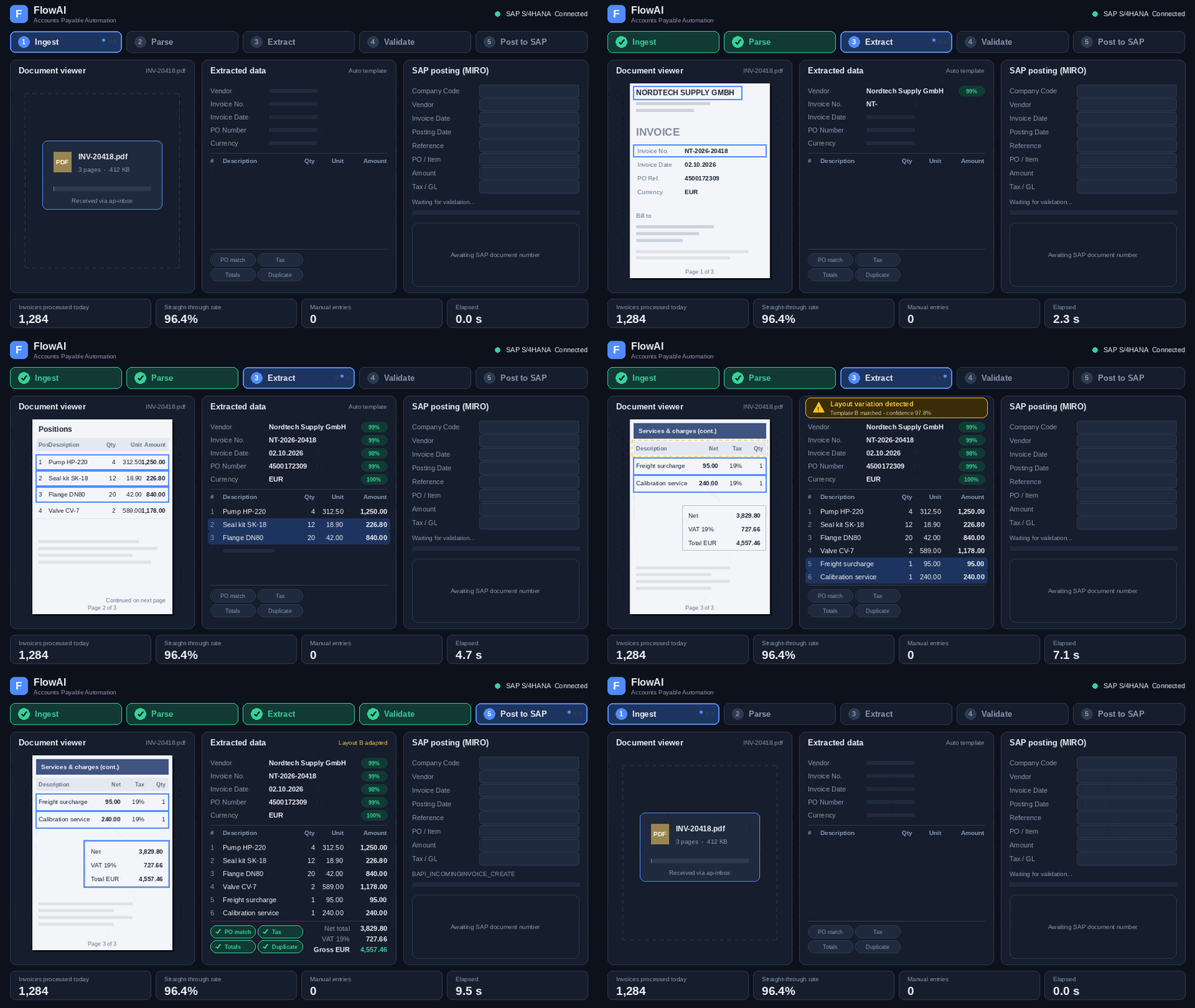
Traditional RPA has difficulty processing invoices that present different layouts. AI process automation is capable of recognizing different types of invoices, matching line items with purchase orders and statements, identifying duplicate charges, and queuing payments.
3. Support for Customers and Management of Services
AI-backed systems check the identities of customers before answering their queries. They search the ordering history in systems such as Shopify and SAP. They begin the return process.
4. Transportation & Supply Chain Traceability
Whenever the shipment is delayed, automated processes check the information coming from the carriers in order to determine new shipment dates, notify partners, and make changes to the reorder levels.
Total Cost of Ownership (TCO): Maintenance & Scalability
A major hidden liability of traditional RPA is ongoing developer maintenance. According to industry research cited by leading analysts at Gartner Enterprise Insights, up to 30% of legacy RPA budget is spent fixing broken scripts caused by minor software UI changes.
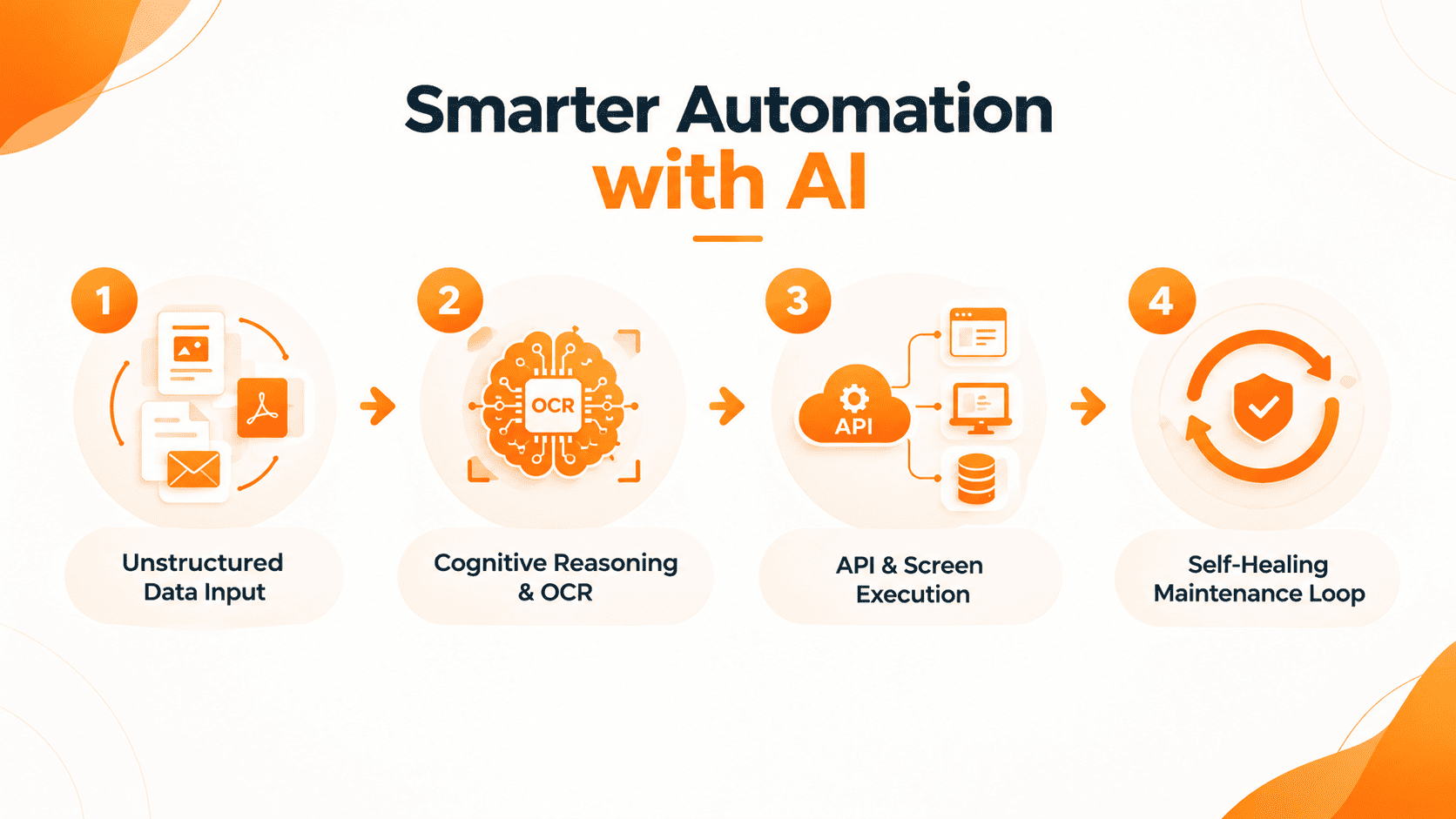
The adoption of a consolidated AI automation system helps to alleviate some of the pressure that falls on the developers through
- Visual and Structural Robustness – Using context rather than static pixel coordinates to identify onscreen elements, AI models deliver visual results.
- Continuous Accuracy Improvement – The machine learning process improves accuracy over time with higher transaction volumes.
- Shorter Development Cycles – By relying on natural language prompts rather than building unique code for each integration, the business teams can implement new processes more quickly.
To discover how contemporary software architecture helps in managing operational data across the legacy databases, read our detailed article on the development of enterprise digital transformation strategy or learn about our customized AI software development solutions.
Executive Roadmap: Migrating from RPA to AI Process Automation
Moving to smart workflows involves following a specific organizational process.
- Find Current RPA Failures – Look for RPA developments that do not work because of the organization layout or some manual processes that need to be carried out with unstructured information.
- Get ROI Indicators Clear – Get the initial record of the number of hours spent by employees, their mistakes, and the time needed for cycle time before introducing a new system.
- Use Role-Based Access Control (RBAC) – Determine clear boundaries for the automated process and let people define where the money can be used.
- Use Role-Based Access Control (RBAC) – Determine clear boundaries for the automated process and let people define where the money can be used.
Reducing Risks and Optimizing Returns
In order to successfully scale systems of autonomous operations, companies need to be aware of crucial risks and execute them well
- Risk of How Something Is Done – An autonomous doing something erroneous on your software solutions leads to much greater disruption than a chatbot answering incorrectly. Every deployment needs to go through rigorous testing in a sandbox and validation stages.
- Data Protection – Systems must apply strict RBAC in order to assure that the agent is accessed only by those who require it for doing their jobs.
- Monitoring Financial KPIs – Research from Harvard Business Review and Gartner Research proves that transformation processes come to failure due to the absence of basic operational data monitoring. It is important to track processing cycles and costs before and after the deployment in order to see the change in the P&L impact.
Frequently Asked Questions (FAQs)
Not quite. Numerous businesses utilize ai automation technologies to function above the legacy RPA systems. Artificial intelligence manages unstructured information and then directs regular RPA tools in fulfilling routine tasks for old-fashioned systems.
Enterprise systems must meet exceptionally high safety standards including HIPAA and SOC 2 Type II standards. The system has role-based access and has techniques for data encryption.
Proof-of-concept pilots of one project take 4 to 6 weeks. Full implementation of a company-wide solution usually takes 3 to 6 months.
Possible KPIs include time (in hours) saved within FTEs because of the repurposing of resources to other strategic initiatives, decreased error processing costs, improved response times, and decreased running costs compared to the old way of RPA.
No. Present-day systems have user-friendly visual dashboards and low-code interfaces which are accessible for operations managers to change business rules, supervise exception queues, and change workflow.
🚀 Transform Your Business Operations
Stop relying on fragile legacy scripts that slow down growth. Start scaling with intelligent execution.
Schedule an executive strategy session with our technical architects to see live cognitive workflows in action.