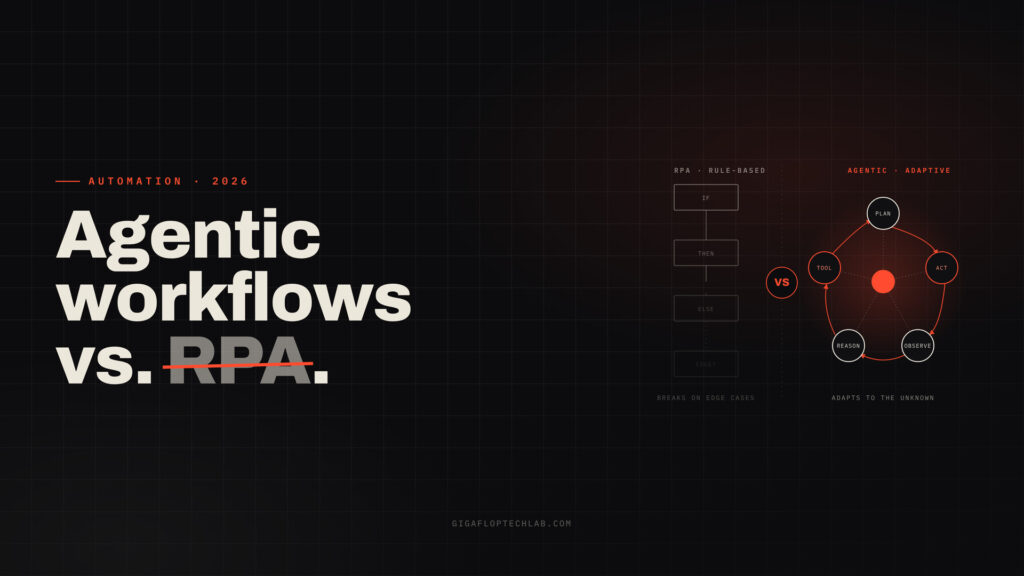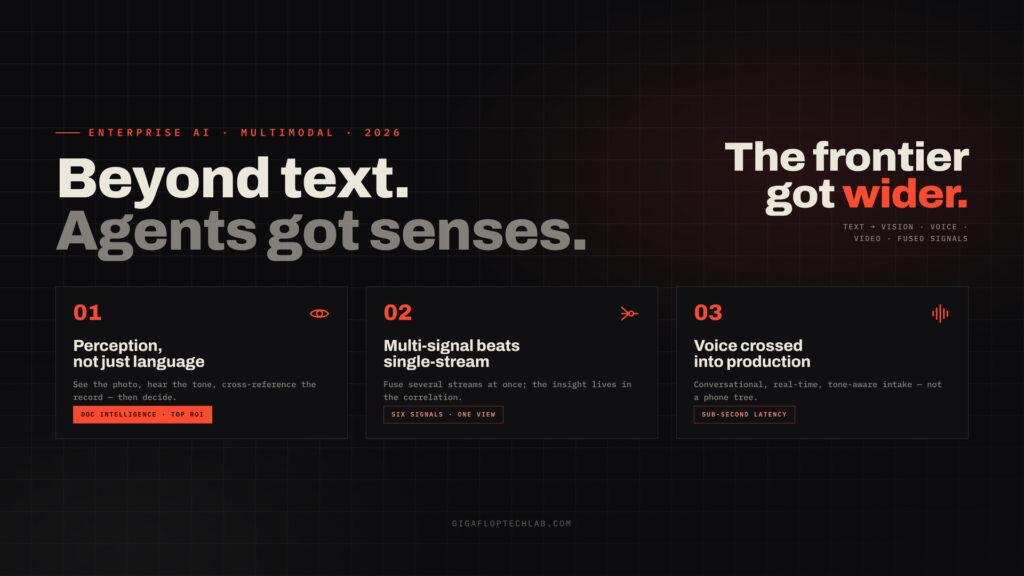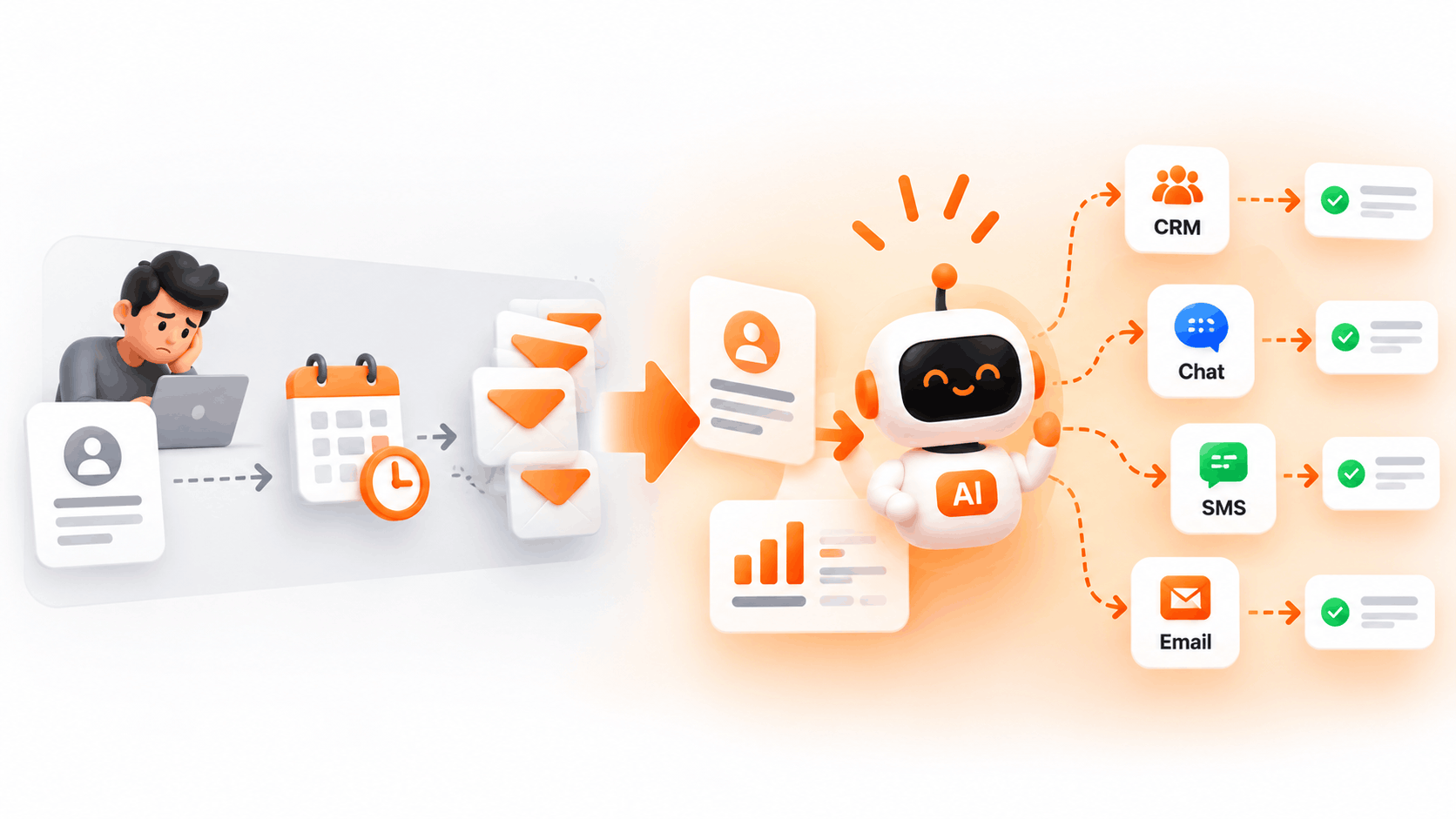
An automated marketing emails program that goes out every Tuesday at 9 AM is the hallmark of effective digital marketing. However, with modern clients, this one-size-fits-all method may no longer be effective. New-generation clients expect to be provided with relevant messages that reflect their behavior and not just general emails sent as part of a massive marketing campaign.
To achieve success in implementing advanced marketing processes, businesses need smart technologies that analyze customers and do that in real time. With the help of some new types of technologies used for automating email sending, companies can convert old-fashioned email communications into a flexible and effective tool that allows them to get their customers to respond without employing more employees.
“The next wave of business productivity will not come from doing the same tasks slightly faster. It will come from fundamentally rethinking operational workflows using intelligent systems that reason, act, and adapt to customer behavior in real time.”
— Satya Nadella, Chairman & CEO of Microsoft
This practical guide breaks down how AI workflow automation elevates marketing operations from routine task execution to predictive customer engagement, where to deploy it, and how to measure real enterprise ROI.
Why Traditional Marketing Automation Is Failing Enterprise Leaders
Old-fashioned marketing tools depend on fixed decision trees created years ago. These tools are programmed to follow a strict sequence: If a person downloads a white paper, three business days must pass before the person receives Follow-Up Email B.
This linear approach worked well when the buying journey of the target audience was the same. In today’s business-to-business or e-commerce scenario, potential buyers do their research using different channels and may revisit pricing calculators or talk to sales representatives in non-linear order.
It is not uncommon for traditional marketing tools to fail when a buyer goes through a non-linear journey
1. Mismatch of Context and Customer Discontentment
Subscribers need relevant newsletters while currently looking over the pricing plans of the company or the tech documentation. This discrepancy demonstrates that the involved parties are oblivious of what’s happening and that their emails are prone to getting unsubscribed.
2. Delays in Assigning Leads
Highly motivated prospects might wait for several hours or days for their lead to be transferred because of their reliance on batch processing or updating CRM entries manually. In online sales, a lag of 15 minutes would lead to a decline in success rate with regards to lead qualification up to 400%.
3. Lack of Unified Data
Customer communications made across the web analytics, messaging apps, e-Commerce systems or email services remain stuck on separate dashboards. Absence of combined data flow prevents marketers from spotting valuable intent signals.
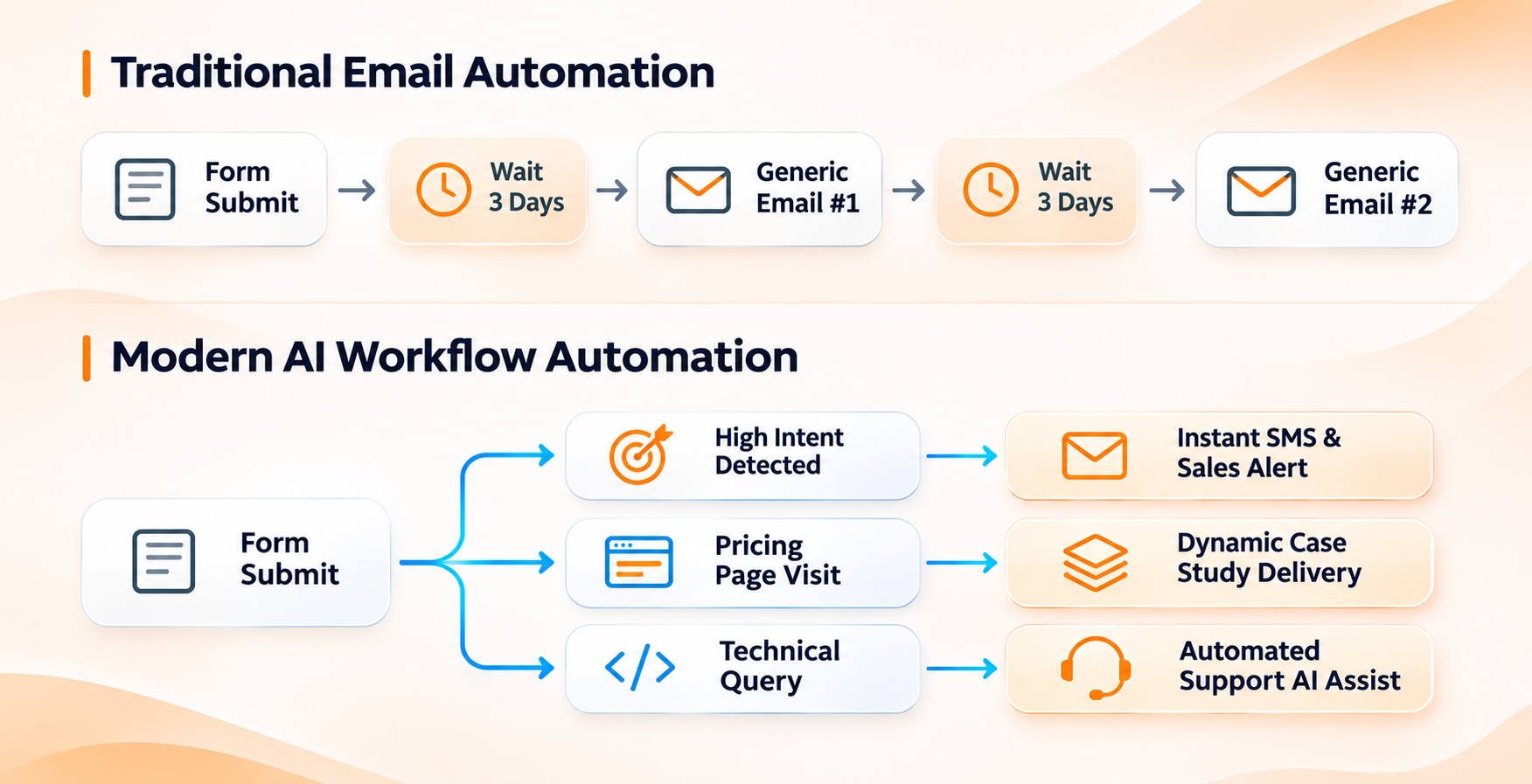
Replacing static drip sequences with dynamic AI workflows eliminates these bottlenecks by analyzing real-time behavioral signals and triggering automated actions instantly.
4 Core Pillars of AI Workflow Automation in Marketing
Integrating AI automation services into your growth strategy upgrades marketing from passive broadcast publishing to active lead conversion.
| Capability | Traditional Marketing Automation | AI Workflow Automation |
| Logic Trigger | Time delays & static form fills | Real-time intent & behavioral signals |
| Personalization | Basic mail-merge fields ({{First_Name}}) | Dynamic content based on interaction context |
| Lead Scoring | Manual point-addition rules | Predictive machine learning models |
| Channel Access | Siloed email software | Orchestrated cross-channel API triggers |
1. The Practice of Predictive Lead Scoring and Swift Routing
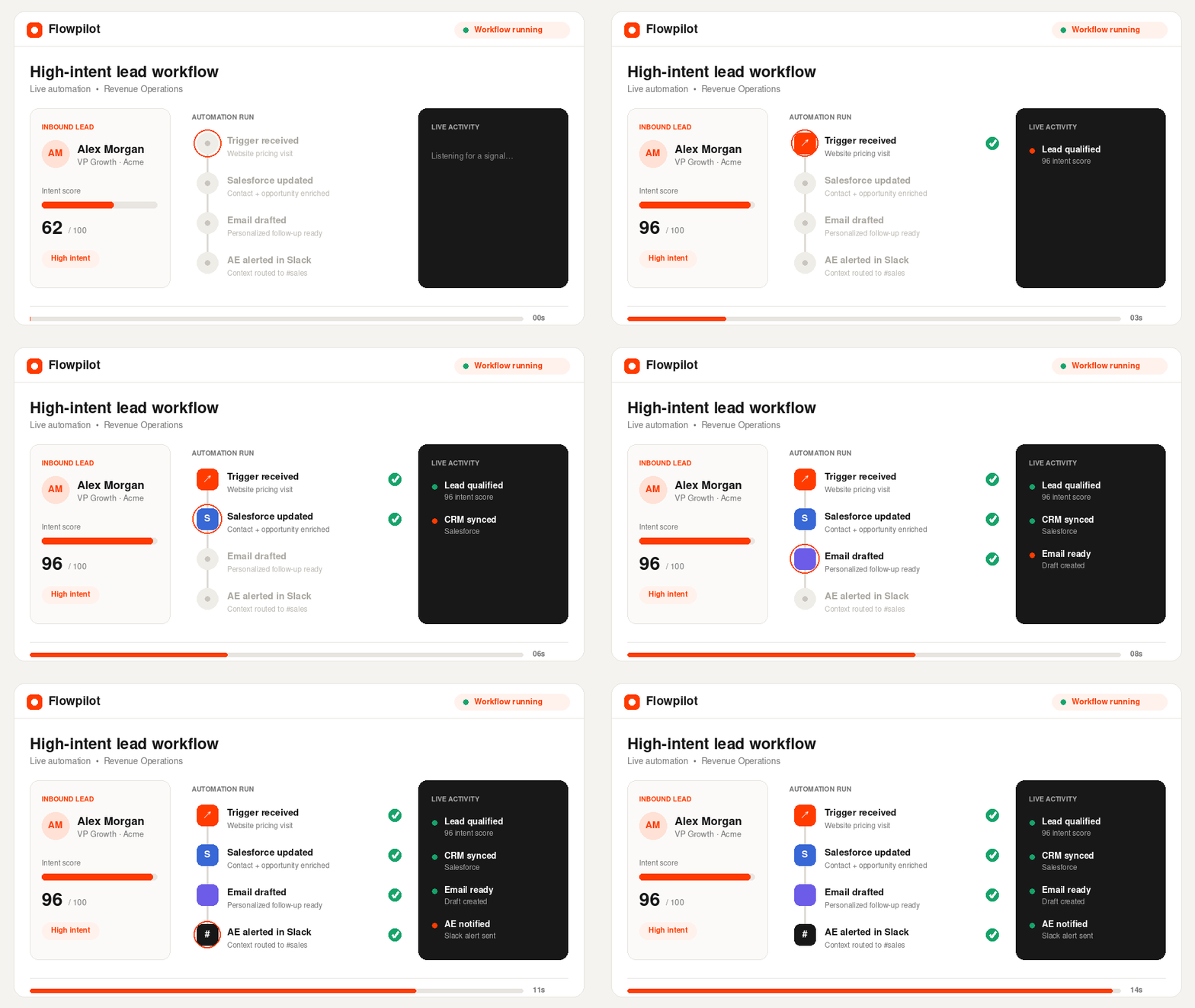
Predictive lead scoring utilizes a technology platform that assesses precise behavioral indicators to rate leads in real-time instead of utilizing random measures. The system examines micro-actions by users that indicate interest including, but not limited to entering and leaving feature comparison pages regularly, downloading documents, or reviewing information about the organization’s top executives.
Once a lead displays signs of high-interest, the platform sends alerts to sales representatives and creates a personalized meeting agenda based on their browsing history.
Case Study Highlight: Learn how we helped a mid-market enterprise cut lead response times from 4 hours to 45 seconds, boosting qualified pipeline conversions by 35%.
2. High-scale Customization
Old-fashioned customization involves nothing more than adding a company’s name in the email headline. AI-based customization helps to tailor the text, suggestions, and tone of communication to the customers based on the sources of information that weren’t processed, including the records of previous conversations, buying patterns, and how the consumer consumes various content.
An updated study by McKinsey Enterprise AI Index shows that businesses using superior AI customization techniques can count on making up to 40% more profit from interactions with customers than less alert rivals.
3. Orchestration of Cross-Channel Journeys
Customers rarely limit their inquiries to one channel. With the help of AI automation, signals from website chat, texts, emails, and social media ads can be combined into one thread.
If a potential buyer sends a technical question via chat, the system updates his profile immediately. The next email sent to him is no longer a generic ad but is directed to his question.
4. Ongoing Autonomous Optimization of Campaigns
A/B testing conducted in the old way is complicated. It requires creating variations manually, waiting for statistical significance, and sending out the selected variant.
AI performs different multivariate optimizations automatically. It can assign the online audience to every subject line or content according to efficiency.
Is your customer acquisition stack ready for intelligent automation?
Don’t waste months building complex sequences without a clear return on investment.
Book a Free 15-Minute AI Audit with our growth team to identify the top 3 high-impact workflows in your funnel.
Practical Examples of Real-World Application by Growth Teams
Companies relying on AI automation services witness quick returns on their investments because they utilize these services in highly automated processes
Retrieval and Reactivation of Abandoned E-Cart Purchases
In case a high-value cart is left inactive by a user, the AI system determines the person’s lifetime value (LTV) and works accordingly. For first-timers, it starts sending a series of emails explaining how to order items successfully. For VIP customers with high LTV, the system creates a personalized SMS offer and engages customer service representatives immediately.
Account-Based Marketing (ABM) in B2B Sales
With regards to an enterprise account using the internet, once several decision-makers visit the customer’s website, the system identifies the intent to purchase from the account level. It then configures the content of banners on the website, launches highly targeted advertisements on LinkedIn, and alerts the sales team in charge of that account about this event.
Automated Customer Onboarding and Retention
AI systems monitor the entire user onboarding process and hence measure feature adoption rates. If a new user skips a critical setup step, the workflow triggers an automated delivery of a targeted walkthrough video or a check-in call scheduled by customer success.
The Executive Roadmap to Implementing AI Automation Services
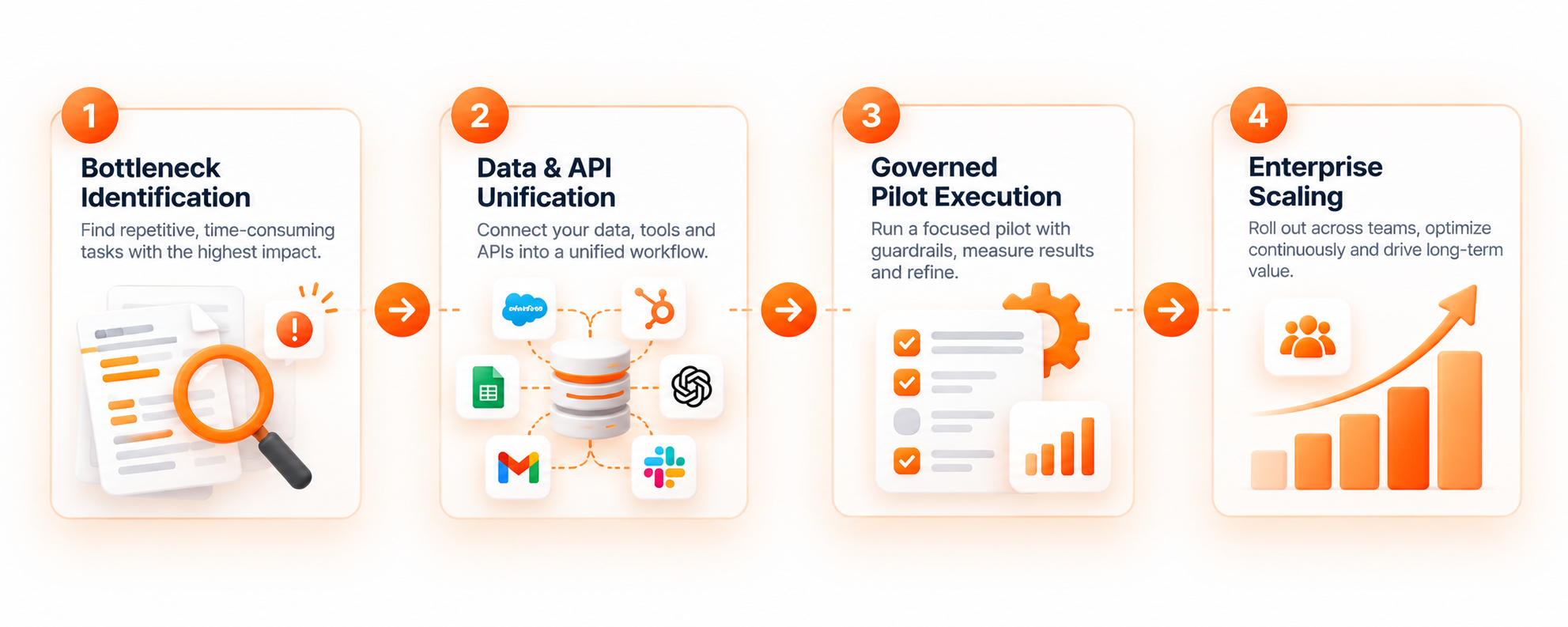
Successfully deploying intelligent automation across your organization requires defining governance, integration standards, and clear business boundaries.
Step One: Evaluation of Funnel Issues
Refrain from setting overly simplified goals like “streamline our marketing efforts.” Instead, concentrate on a stubborn operation that can be measured in terms of indicators, e.g., the speed of lead qualification or the rate of cart abandonment recovery.
Step Two: Make Sure Different Data Points Work Together
Check if the CRM systems, ESP programs, web analytics, and customer support systems can exchange information utilizing APIs.
Step Three: Designate Operational Rules, Skills, and Permissions
Determine the extent of AI capabilities. Identify what data available for the AI process, which records are subject to changes, and which actions are subject to human permission.
Step Four: Implement an AI for the 90-Day Experiment
Put the AI process into operation along with human actions. Monitor the speed of running this process, the number of conversions, mistakes, and time savings involved in the process before implementing it on a larger scale.
Accelerate Your Growth Strategy
Ready to build and deploy intelligent workflows across your organization?
Read our comprehensive Automation Solutions Page to see how our engineering team builds tailored architectures for mid-market and enterprise businesses.
Risk Management: Security, Compliance, and Measurable ROI
The process of implementing automated marketing workflows brings with it considerable corporate challenges. These are some areas that business leaders need to be attentive to
- Execution risk – The automated messages that are sent without the proper context can lead to problems in the relationship with the customer. It is necessary to conduct sandbox tests and have checks performed by a real person.
- Data Security and Privacy – The workflow should be compatible with existing laws across the globe (such as the GDPR, CCPA). Check that the integrated AI services are compliant with the provisions of Role-Based Access Controls and encryption.
- Use clear KPIs – Establish KPIs before starting the deployment. Monitor and control the pipeline speed, customer acquisition costs (CAC), the time for response to a customer, and the lifetime value of the customer (LTV).
Frequently Asked Questions (FAQs)
Traditional marketing automation is based on a rigid, predetermined “if/then” structure. Whereas AI automation services interpret customer intent signals instantly and adjust dynamically the content, times of any communication and channels for every user.
No, AI automation services work in conjunction with your current CRM, email platforms, and analytics. They act as an intelligence layer that integrates data flows and automates decisions without replacing any systems.
Cutting down on the time of giving the leads responses and manual efforts has immediate results, while some measurable benefits in terms of conversion, speed of moving through the pipeline, and customer lifetime value (LTV) usually appear after one or two months from implementation.
Yes, if they use enterprise-grade security technology, such as Role-Based Access Control (RBAC), end-to-end encryption, and human-in-the-loop systems.
Transform Your Revenue Engine Today
Static email schedules are no longer sufficient to engage modern buyers. Upgrade your growth stack with intelligent workflows that respond to customer behavior instantly.
Request a Custom Live Demo with our technical architects to see live AI workflow automation in action and discover where intelligent execution can unlock immediate growth for your business.