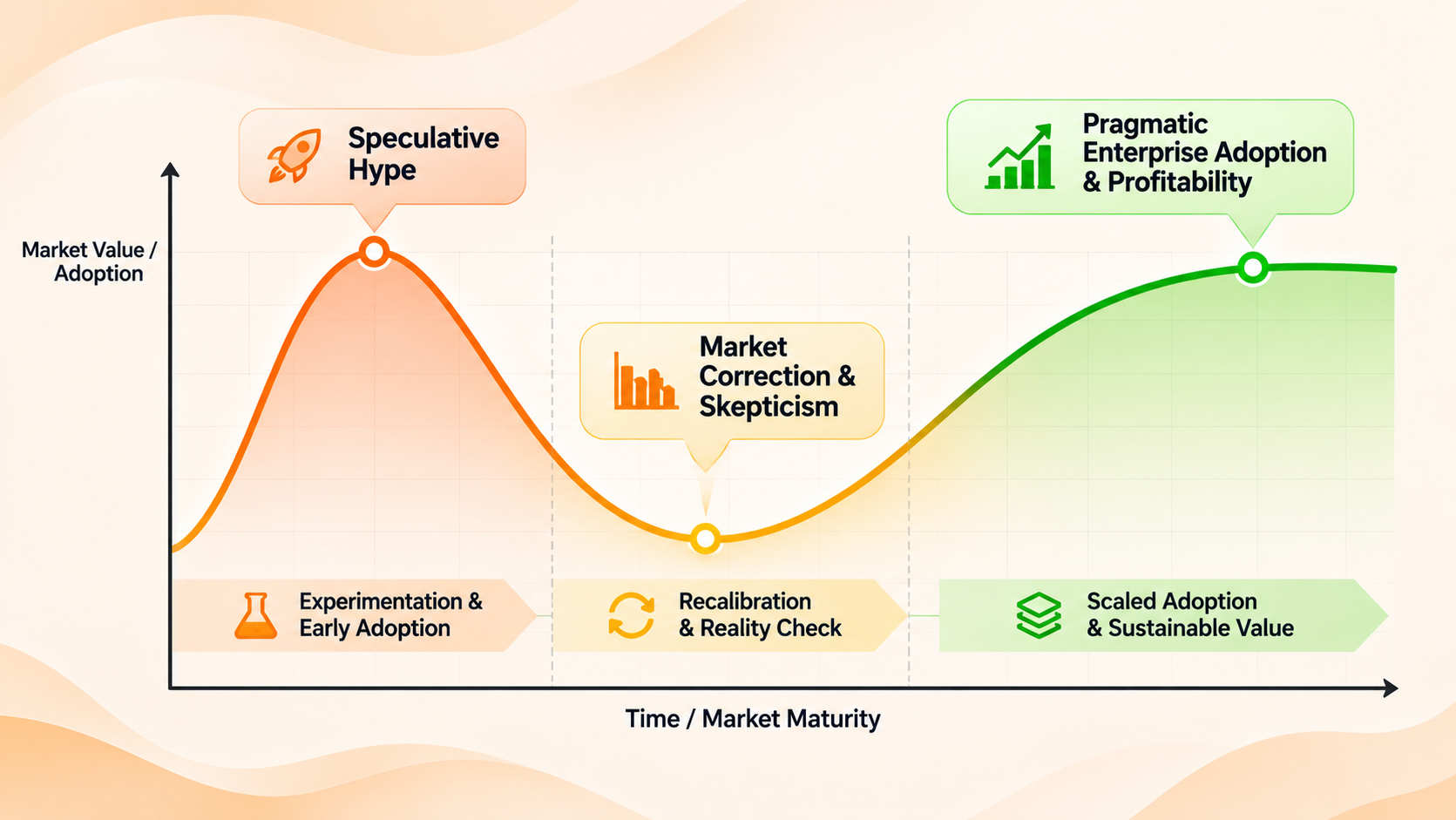
While the global marketplace may be changing under the influence of artificial intelligence, Howard Marks, legendary investor, and co-chair of Oaktree Capital, has noticed a shift in market sentiment. According to Marks, the setbacks and reality checks faced by the tech sector recently have instigated the replacement of blind and absolute optimism with skepticism regarding investments in AI. For decision-makers of the modern business world, CTOs, and innovators, these changes in market psychology mean a considerable change in the way it approaches investment from mere speculation to financial accountability.
The Reality Check Behind the AI Investment Boom
In recent years, the landscape of artificial intelligence has resembled an uncurbed gold rush with massive spending of money, record-setting budgets, and growing value of companies, making AI the most crowded field in terms of investment. However, the recent report on earnings and change of circumstances of tech companies have led to a profound and much-needed reality check for the market.
When giant tech corporations invest huge sums of money for infrastructure such as modern data centers, special microchips, and heavy power grids without having a clear understanding of how they will be able to recover their costs, people start asking difficult questions. As Marks points out in his latest investors’ insights, scale can easily change perception of reality. Just think of the following fact: a trillion-dollar expenditure is a dollar spent every second for over 31 thousand years. When the amount of investment reaches this level, it does not matter what the technology can do anymore; the only relevant question is whether the business models created can make money.
The realization has instigated a global pause in boardrooms everywhere. Firms that have jumped at every latest modern model or automation process have now settled down to calculate the costs involved. The time for squandered funds is over, and now, in its place, we enter the time of capital efficiency. Executives are clearly not ready to invest in endless little projects without leadership detailing how they will help to generate revenues or save costs. In today’s world, boards need a thorough financial audit of any digital actions and insist on being convinced how machine learning technologies will boost the profits and improve loyalty of customers.
Moreover, this correction has permeated beyond large technology firms to mid-sized companies and digital retailers. Business is learning that it can quickly rack up hefty monthly bills from employing generative models unless costs are stringently controlled. With capital becoming more expensive and investors tightening their criteria, it is more important than ever to find the right balance between technological innovation and financial prudence.
Navigating AI Industry Challenges and Enterprise Adoption
Amidst the current state of financial markets where several new business ventures are introduced, firms are often compelled to face practical challenges that they encounter in the course of their operations. One of the key challenges is brought about by the difference between what executives expect and what the firm is really able to achieve.
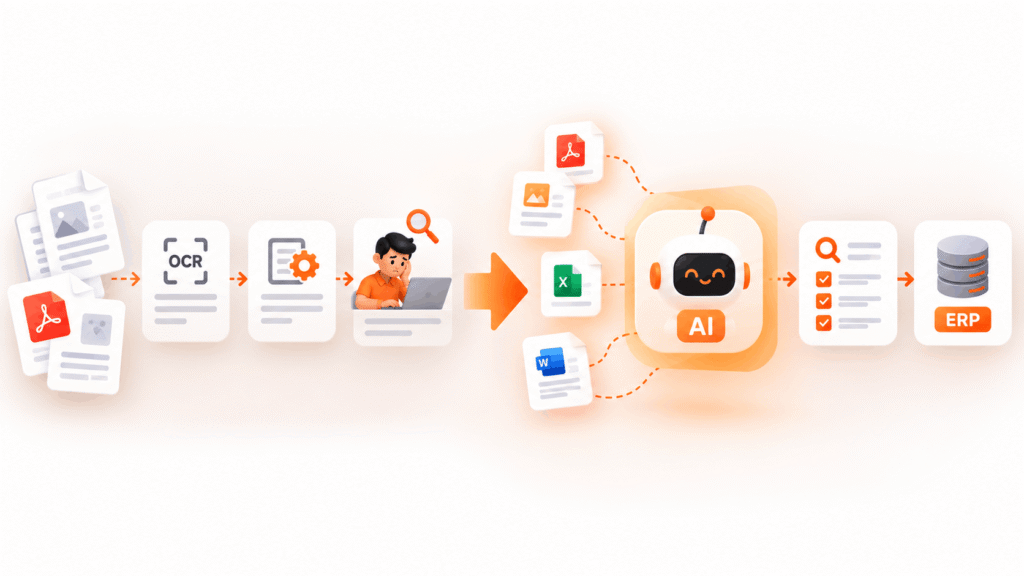
The introduction of modern technology, such as automation, machine learning, and other modern technological systems into the activities of corporations requires a considerable amount of time and effort, including proper data preparation and changes in the whole organization. As the companies become aware of the fact that simply having a new piece of software does not suggest that they will immediately obtain the return on their investment, employees begin to face a number of challenges related to using the new software. First of all, they should understand the specific features of the new technology and change original company procedures to fit it.
Ready to evaluate your current tech infrastructure before market shifts catch you off guard? Book Your AI Strategy Review Today
In navigating these challenges facing the AI sector, companies must not get enchanted by smart vendor sales and concentrate solely on their operational efficiency. Businesses that connect their technological investments with specific productivity improvement.
76 ents are more successful than those chasing after passing ideas. For example, companies that opt for testing narrow automation technologies remarkably recoup their investment more swiftly than companies implementing large-scale, generic algorithms without an operational strategy.
Data privacy and legal compliance are also among major nuisances for any growing business. The emergence of tougher legislation on data processing, privacy, and automated decisions obliges the legal department to scrutinize every new tool that comes into the company. This slows down the implementation process and can annoy managers expecting instant results.
On the other hand, those businesses that take on the new regulations first will create an advantage over competition. Organizations that establish good data pipelines, train models in an ethical manner and maintain complete audit logs will help to protect their reputation and avoid costly fines from non-compliance. To successfully navigate through the above-mentioned hurdles takes collaboration among IT departments, legal teams, and operations managers, so that technology can be advanced in a safe environment and in conjunction with organizational risk tolerance.
Managing Artificial Intelligence Market Trends and Setbacks
The cycle of how markets operate will be the same every single time. It starts with an initial period of excitement and then moves into a period where the market takes a hard look at what has been going on. The wave of skepticism we are seeing now does not mean that technology is failing; rather, it is a sign that the market is maturing.
Organizations that are smart will find ways to turn the current economic situation (characterized by market corrections, increased funding restrictions, etc.) to their benefit. Organizations can take advantage of the artificial intelligence trend that is being driven by the above-mentioned economic conditions. Rather than making quick decisions regarding purchasing expensive, untested AI tools, organizations are taking a data-driven, analytical approach to decision-making.
- Emphasis on clear application areas: Every software solution must address a single, actual issue rather than using technology simply because it is available.
- Long-term cost of ownership, such as keeping an eye on the long-term cost of owning infrastructure (i.e. maintaining it), storage of data, usage of APIs, and computing resources, is more important than simply looking at the first-time purchase price.
- Risk and innovation must be balanced by using tech investment to maintain established sources of income while testing innovative solutions that can be scaled up.
As financial institutions tighten their lending standards, businesses are learning to build leaner, smarter systems. This discipline keeps companies from over-extending themselves on unproven software, ensuring every dollar spent directly helps customers or cuts internal costs.
Want to see how structured tech implementation drives real results? Read our case study on how we helped a retailer cut operational inefficiencies by 30% through targeted data automation.
Overcoming AI Technology Setbacks Through Disciplined Strategy
Organizations will have to develop their overall capabilities when they hit roadblocks with AI technology (i.e. if there are unexpected costs associated with implementing the technology, security problems, or if employees take longer than expected to adapt to the new tools). As smart investors manage risk when dealing with speculative market bubbles, so should business leaders strictly discipline themselves in managing technology projects.
In order to be successful you will need to stop being so concerned about “missing out,” but rather focus your energy on creating value for your organization. You can create value for your organization by establishing clear metrics, conducting extensive research when selecting software providers, and implementing new tools in small, controlled increments.
Further, building cross-functional teams comprising IT people, financial controllers and operations managers ensures that the technology projects are firmly rooted in the business. When the project is understood by the business at all levels from the C-suite down to the shop floor, it’s far less likely to get stuck or to drift into the realm of expensive irrelevance. For more on how to structure your phased tech upgrade, see our full Enterprise Digital Transformation Roadmap Guide by NeoSOFT.
Visual Description: A crisp, high-definition screen recording loop of a dynamic analytics dashboard interface designed in dark mode with clean accent lines. The screen features real-time line charts, dynamic budget-tracking meters, and fluctuating numerical metrics tracking API compute spend, server token consumption, and automated workflow efficiency rates. Subtle animated green and blue indicators pulse gently to show live data streaming in, while alert thresholds clearly highlight cost-saving milestones and budget optimization markers for engineering and finance teams.
Frequently Asked Questions
With trillions of dollars in infrastructure investment made by big tech companies, scepticism is mounting as the latest earnings reports and enterprise adoption metrics indicate that it is taking longer than promised for clear, scalable paths to monetisation and ROI to appear.
Leaders need to move from hype to usefulness. That means focusing on projects that will deliver clear efficiency gains, managing infrastructure costs carefully and tying tech adoption to measurable business outcomes.
Typical challenges are slow adoption in legacy systems, mismatch of executive expectations vs actual adoption speed, hidden compute and maintenance costs, and ensuring tight data security compliance.
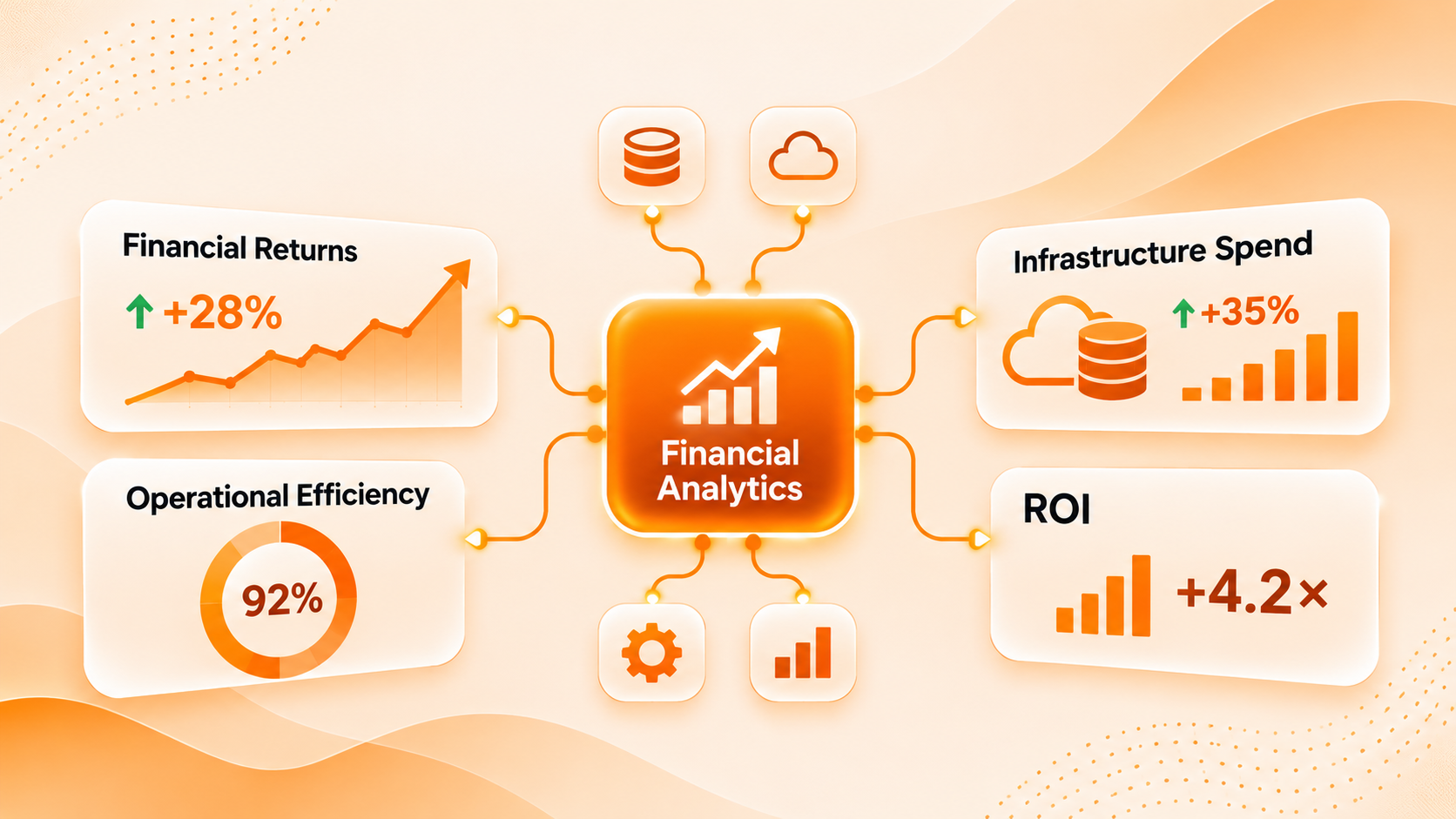
To measure true ROI, you must track direct financial returns (e.g., higher sales conversion, reduced customer support overhead) and indirect gains (e.g., savings on employee hours). Before you deploy, you must establish baseline metrics so you can accurately compare them to results after implementation.
Ready to Optimize Your Tech Strategy?
Don’t let market volatility or unverified software spending catch your organization off guard. Schedule a personalized consultation with our strategy team today to evaluate your technology roadmap, maximize operational ROI, and scale sustainably.