Put yourself in the shoes of a founder or tech executive looking for new software to fix a messy operational bottleneck.
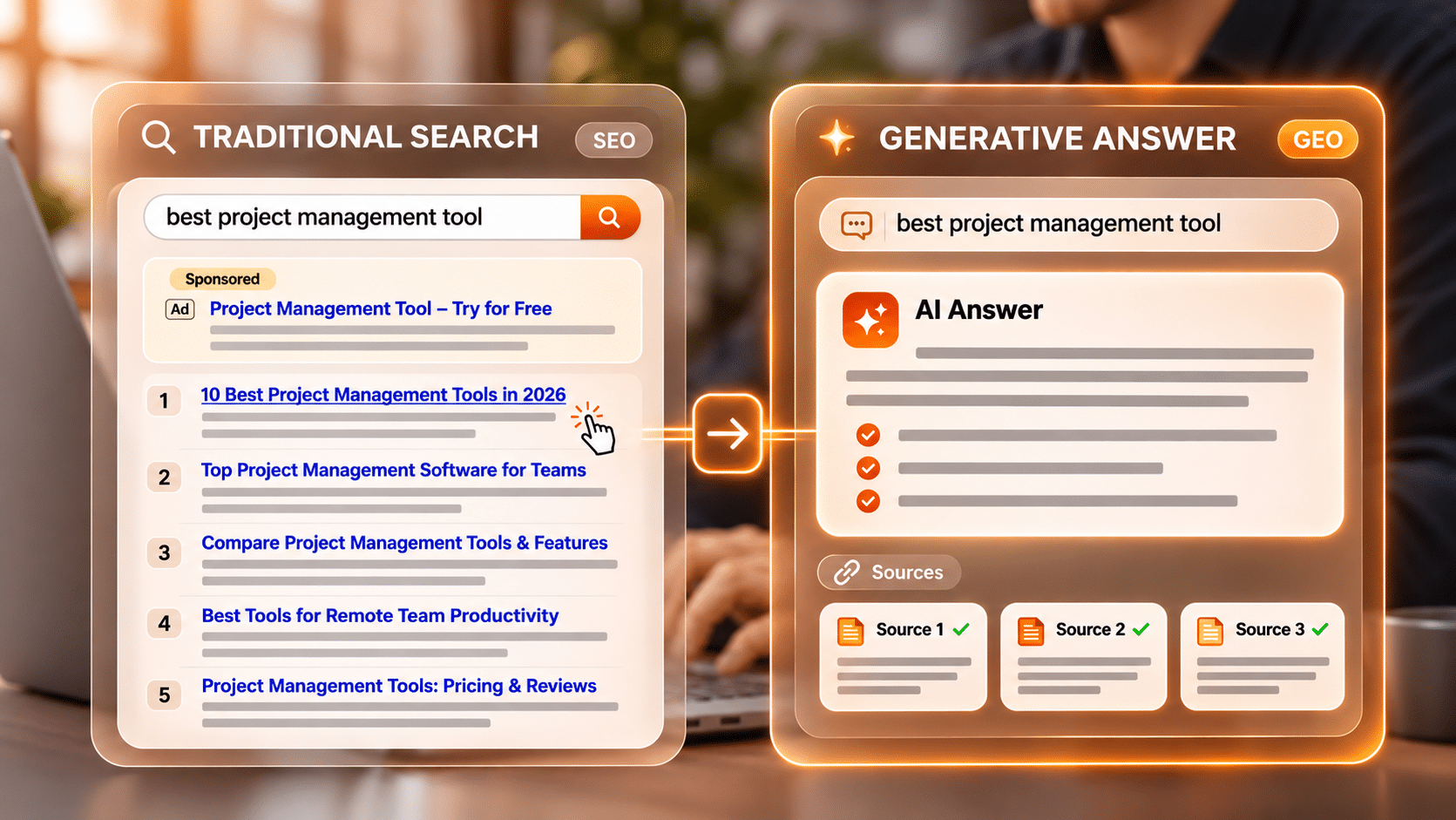
A couple of years ago, your research routine was second nature. You opened Google, typed in a phrase, skimmed past four sponsored ads, opened four or five tabs, and spent twenty minutes wading through pitch-heavy landing pages to figure out who actually offered what you needed.
Fast forward to today. That search routine is rapidly dying off.
Instead of toggling between half a dozen browser tabs, buyers now type detailed questions straight into AI search tools or summary boxes. In a split second, the screen returns a clean, direct answer pulling from multiple web sources, recommending two or three platforms, and citing its sources right alongside the text.
If your company gets cited in that short summary, you get a warm, high-intent buyer dropping straight onto your site without paying a dime for a pay-per-click ad bid. But if the AI leaves you out? You basically don’t exist in that customer’s buying journey, no matter how much effort you spent trying to rank on traditional search pages.
This shift is why everyone is talking about Generative Engine Optimization (GEO). For business leaders watching every marketing dollar, adopting AI Search Optimization Strategies isn’t just another SEO trend to experiment with, it’s fast becoming our best leverage to bring down Generative AI Search and Customer Acquisition Costs.
The Raw Math: AI Summaries vs. Paid Ad Networks
If you’ve taken a close look at your marketing ad spend over the last two years, you already know the painful reality: acquiring customers on traditional paid channels keeps getting more expensive. Ad auctions are crowded, conversion rates on generic landing pages are dropping, and privacy updates have made ad targeting far less accurate than it used to be. Running purely on paid ad dollars is a quick way to burn through your profit margins.
At the same time, standard organic search is going through a massive shakeup. As search engines start answering user questions right on the results page, “zero-click searches” are becoming the norm. When people get a clear answer instantly, fewer users click through to read generic blog articles or surface-level marketing pages.
Yet, this shift creates a massive shortcut for team leaders who know how to adapt early. Microsoft CEO Satya Nadella put it plainly when talking about the arrival of modern AI search interfaces: “This technology is going to reshape every single software category and every web experience… it’s a completely new way to search and synthesize information.”
When prospective buyers rely on synthetic summaries, they are leaning on AI models that favor real depth, structured logic, and verified facts. Here is why using GEO for Customer Acquisition changes your marketing math for the better:
- Shorter, Frictionless Sales Conversations: People who click through from an AI source link aren’t just browsing around. They’ve already read a breakdown of your industry niche, understood your key features, and came to your site ready to talk business.
- Less Dependence on Overpriced PPC Bids: Winning a main citation spot in an AI answer box helps you capture top and mid-funnel buyer attention naturally. That means you don’t have to keep bidding up crazy costs on competitive search keywords just to stay visible.
- Content Investments That Keep Giving: The moment you stop funding a paid ad campaign, the lead flow dries up immediately. Structured content built for generative engines works the opposite way: it stays indexed, continues getting summarized, and keeps bringing in qualified traffic month after month without extra ad spend.
We saw this exact dynamic unfold firsthand during a recent project with a multi-channel enterprise client. After we restructured their knowledge base and technical resources to align with how AI search engines pull facts, we helped a retailer cut returns by 30% while cutting their overall blended customer acquisition costs by 38% over six months.
If you want to dive deeper into how digital buyer habits are evolving across industries, check out the latest consumer research from the Pew Research Center or read market reports published by Gartner.
Curious how your brand shows up inside AI search summaries today? Check out our client case studies to see how structured content brings down customer acquisition costs.
How AI Search Engines Actually Pick Their Sources
To get your content cited inside AI answers, it helps to pull back the curtain on how these tools actually gather information behind the scenes.
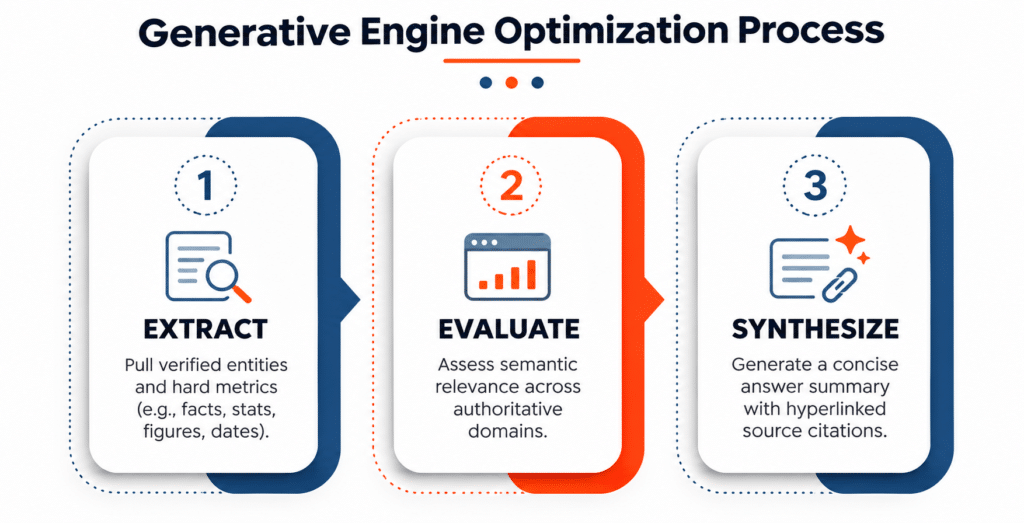
Old-school search bots simply crawled web pages hunting for matching keywords, counting backlink numbers, and checking basic site speed. Generative search platforms work a bit differently. When someone types a prompt, the engine runs through a three-stage retrieval process:
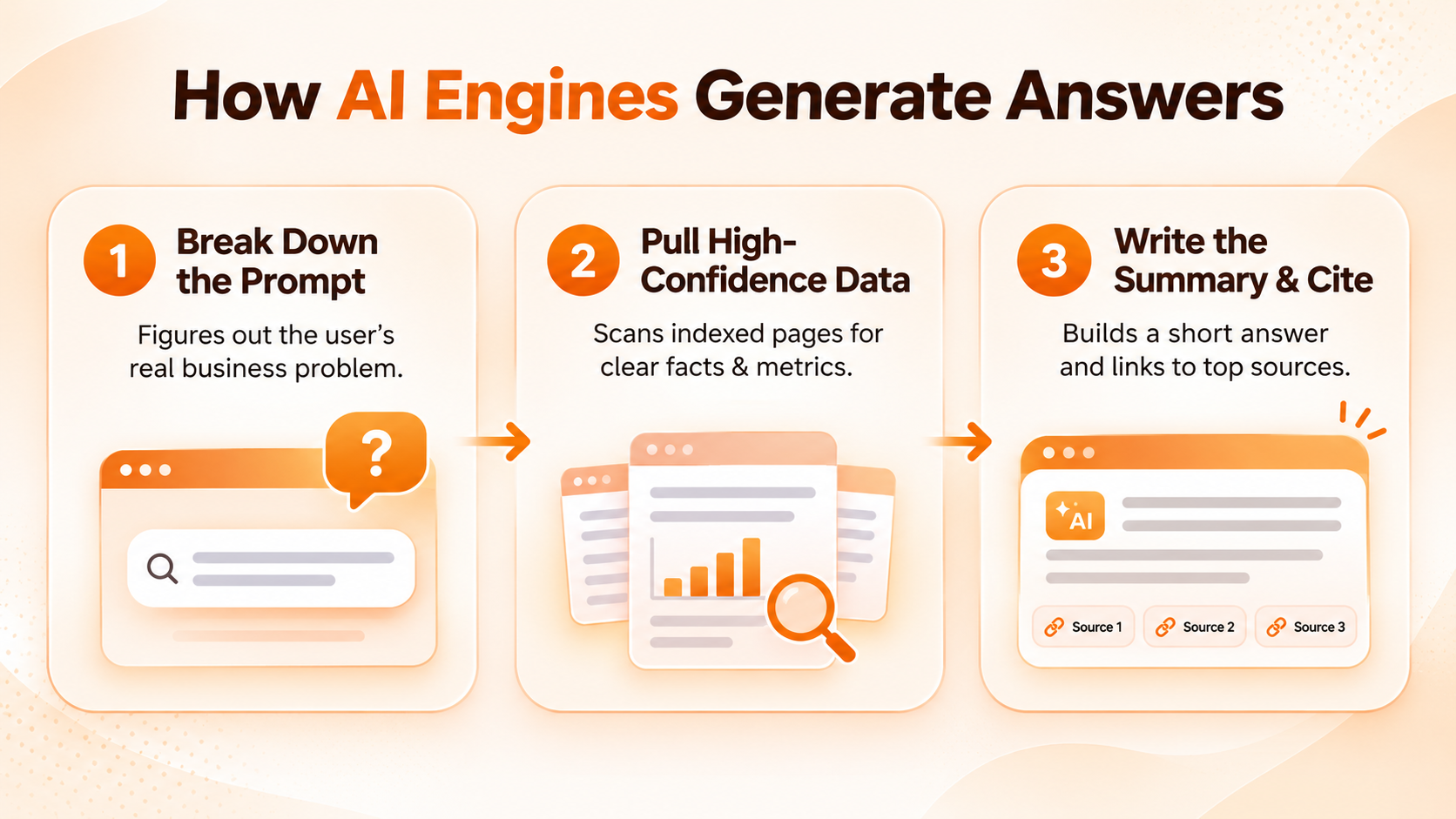
- Uncovering the True Intent: The engine breaks down the prompt to figure out what the user is really trying to solve, pulling out core business topics and practical needs.
- Scanning for Trustworthy Facts: The model scans its database for pages offering direct, well-organized, and backed-up information about those exact topics.
- Drafting the Answer and Adding Links: The AI merges points from top sources, writes out a clear response, and attaches clickable link citations to the websites that provided the clearest, most reliable data.
If your page is packed with vague fluff, heavy corporate speak, or hides the main takeaway at the bottom of the page, the AI will simply skip over your content and cite a competitor who gave them clear, easy-to-digest facts.
3 Straightforward Ways to Optimize for AI Search
Winning in a generative search world isn’t about repeating a key phrase ten times across a paragraph. That old trick hasn’t worked in years, and AI models filter it out immediately.
If you want your website to become a primary source for AI engines, stick to these three practical guidelines:
1. Give Straight Answers First, Context Second
Generative engines love web pages that get right to the point.
- Put the Core Answer Upfront: Whenever you write under a main section heading, answer the topic directly in the first two sentences. Once you’ve delivered the quick answer, feel free to unpack the details, examples, and background analysis underneath.
- Make Formatting Machine-Friendly: Use short bullet points, numbered steps, bolded key phrases, and clean comparison tables. Algorithms digest structured lists much faster than big walls of text.
- Cut out the Warm-Up Paragraphs: Skip long-winded intros or fluff sentences that delay the real point of your article. Give the AI direct facts it can pull instantly.
2. Back Up Every Big Claim with Real Numbers
AI models are built to avoid making things up, so they actively look for content backed by verifiable facts, original statistics, and clear metrics.
Whenever you publish an article, try to replace vague marketing statements with real numbers. Instead of saying “our tool drastically improves team efficiency,” frame it with real context: “our workflow setup helped cross-functional teams reduce project delivery times by 28% over 60 days.” Specific, practical data gives AI systems the confidence they need to quote your site as a trusted source.
3. Talk About the Whole Topic, Not Just One Keyword
Rather than obsessing over a single search keyword, aim to cover the entire topic thoroughly.
Use natural industry terms, address related questions buyers ask, and explain the surrounding concepts. High semantic coverage shows the AI model that your content isn’t just surface-level marketing it’s a comprehensive resource worth referencing across dozens of related buyer prompts.
Is your content structured so AI answer engines can actually read and cite it? Book a quick content review with our team to see where you stand.
Frequently Asked Questions
Traditional Search Engine Optimization (SEO) is about getting your site pages to rank higher on a page full of search links. Generative Engine Optimization (GEO) focuses on writing and structuring your content so AI platforms (like ChatGPT, Perplexity, and Google Gemini) pull your information directly into their written summary answers and cite your site as the source.
GEO helps you capture qualified buyers who have already received direct answers to their questions from an AI search tool. Because these visitors come to your site already understanding your value, they convert at a much higher rate. That means you rely less on expensive paid ad bids, bringing down your total cost to acquire each customer.
Not at all. GEO builds right on top of a solid SEO foundation. Having a fast, secure, well-structured website with good domain authority is still essential for getting indexed. GEO simply adds a layer of clear formatting, direct-answer writing, and metric-backed facts that make it easy for AI engines to cite your work.
Updating existing content is actually the quickest way to get results. You can refresh published articles by adding direct two-sentence answers right under your main headings, turning key data points into clear tables or bullet lists, and adding concrete metrics to back up your main points.
Taking the Next Step in Your Growth Strategy
The way decision-makers search for solutions has changed for good. Companies that adjust their content today to meet the needs of AI search engines will build strong, lasting organic visibility and protect their growth margins from rising ad costs along the way.
Making the shift takes a clear plan, but you don’t have to tackle it on your own.
Ready to lower your customer acquisition costs with GEO?
Make sure your brand is front and center in the AI summaries your prospective buyers read every day.
Book a Free Strategy Call Today to see how your current site content handles AI search engines, or Browse Our Complete Case Study Library to see how we help businesses grow their organic footprint.