When your company decides to develop, expand, or implement artificial intelligence systems, the task of selecting the right technical partner is only partially achieved. A wrong choice of a contract type can lead to significant budget overruns, delays in launching functions, and a difference in expectations of your team compared to the expectations of external partners.
No matter whether you decide to hire an established ai development company or a small ai development firm, the type of contract chosen has significant influence over the flexibility of your project, its financial risks and the time required for entering the market.
Why AI Contracts are Different
Creating artificial intelligence is quite different from developing an ordinary website or mobile application. Conventional software operates according to deterministic rules, i.e., the application is guaranteed to behave in the same way as long as the code is the same.
On the contrary, artificial intelligence relies on methods that are more experimental in nature. Training neural networks, tuning large language models, establishing RAG pipelines, or improving computer vision systems all involves experimentation. Therefore, if you sign a rigid traditional contract with an engineering partner without considering data cleaning and model testing, you are likely to ruin your project before it even kicks off.
“AI is the defining technology of our times. It’s augmenting human ingenuity and helping us solve some of society’s most pressing challenges.”
Satya Nadella, CEO of Microsoft
Because AI amplifies what your team can achieve, the partnership model you choose will decide whether your project thrives or gets stuck in endless testing loops.
Ready to evaluate your AI architecture? Don’t let contract confusion stall your roadmap.
Book a Free AI Strategy Session with our engineering leadership to review your technical goals and find the right fit.
1. The Fixed-Price Model: Predictable Budgets, Rigid Scope
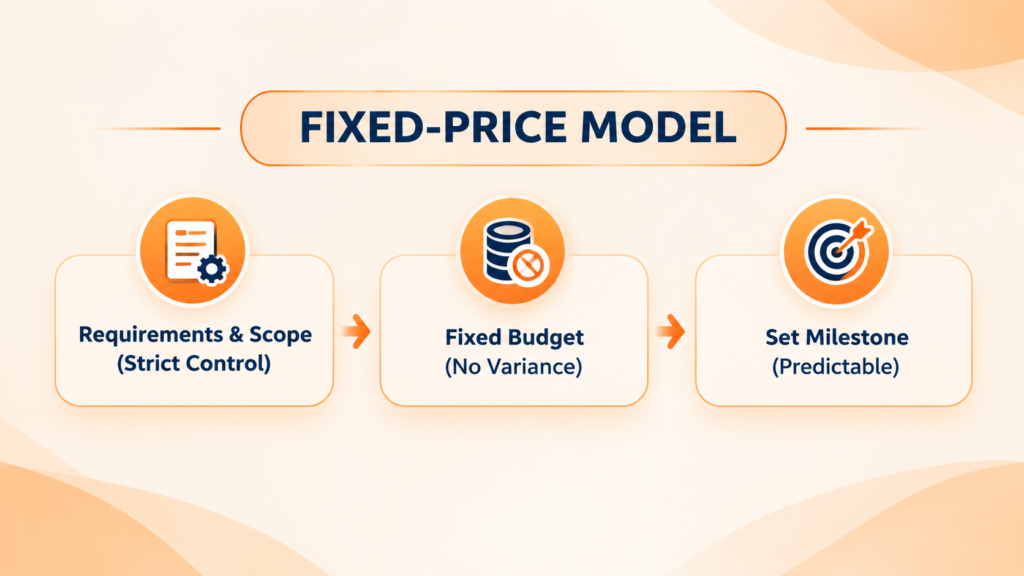
In a fixed-price setup, your budget, timeline, and feature list are locked in stone before work begins. The vendor takes on most of the risk, promising to deliver a finished product for a set fee.
When It Works Best
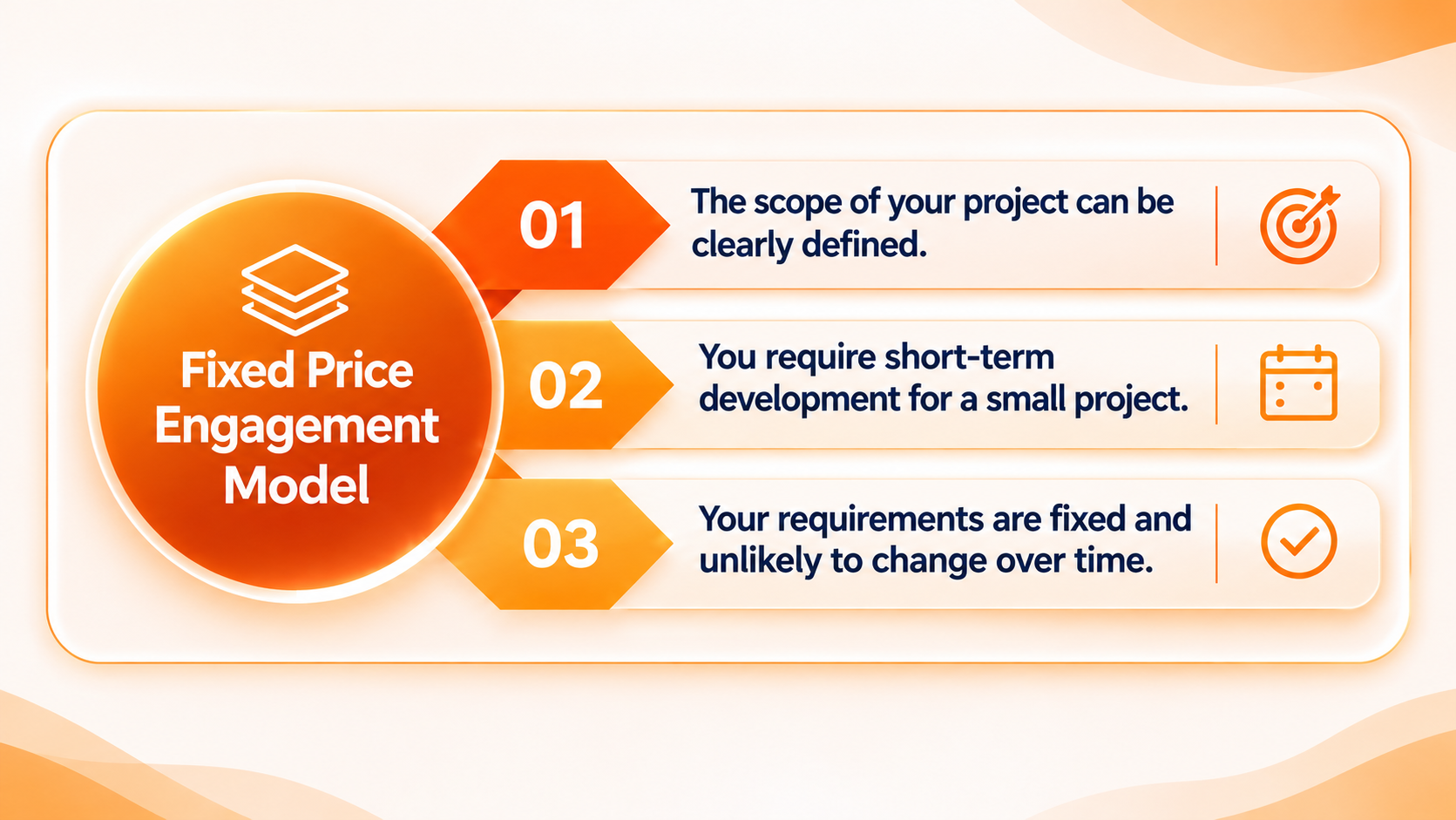
- Crystal-Clear Scope – Projects with detailed specifications and zero guesswork where no R&D is needed.
- Small MVPs – Simple proof-of-concept tools or basic API integrations.
- Strict Budgets – When your finance team requires a guaranteed price tag upfront.
Potential Drawdowns
- Zero Flexibility – Want to tweak a feature halfway through? You will face formal change orders, extra fees, and administrative delays.
- Higher Price Tags – Vendors build safety buffers into fixed bids to cover unexpected hiccups.
- Wrong Incentives – If the vendor starts losing money on a fixed bid, they might cut corners on code quality or testing to protect their profit margins.
2. The Time & Materials (T&M) Model: Maximum Flexibility
With a Time & Materials contract, you pay for the actual hours worked and resources used. It gives you total freedom to change priorities, test new ideas, and pivot as your data reveals new insights.
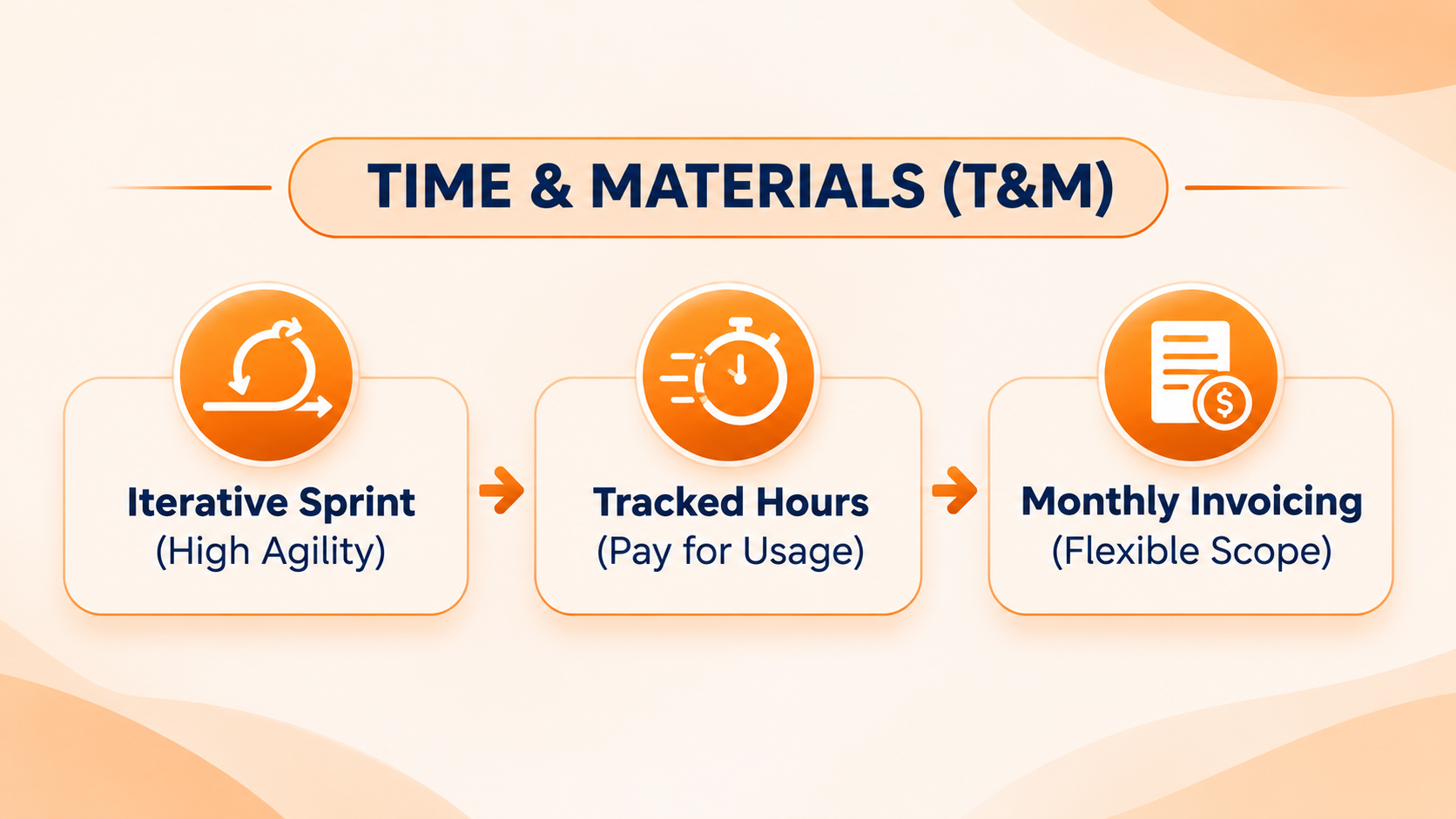
When It Works Best
Exploratory AI Work – Projects that require heavy model tuning, prompt engineering, and data discovery.
Evolving Roadmaps – When your feature priorities shift based on early user feedback or new AI models hitting the market.
Fast-Moving Startups – Teams that need to move fast without spending months writing rigid technical manuals.
Potential Drawdowns
Uncertain Costs – Budgets can fluctuate depending on how long debugging or data cleanup takes.
Hands-On Management Needed – You need an internal technical lead to keep sprints focused and aligned with your financial targets.
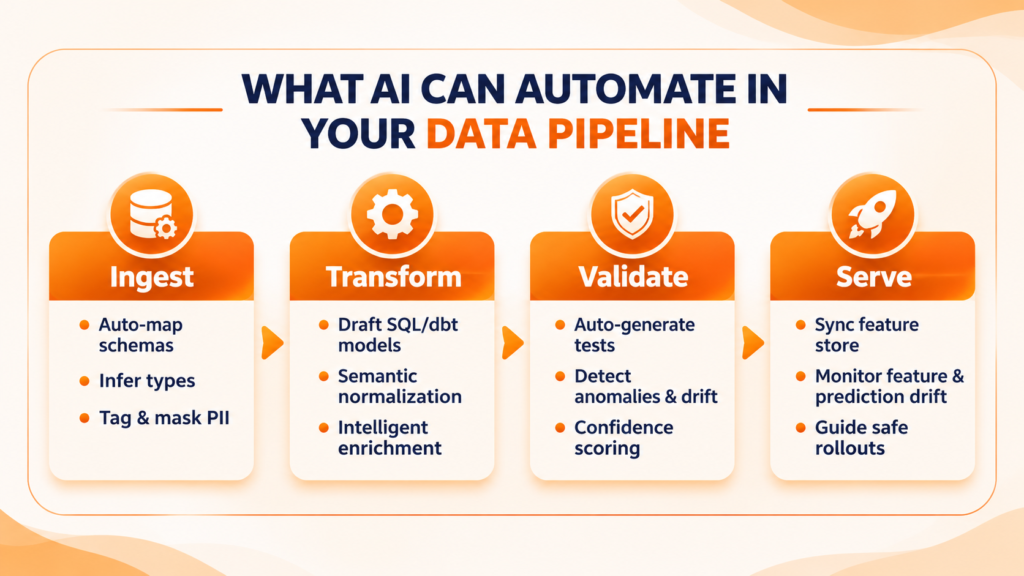
Case Study Spotlight – Learn how we helped a leading retailer cut return rates by 30% using a flexible Time & Materials model to continuously improve their recommendation engine.
3. The Dedicated Team Model: Your Extended Crew
In this model, an external provider supplies a full squad of machine learning engineers, data scientists, and project managers who work exclusively on your product alongside your own staff.
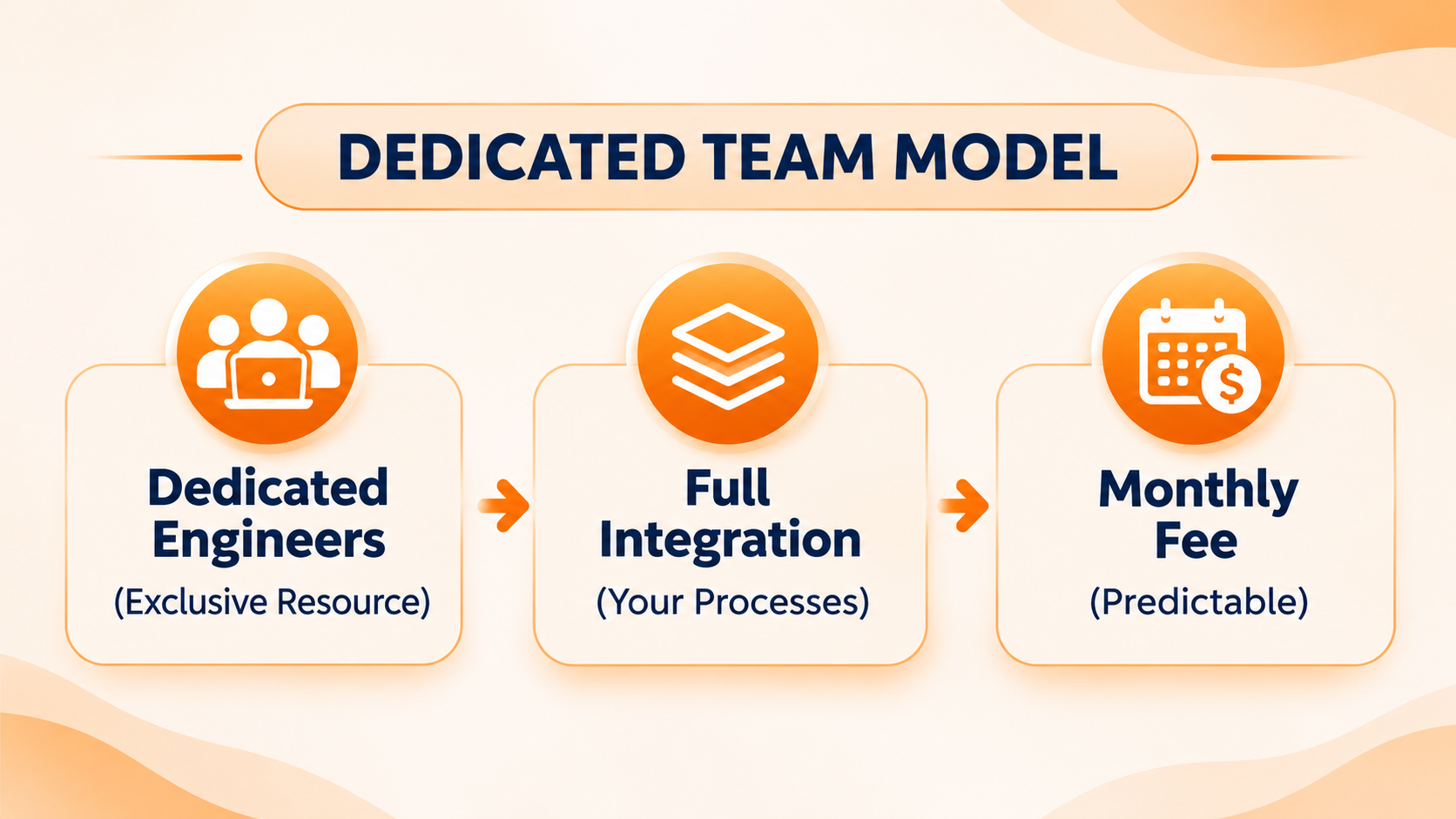
When It Works Best
Long-Term Projects – Core software development that requires steady engineering power for a year or more.
Scaling Up Fast – When you need elite AI talent immediately without the painful hiring delays and high overhead of recruiting full-time staff.
Complex Systems – Deep technical builds that require ongoing domain knowledge and custom data pipelines.
Potential Drawdowns
Longer Commitments: You need a steady backlog of work to keep a dedicated team busy month after month.
Management Overhead – You must integrate the external squad into your daily standups, code reviews, and company culture.
4. The Hybrid Model: The Best of Both Worlds
Many smart companies combine these approaches to capture the benefits while cutting the risks:
Phase 1
Fixed-Price Discovery – A quick, time-boxed fixed-fee phase where the agency checks your data readiness and maps out the technical architecture.
Phase 2
Capped T&M Build – Development runs on an agile hourly basis, but with a guaranteed monthly spending cap to protect your budget.
Phase 3
Dedicated Scaling – Once product-market fit is proven, you transition into a dedicated team model for ongoing maintenance and feature growth.
Side-by-Side Comparison Matrix
| Feature | Fixed-Price Model | Time & Materials Model | Dedicated Team Model | Hybrid Model Structure |
| Scope Flexibility | Low | High | Very High | Balanced (Controlled) |
| Budget Predictability | High | Medium | High (Monthly Burn) | High (Capped Limits) |
| Speed to Start | Slow (Requires Specs) | Fast | Fast | Moderate |
| Client Management Load | Low | Medium | High | Medium |
| Best Suited For | Small MVPs & Clear Specs | Iterative AI & R&D | Long-Term Scaling | Complex AI Products |
Industry Insights and What the Data Shows
According to tech advisory data, over 60% of enterprise AI projects fail to reach full production. The main culprits? Messy data pipelines, poorly defined scopes, or mismatched vendor contracts.
Research from Gartner Research on AI Implementation Strategies shows that flexible, agile contracts outperform rigid fixed-price bids in exploratory machine learning projects. Furthermore, studies by McKinsey & Company on the State of AI Adoption highlight that companies partnering with dedicated external engineering teams cut their time-to-market by 40% compared to those relying purely on ad hoc contractors.
Selecting an Appropriate Model
When it comes to selecting the right structure for your business, the best strategy is to consider the 3 following questions
How precise is your scope?
If you have your requirements and data nailed to the fullest, a fixed-price solution ensures safety. On the other hand, when you are still in the process of figuring out the use of your data, a time and material solution minimises the obstacles you might encounter.
Is there management capacity?
If you have your engineering management team overseeing everyday operations, the Dedicated Team model is a perfect solution. However, if your manpower is limited, Managed Fixed Delivery makes the whole process much easier.
How soon do you want to launch?
T&M and the dedicated team models allow you to implement the coding process immediately while at the same time working on your product specifics.
Frequently Asked Questions
The reply is in the affirmative. Owing to the flexibility of partnerships, many companies initiate partnerships on the time and materials model at the beginning of Research and Development and later switch to the dedicated team engagement model or milestone-based engagement model.
Custom machine learning development is always best served by the Time and Materials or dedicated team models owing to the nature of the technology that requires continuous training, testing, and fine-tuning of the solution.
Regardless of the model of engagement you decide to use, you must ensure that the contract specifies that upon the payment, your business will own all the source code, model weights, datasets, and any other intellectual property.
Accelerate Your AI Roadmap with Confidence
Partnering with an experienced engineering team converts artificial intelligence from an operational challenge into a sustainable driver of business growth.
Book a free 15-minute AI strategy session with our engineering team today to review your data readiness, evaluate target architectures, and receive a clear development roadmap tailored to your strategic goals.