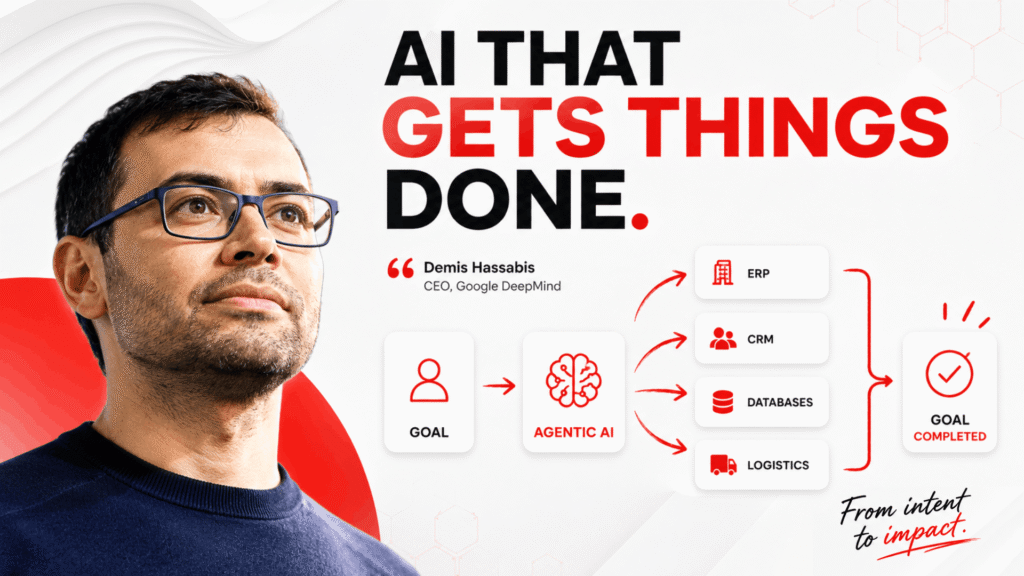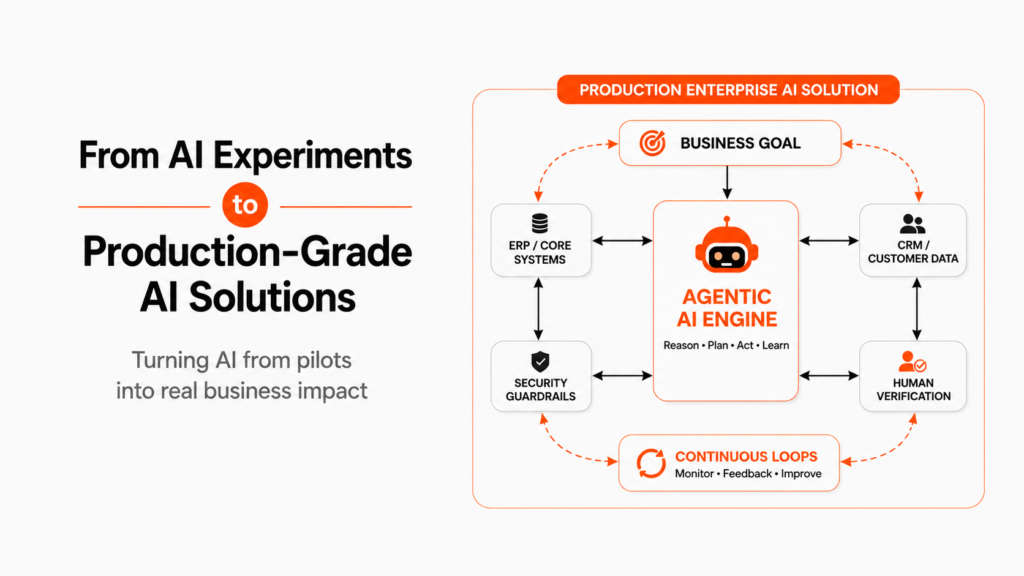
Deploying AI agents for business is no longer an experimental R&D initiative it is a financial decision driven by payback speed and measurable return on investment (ROI).
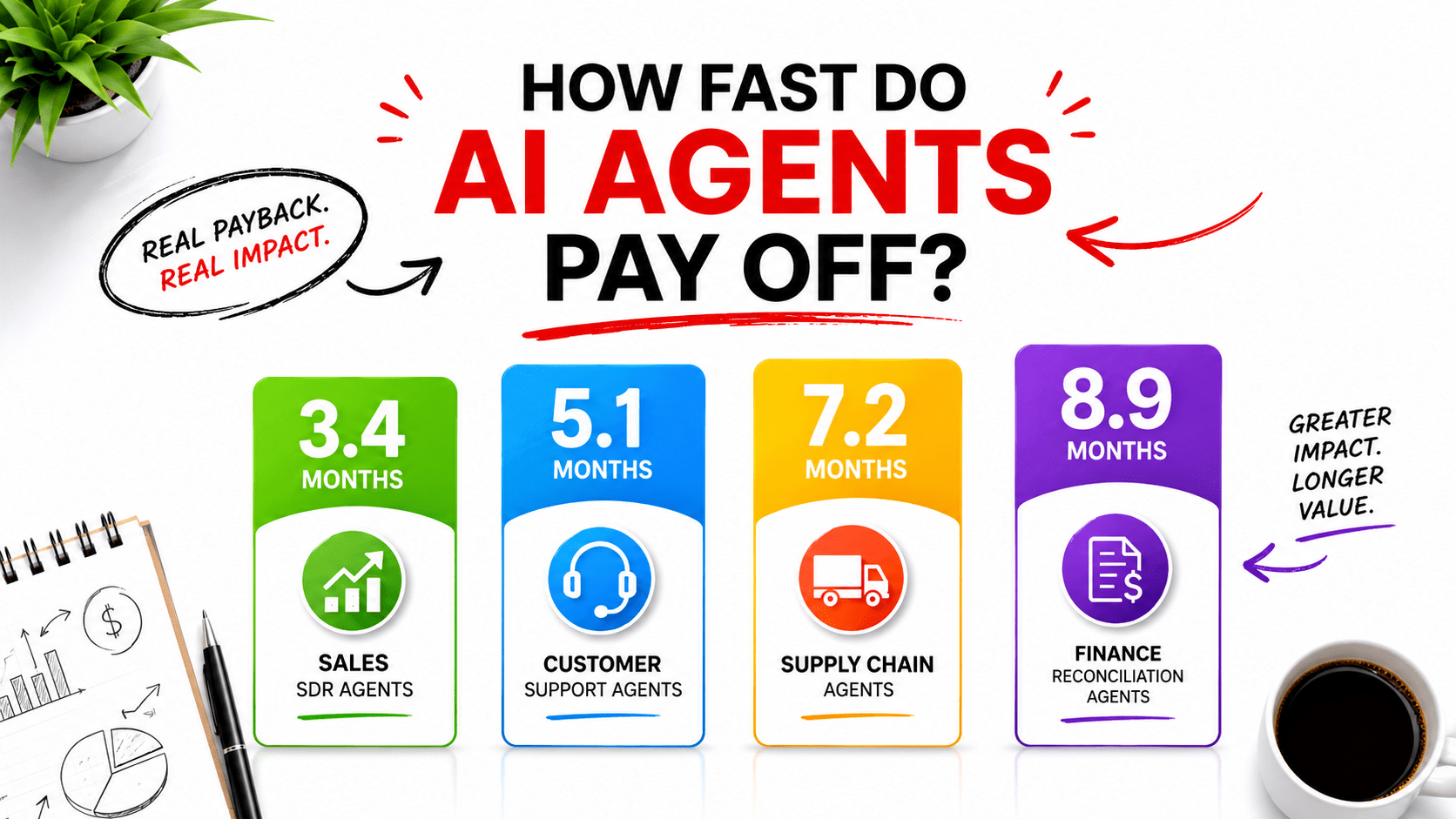
According to benchmarking data compiled by McKinsey & Company, an AI sales agent deployed for sales development representative (SDR) workflows reaches full payback in an average of 3.4 months. Conversely, autonomous finance agents handling complex ledger reconciliations require an average of 8.9 months to break even.
Understanding why these payback windows differ allows executive leadership to prioritize deployment roadmaps, allocate capital efficiently, and build predictable automation models in 2026.
As Salesforce CEO Marc Benioff has emphasized,
“The future of work will increasingly involve humans working alongside AI agents. This shift is already creating measurable economic value: SDR agents can potentially pay back their implementation costs in months, while more complex finance agents may require longer deployment and integration cycles.“
Comparing AI Agent Payback Periods Across Departments
Different departments experience different time-to-value cycles depending on data complexity, risk thresholds, and pipeline velocity.
| Department | Primary Agent Function | Implementation Time | Average Payback Period | Key Drivers of ROI |
| Sales & Prospecting | Inbound qualification, outbound outreach | 2–4 Weeks | 3.4 Months | Immediate revenue uplift & higher lead capacity |
| Customer Service | Order tracking, account edits, returns | 4–6 Weeks | 5.1 Months | Decreased cost-per-ticket & 24/7 resolution speed |
| Supply Chain | Carrier tracking, reorder triggers | 6–8 Weeks | 7.2 Months | Lower inventory carrying costs & fewer stockouts |
| Finance & ERP | Multi-way invoice reconciliation | 8–12 Weeks | 8.9 Months | Defect reduction & regulatory audit trail compliance |
1. Why AI Sales Automation Recovers Capital Faster
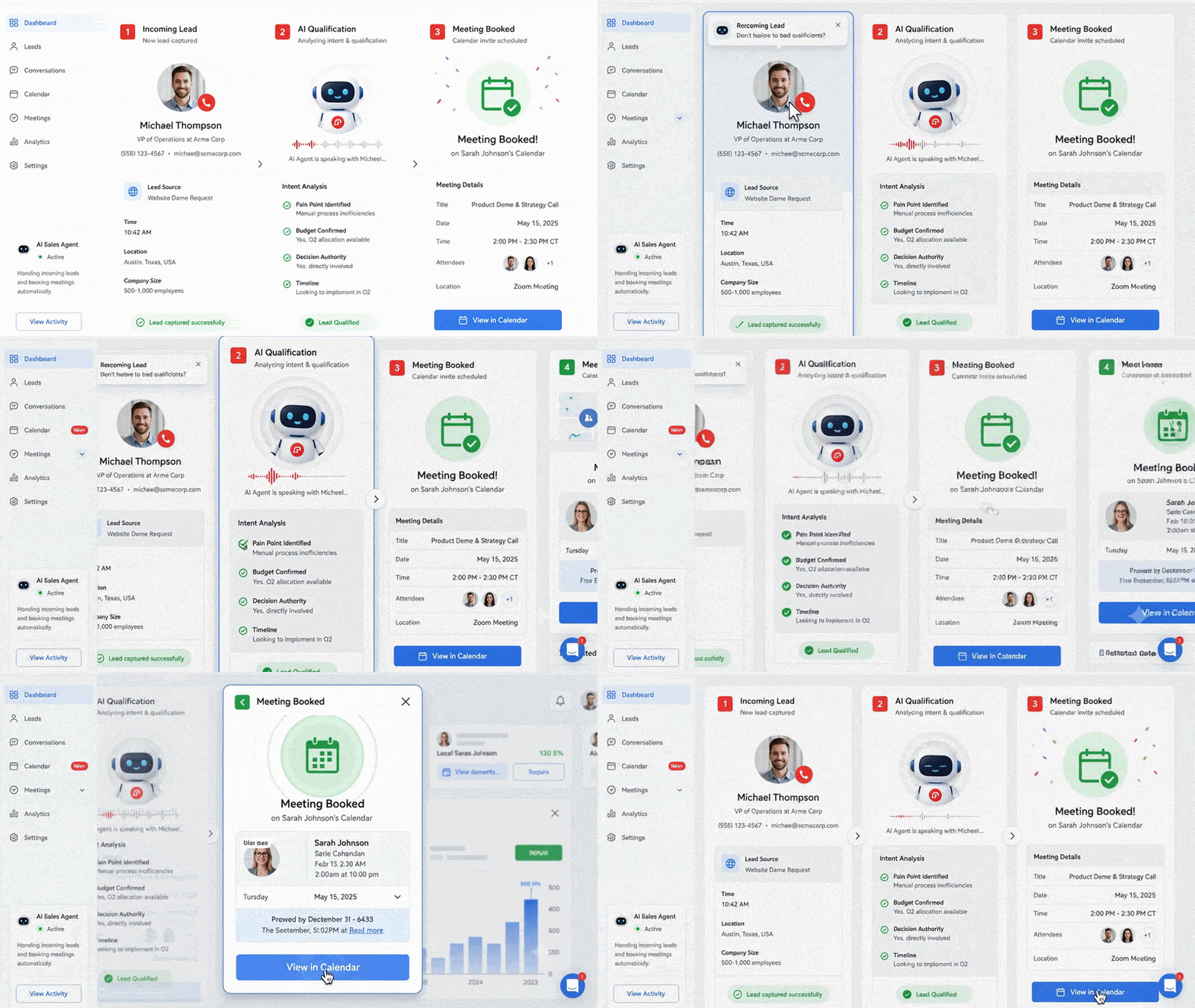
An AI sales agent operates directly on top of revenue-generating channels. Through modern AI sales automation, digital reps enrich lead lists, evaluate buyer intent, draft tailored messaging, and schedule meetings on account executive calendars within minutes. Because every booked meeting directly impacts top-line revenue, capital recovery occurs almost immediately.
Finance agents, by contrast, focus on cost avoidance, error reduction, and deep ERP integration. Their financial payback relies on reduced manual processing hours and eliminated error fines outcomes that accrue steadily over several quarters rather than driving immediate cash inflows.
💡 Want to calculate your enterprise payback timeline?
Stop guessing your automation returns. Book a Free 15-Minute AI ROI Audit with our strategy team to project cost savings and payback windows for your top workflows.
4 Factors That Accelerate Payback for AI Agents for Business
To compress payback windows across any department, leadership teams should evaluate four primary deployment levers:
- API Integration Depth: Deploying pre-built API connectors to platforms like Salesforce or HubSpot accelerates setup and shrinks initial setup costs.
- Bounded Decision Thresholds: Establishing clear operational rules allows agents to handle 80% of routine tasks without waiting for human sign-off.
- Low System Ambiguity: Processes with structured data inputs (like lead forms or standard invoices) yield faster setup timelines than unstructured workflows.
- Human-in-the-Loop Routing: Routing edge cases directly to human managers prevents execution errors that derail deployment timelines.
High-Impact ROI Drivers by Function
- Sales Operations: Instant Revenue Acceleration With AI sales automation, digital SDRs handle lead qualification at scale. They process inbound requests instantly, eliminating lead decay and increasing qualified pipeline velocity without increasing headcounts.
- Finance Operations: Long-Term Operational Efficiency Finance agents cross-reference multi-page purchase orders, bills of lading, and bank statements. While integration takes longer due to security parameters, the long-term payoff includes a 60%+ reduction in processing overhead.
When our team deployed targeted AI agents for business to handle high-volume back-office processing, we helped a mid-market enterprise cut manual invoice processing costs by 67% while maintaining enterprise compliance standards. Explore our AI Automation Case Studies
The Executive Roadmap for Fast Payback Deployment
Compressing your payback timeline requires a systematic approach to workflow selection and rollout.
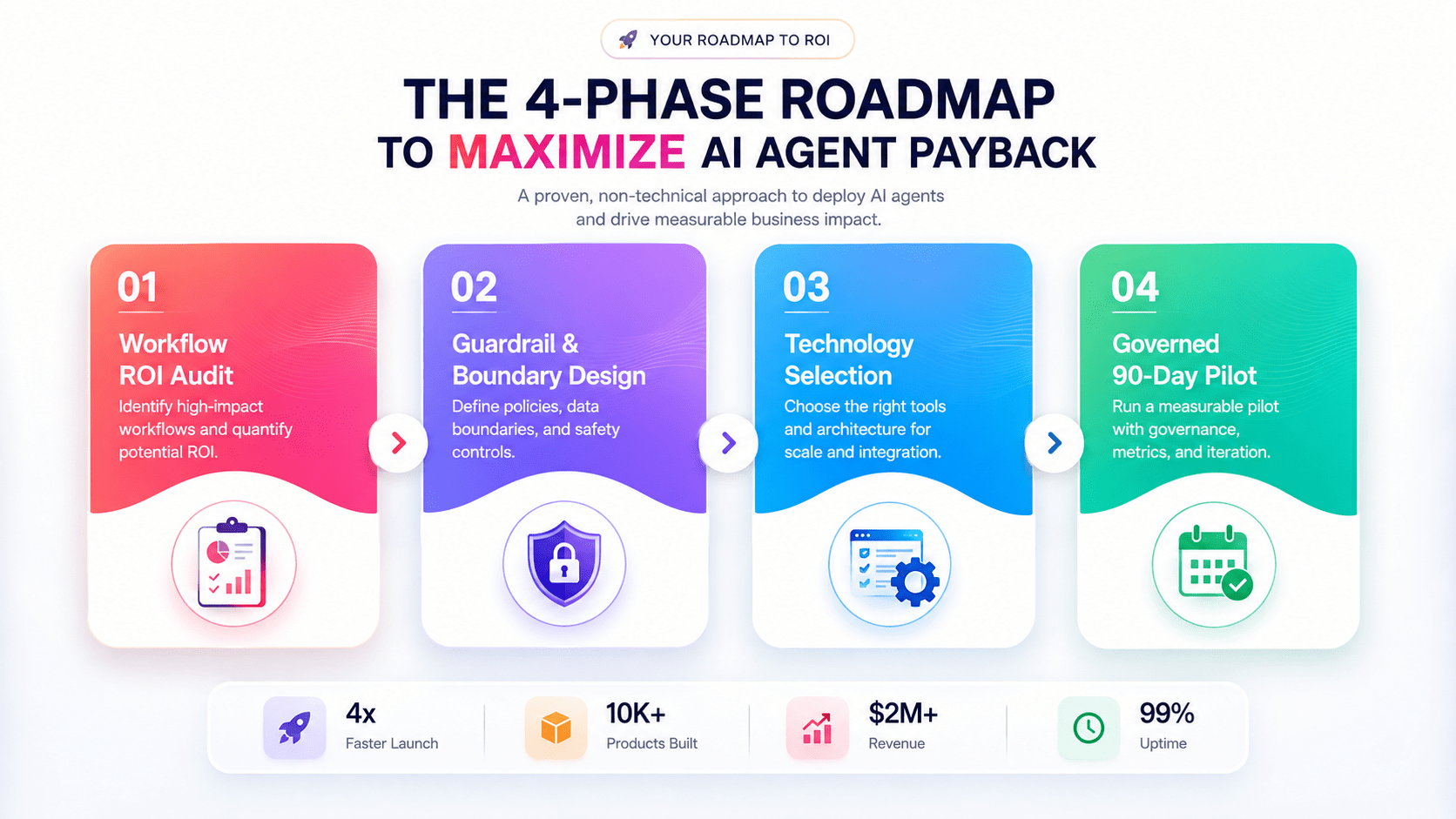
Phase 1: Prioritize Top-Line Revenue Workflows First
If quick payback is your primary mandate, launch an AI sales agent pilot before tackling back-office compliance systems.
Phase 2: Define Clear Security Guardrails
Specify exact system permissions under Role-Based Access Control (RBAC). Detail what records an agent can edit and where manager sign-off is required.
Phase 3: Choose the Right Technology Strategy
- Pre-Built Agent Modules: Fast deployment for standard CRM workflows; best for quick payback on routine tasks.
- Custom Agentic Architecture: Tailored platforms built for proprietary data environments; delivers higher long-term defensibility. Review our guide on custom versus off-the-shelf AI integration to choose the right model stack.
Phase 4: Execute a Governed 90-Day Pilot
Deploy agents alongside human teams. Measure conversion rates, cycle times, error rates, and cost-per-transaction to verify ROI before expanding rollout.
Mitigating Risk: Security, Governance, and ROI
To safeguard your payback projections, proactively manage these core risk vectors:
- Execution Risk: Unmonitored agents taking incorrect software actions create costly operational cleanup. Enforce step limits and sandbox testing.
- Data Access Security: Ensure agents operate strictly under least-privilege RBAC standards to protect sensitive corporate assets.
- KPI Benchmarking: Establish baseline operational metrics prior to deployment. Track conversion lift, cost-per-task, and cycle times weekly to keep payback schedules on target.
🚀 Accelerate Your Automation Payback
Ready to deploy high-ROI agents across your revenue and operations teams?
Frequently Asked Questions (FAQs)
Sales agents directly drive top-line revenue by qualifying leads and booking sales meetings, resulting in near-immediate financial return. Finance agents focus on internal efficiency, error reduction, and deep ERP integration, which generates steady cost savings over a longer timeline.
Initial setup and integration for an AI sales agent typically take 2 to 4 weeks, with full payback achieved within 3 to 4 months.
Yes. When configured with strict human-in-the-loop (HITL) checkpoints, role-based access control, and complete audit logging, finance agents maintain compliance while reducing manual workloads.
No. Business leaders can deploy pre-built agent platforms or collaborate with specialized AI integration partners to handle security, setup, and system connections.
Maximize Your Enterprise AI Returns
Understanding payback timelines allows leadership to sequence deployments for maximum financial return starting with rapid revenue drivers and reinvesting gains into long-term operational efficiency.
Ready to shorten your payback window and scale high-ROI digital workflows?